

 1 hour ago
3
1 hour ago
3
ARTICLE AD BOX
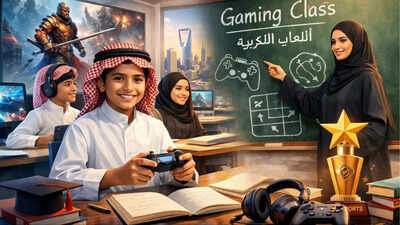
Saudi Arabia Integrates Gaming into School Curricula: A Digital Education Revolution (Representative Image)
In a bold and unprecedented move, Saudi Arabia’s Ministry of Education has officially approved the inclusion of electronic gaming, both competitive and educational aspects, in school curricula across all education levels.
This landmark initiative aims to bridge traditional education with 21st-century digital skills, creativity and the rapidly growing gaming industry, reflecting a global shift toward recognising video games as valuable tools for learning and future careers.
What’s happening: Gaming meets education in Saudi schools
The decision comes after three strategic memorandums of understanding were signed between the Ministry of Education, the National Institute for Educational Development and the Educational Services Development Company with Savvy Games Group, a state-owned gaming enterprise under the Public Investment Fund.
These agreements formalise the integration of electronic games into curricula, development of national gaming competitions and training pathways to build local talent within the gaming sector.Coverage from Al-Marsad newspaper reports that the collaboration will include working with the National Curriculum Center to embed game-related skills and knowledge in school content, alongside initiatives to upskill educators, create educational games and support nationwide innovation challenges tied to the gaming industry.
This is one of the most significant educational policy shifts in the Middle East in recent years, not just because games are fun but because they can teach transferable and future-oriented skills. According to international research and global education commentary, competitive video gaming and esports programs in schools can nurture collaboration, strategic thinking, problem-solving, communication and leadership, all skills employers increasingly value.For example, schools in Wales and the US that implemented esports suites and gaming programs noted positive impacts on student engagement, teamwork and pathways into tech-related careers. Just as structured arts or sports programs can support growth, gaming education, when well designed, can be both academic and practical.
Saudi Arabia taps into the global trend of gaming in classrooms
Saudi Arabia’s move aligns with global experimentation around gaming as an educational tool.
In Japan, certain schools have incorporated video games into classroom learning to help students build critical thinking and communication skills, with high participation and positive university progression rates among graduates.
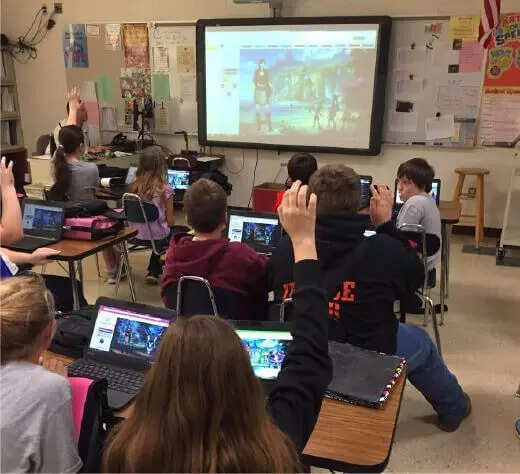
Level Up, Students! Saudi Arabia Adds Electronic Games to School Courses
Likewise, academic discussion including research into game-based learning curricula such as Quest To Learn in the US, has highlighted how games can reinforce systems thinking and engagement, supporting traditional subjects like math, science and language through interactive design and strategic challenges.
Saudi officials are positioning the gaming curriculum initiative as part of a larger push toward digital transformation, innovation and job creation in future industries.The Kingdom’s gaming sector already demonstrates strength, with millions of players and billions in annual revenue, signalling robust interest and economic potential. By formalising gaming education, authorities aim to prepare students for careers across game development, design, esports management, digital media, cybersecurity and related tech sectors.
These are the fields that are poised for growth alongside Saudi Arabia’s broader economic diversification goals.
What the gaming curriculum in Saudi Arabia will cover
While official details on the exact curriculum framework are still emerging, the memorandums outline several key components:
- Integration of gaming concepts into formal courses using electronic games to illustrate digital literacy, computer science fundamentals, teamwork and creative expression.
- National level competitions designed to nurture talent and spotlight student achievements in game design and esports performance.
- Professional pathways including training and qualification programs aligned with Saudi scholarship and vocational tracks like Khadem Al-Haramein Scholarship and Wa’ed, supporting future game designers and developers.
The initiative is also expected to include the establishment of gaming labs and innovation hubs within technical and vocational institutions, geared toward hands-on experience and industry projects. Global education voices, including contributors to research platforms and the World Economic Forum, have explored how esports and gaming curricula can teach teamwork, leadership, problem solving and communication skills, especially when embedded within supportive academic structures.These programs often serve dual purposes: they enhance student engagement (particularly among learners who struggle with traditional teaching methods) and they create career pathways in technology, digital arts, programming and business.
What comes next in Saudi Arabia’s gaming curriculum: Implementation and expansion
Saudi Arabia’s Ministry of Education is now in the roll-out phase, working with curriculum developers, industry partners and training institutions to finalise content, teacher preparation and infrastructure.
The early emphasis will likely be on pilot programs, teacher upskilling and integration phases to ensure the curriculum complements, rather than replaces, existing subject goals.
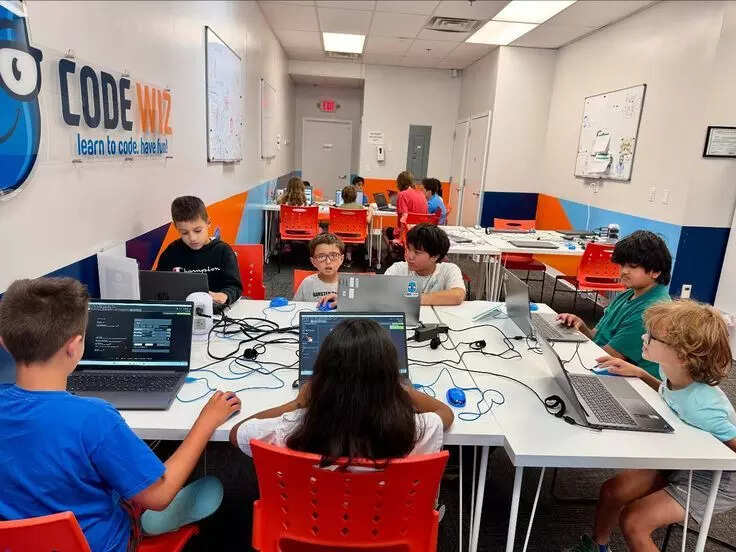
Saudi Arabia Rewrites School Rules: Electronic Gaming Is Now Officially ‘Educational’ as KSA Taps Into Global Trend
Over time, the success of this gaming integration could attract attention from other countries in the region exploring innovative education models that respond to a rapidly evolving labour market and the rise of digital economies globally.
With the official inclusion of electronic gaming in Saudi school curricula, the Kingdom is at the forefront of a global shift toward embracing games as tools for learning, creativity and future career readiness.While challenges remain, including ensuring balanced screen time and aligning gaming with core academic standards, the initiative signals a bold rethinking of how education can evolve to reflect the digital aspirations of a new generation of learners.









 English (US) ·