

 9 hours ago
4
9 hours ago
4
ARTICLE AD BOX
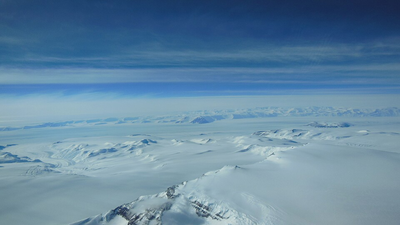
A view of Antarctica’s ice sheet and mountains seen from a U.S. Air National Guard LC-130 aircraft| Image Credit: Wikimedia Commons
Beneath the thick ice cover of Antarctica lies water flowing continuously through its network. Deep beneath the frozen crust, the formation of lakes continues secretly under the ground, draining out from other lakes through channels scientists cannot see.
Now, in the wake of research done using satellite data collected for the past decade, scientists have discovered 85 new active subglacial lakes lying under Antarctica.According to a study published in Nature Communications, this discovery makes the total number of active subglacial lakes in Antarctica go up from 146 to 231. Scientists believe that this discovery does not just add to the existing map but shows how the network of water beneath the ice is highly interlinked.A hidden water system beneath the iceThese new lakes lie deep under several kilometres of Antarctic ice and can not be studied directly on the ground. Therefore, experts had to monitor their activity by studying data gathered from the CryoSat-2 spacecraft of the European Space Agency from October 2010 until July 2020. According to the results of the study, experts worked with nearly 15 billion measurements of the elevation of the ice obtained using the CryoSat-2 spacecraft.
Small elevations and decreases in the surface of the ice allowed experts to determine the activity of these lakes. If a lake were filled up, there would be small elevations of the surface of the ice, and vice versa.Scientists registered 37 drainage events and 34 filling events, which prove that these lakes are active. The European Space Agency states that subglacial lakes are particularly difficult to detect because they lie far below Antarctica’s surface and may change gradually over months or years.More connected than scientists expectedAnother crucial finding from this research is that most of the lakes seem to be connected through a network of drainage channels underneath the ice sheet.The researchers say they managed to map out five subglacial lake networks as well as 25 subglacial lake clusters in Antarctica. Some of these lakes showed simultaneous draining of upstream lakes and filling of downstream lakes, which suggests the presence of hidden channels linking up the lakes.It has also been found that 73 of these newly discovered active lakes were located in East Antarctica, and 12 in West Antarctica. This means that there are active subglacial hydrological systems throughout Antarctica.Additionally, the researchers have created what they call the first time-evolving boundary dataset, comprising all 85 lakes, making it possible for scientists to track their changes in size over time.
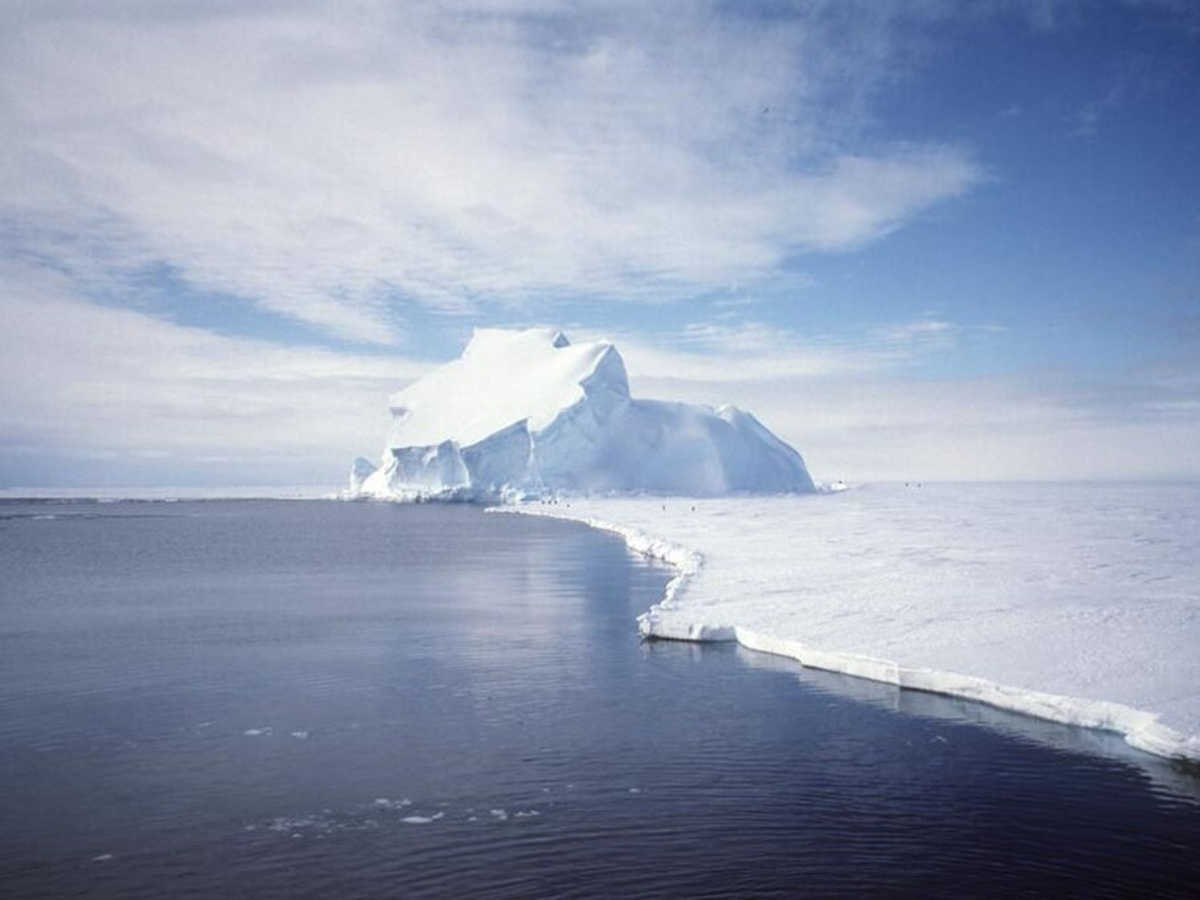
Antarctica’s ice sheet, view of the Riiser-Larsen Ice Shelf in Antarctica| Image Credit: Wikimedia Commons
Why water exists beneath frozen AntarcticaDespite being incredibly cold, scientists suggest that there are several mechanisms by which meltwater is formed under the ice layer. One of those natural processes includes geothermal heating from rocks located under the surface of Antarctica, leading to melting ice from below. Moreover, friction due to large masses of ice sheets moving against the ground surface leads to the creation of additional meltwater.The water can accumulate under the ice layer and move further via underground channels, thus forming active lakes.Additionally, satellite images have proven that there are many active subglacial water systems under Antarctica and Greenland. In addition, subglacial meltwater can act as a lubricant on the bottom side of an ice sheet, causing changes in glacial behaviour.Why the discovery mattersThis finding is said to be crucial because the hidden water underneath the Antarctic could have a direct impact on the flow of ice.
Reportedly, the existence of subglacial lakes and drainage networks could influence glacier stability and ice movement, and thus be crucial considerations when predicting long-term sea levels. Water under the ice could make it easy for some regions of ice sheets to flow towards the oceans faster due to decreased resistance from below.Various scientists say that subglacial hydrology is still one of the least known aspects of current ice-sheet models.
Therefore, creating an accurate map of these lakes could help predict better in future what happens with the Antarctic ice.The recent finding further indicates that past studies of these hidden lakes may have been partly successful as well. Most of all, the discovery brings a new way of looking at Antarctica itself. It is no longer the silent, stationary chunk of ice but rather the location above a system of lakes and rivers constantly moving below the ice surface in total darkness.









 English (US) ·