

 50 minutes ago
5
50 minutes ago
5
ARTICLE AD BOX
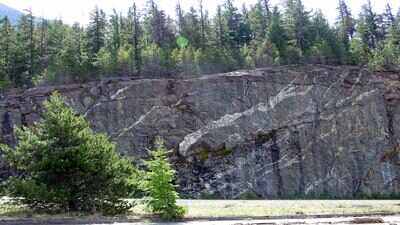
A photo of metamorphic rocks. Image Credit: Wikimedia Commons
For millions of years, Earth’s rocks may have emitted stored carbon and sulfur gases, slowly altering the climate and contributing to some of the planet’s deadliest extinctions, according to new research.
According to Phys.org, research done by Florida State University scientists indicates that besides volcanic eruptions, there may be other processes taking place under the Earth’s crust that impact the planet’s atmosphere. Specifically, it was found that metamorphic rocks – rocks that experience changes due to high temperatures and pressures underground – can release gases that affect the atmosphere.The study published in Science Advances challenges the conventional idea that volcanic eruptions were the primary geological factor behind several climate changes and mass extinction events.
Metamorphic sulfur emissions can cause temporary cooling, while carbon emissions from the same process can lead to long-term warming. Both these effects combined may have led to severe climate instability.How buried rocks can affect the atmosphereDuring metamorphism, rocks are subjected to high temperatures and pressures, often when magma from large volcanic areas heats nearby rocks. A team from Florida State University examined how these processes could result in the emission of sulfur and carbon.
When sulfur gets into the atmosphere, it can turn into sulfate aerosols. Aerosols scatter light from the sun and, thus, decrease solar energy on the planet's surface and lead to global cooling.Sulfur aerosols can also help clouds form by acting as nuclei for water condensation. As a result, such clouds will reflect additional sunlight. Unlike sulfur, carbon dioxide remains in the atmosphere for thousands to millions of years and traps heat.Michael Diamond, assistant professor of meteorology at Florida State University and a member of the research team, says sulfur-driven cooling periods could be temporary while carbon emissions can cause long-term warming.
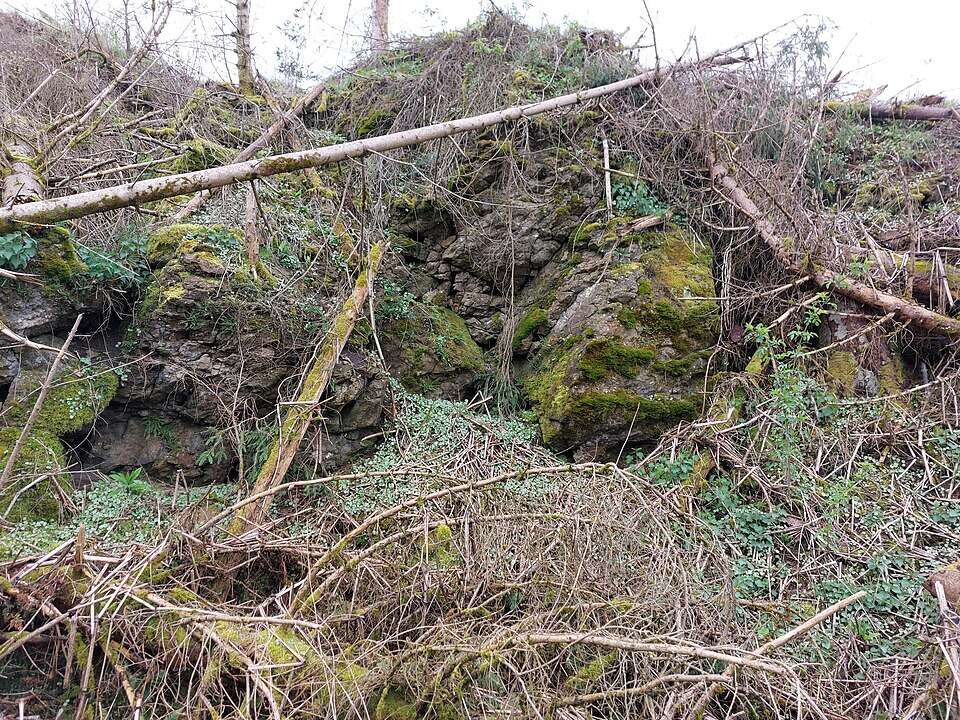
Metamorphic pillow basalts. Image Credit: Wikimedia Commons
New theory on ancient climate oscillationsThe correlation between some of the mass extinctions and large volcanic eruptions, termed the large igneous provinces, is not new. These volcanic eruptions occurred in some of the largest provinces ever seen on Earth, releasing large amounts of gas into the atmosphere.
To give an example, the Siberian Traps are thought to be linked with the end-Permian extinction about 252 million years ago, the most severe extinction event known in Earth’s history.
It was the most severe mass extinction event in Earth’s history, eliminating up to 96 percent of marine species and around 70 percent of terrestrial vertebrate species, according to estimates based on the fossil record.Scientists have long linked several mass extinction events with enormous volcanic episodes known as large igneous provinces. Research published in Nature Geoscience has shown that gases released during the Siberian Traps eruptions, including carbon and sulfur compounds, may have driven major climate swings during the end-Permian extinction, contributing to dramatic changes in Earth’s atmosphere, oceans and ecosystems.
However, according to a new study conducted by Florida State University, this might not necessarily be the case. The rocks around these volcanic systems may have produced extra gases when they are heated by the moving magma.Assistant Professor Emily Stewart of Florida State University stated that the research shows that extinction events probably happened due to the combination of interactions between various things like Earth’s interior, atmosphere, ocean, and living things.Clues about climate locked away in Earth’s historyThe researchers examined several major extinction events from Earth’s history, including the end-Ordovician extinction around 440 million years ago, the end-Devonian extinction around 370 million years ago, the end-Permian extinction around 252 million years ago and the end-Triassic extinction around 201 million years ago.The end-Permian extinction event, known as the Great Dying, was especially devastating, wiping out the majority of marine animals and altering life on land.
These extinction events help scientists study how Earth’s climate system responds to disturbances by combining the fossil record, rock chemistry and atmospheric models. The discovery suggests that Earth’s climate is shaped by interacting systems, including subterranean processes that can alter atmospheric chemistry and affect surface waters and life.Even though these geological events occurred millions of years ago, they may offer lessons about climate sensitivity. Climate change is largely attributed to human activities such as burning fossil fuels, which release carbon dioxide into the atmosphere. By studying natural carbon cycles, scientists can learn how Earth responds to large fluctuations in greenhouse gas levels.








 English (US) ·