

 45 minutes ago
3
45 minutes ago
3
ARTICLE AD BOX
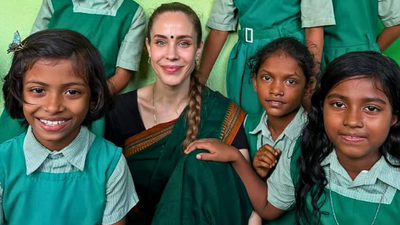
Sandra Lavie with her students. (Image courtesy: Instagram/@sandralavie)
On paper, Sandra Lavie had the kind of life many people spend years working towards. She had grown up in Switzerland, completed her studies, landed a well-paying corporate job in Dubai, travelled across the world, owned a beautiful apartment, drove a nice car, and enjoyed every comfort that comes with financial success.But somewhere between airport lounges and boardrooms, a question refused to leave her. "Why had I been given so much while so many others had so little?" That single question changed everything.
6 May 2026 | 16:56
What are the three things that make you instantly happy?
Fifteen years ago, Sandra made a decision that surprised almost everyone around her. She resigned from her corporate job, packed almost nothing, and boarded a flight to India without any grand plan. "India was a culture shock, but it also gave me exactly what I had been searching for: simplicity, purpose and perspective," she says in a conversation with TOI Women.Today, that decision has helped educate hundreds of children of Sagar Island in West Bengal and transformed the lives of women and families in one of the country's remote villages.
Two shirts, two pairs of trousers, and a one-way ticket
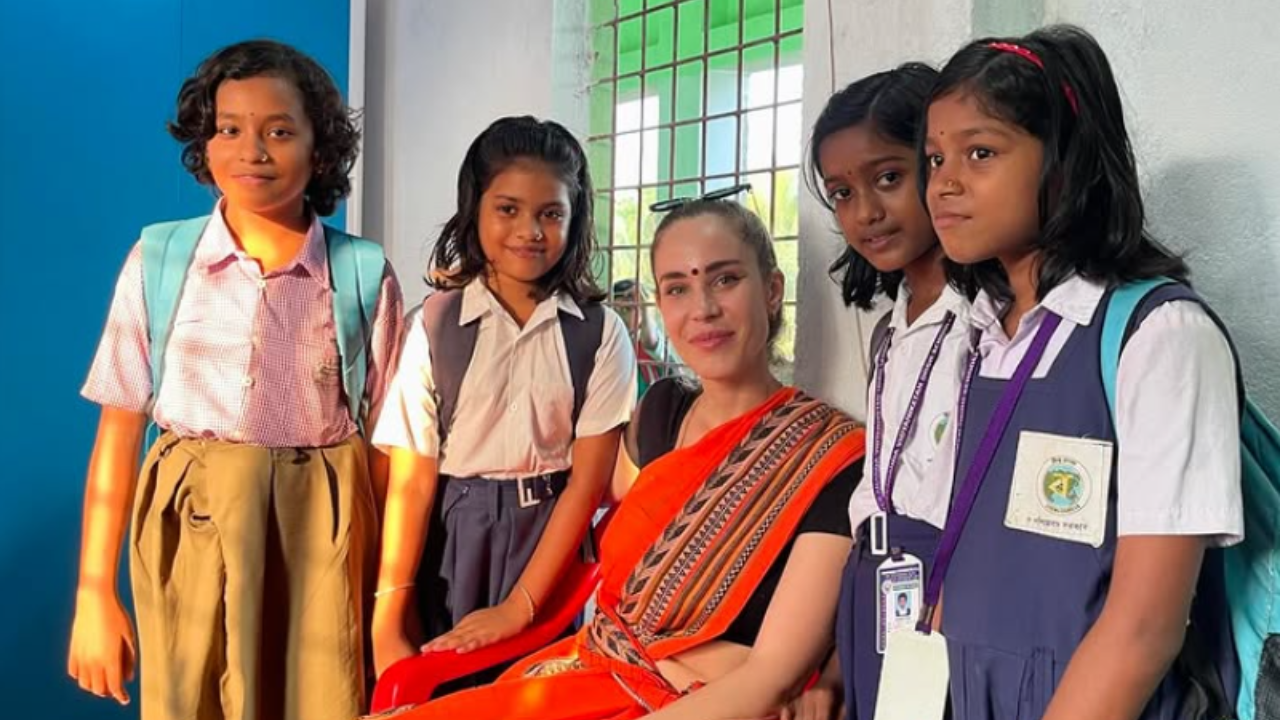
Sandra Lavie with her students. (Image courtesy: Instagram/@sandralavie)
Most people who leave a comfortable life behind still pack for comfort. Sandra didn't. "I resigned from my job, left my comfortable life behind and flew to India with almost nothing," she says. "The contrast was intentional. I went from a life of luxury to travelling with just two shirts and two pairs of trousers."
She travelled through India alone, mostly by train, with no fixed plan and no safety net of familiar faces. "I explored India alone by train, a bit crazy now that I think back and for the first time in my life, I felt completely free. I had very little, yet I had never been happier," she recalls in a conversation with TOI Women.India wasn't easy. It was unfamiliar, unpredictable and often overwhelming. But it also gave her something she had been searching for all along.
From boardrooms to washing clothes by hand
Initially, she believed supporting existing organizations financially would be enough. But the more she observed, the more she realized many projects struggled because of poor implementation."My original intention was to financially support existing organizations. However, as I became more involved, I discovered recurring issues, including financial mismanagement and ineffective development work. That made me realize I wanted to create something myself, something transparent, sustainable, and built around the actual needs of the people."
She realized change doesn't begin in cities
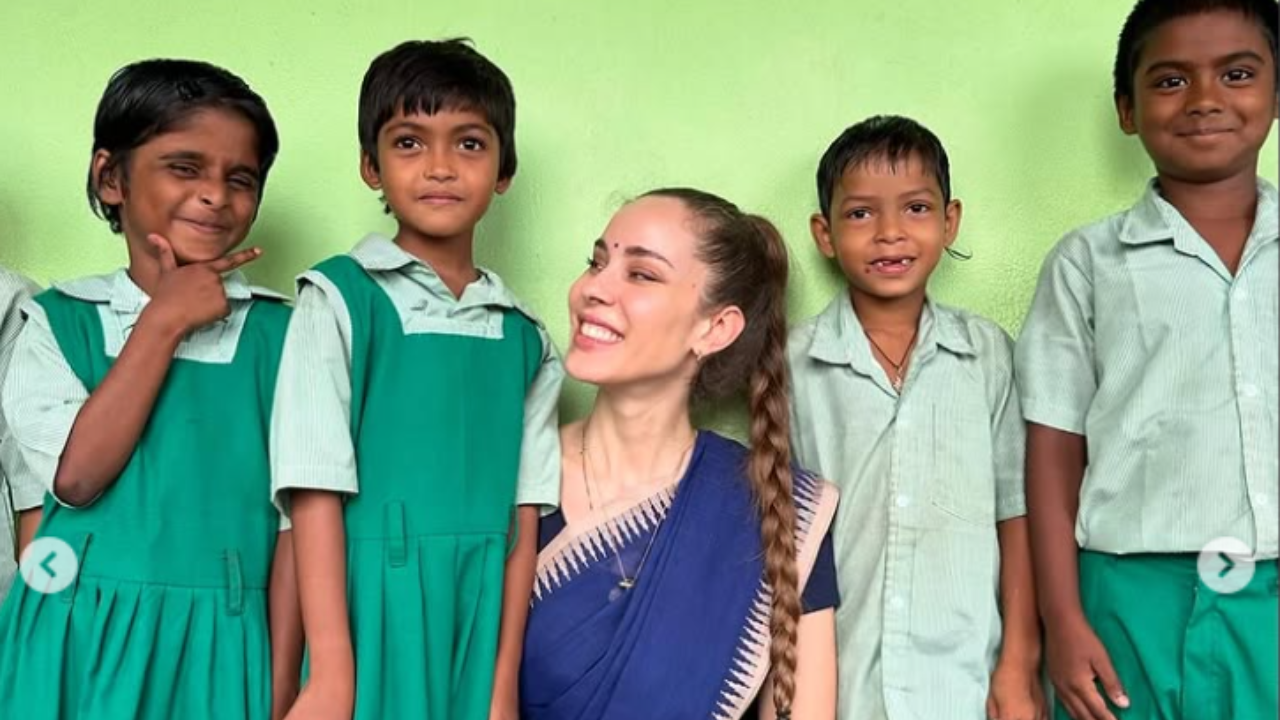
Sandra Lavie with her students.
One lesson stayed with her. "While working in India, I learned one very important thing—that real change starts with villages," she says. She noticed that many families left their villages hoping for a better future in cities, only to end up struggling in overcrowded slums. "If we wanted lasting change, it had to start at the source."So instead of staying in urban centres, she asked local people to take her to villages that outsiders rarely visited.
One journey took her to a remote island after a two-and-a-half-hour train ride followed by a one-hour boat journey."The island is deeply spiritual and is home to the ashram of Kapila Muni. I still cannot fully explain what brought me there, but I believe everything happens for a reason."Rather than arriving with ready-made solutions, Sandra spent time listening. "I visited three villages on the island and sat down with the villagers to listen to their needs.
Those conversations became the foundation of the project I started 15 years ago."
Knocking on every door
Starting a school was not the hardest part. Convincing parents to trust a foreign woman with their children's future was."As a foreigner I knew the trust of the people had to be earned. I went door to door in villages to ask people to send their children to school," she told TOI Women. Some families were hesitant. Others were curious. Slowly, word spread.
One child became ten. Ten became dozens.Today, Sandra's organization runs a free primary school that educates 150 children across five classes. Another 120 children studying in government schools receive tuition support and nutritious daily meals. The organization also provides sewing training to 20 women, helping them build skills that can lead to financial independence.But Sandra believes education is only one part of the work. "Together with my team, we support primary education, tutoring programs, and the empowerment of women and children.
We also work to raise awareness about domestic violence, child marriage, human trafficking and the importance of education because I firmly believe education creates opportunities and helps break the cycle of poverty and abuse."
The journey began much earlier
When Sandra thinks about why she was drawn towards this life, she often goes back to her childhood."I enjoyed my parents' frequent travels from a very young age. My childhood was marked by the impressions of the most varied destinations and cultures and the journeys in the caravan particularly allowed me to come into close contact with the people in each place."
Meeting people from different cultures, she says, taught her early that the world looks very different depending on where you are born.
"This is my life's mission"
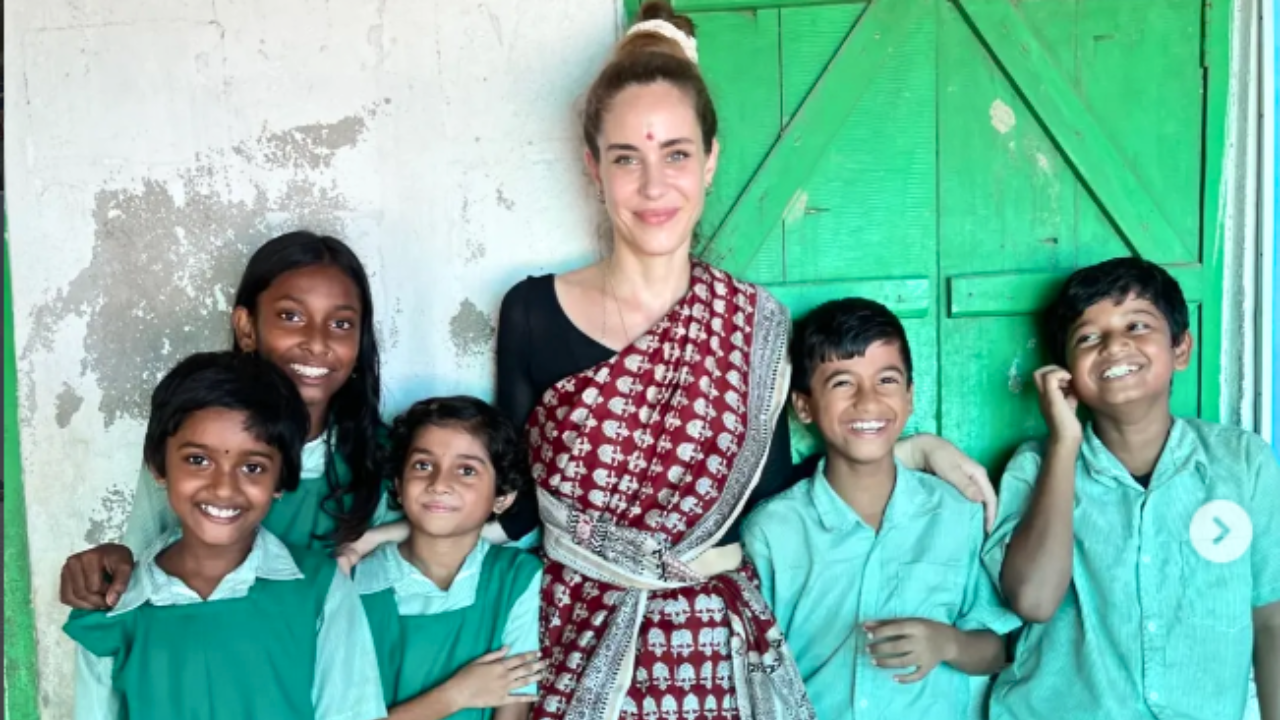
Sandra Lavie with her school students.
Fifteen years after leaving her corporate career behind, Sandra says she has never looked back. She no longer measures success by promotions or pay cheques.Instead, she measures it in classrooms filled with children, women learning new skills and families slowly finding hope. "Material possessions are temporary. They may bring comfort, but they do not bring lasting fulfilment. True purpose comes from serving others, creating opportunities, and standing beside those who have been denied them."And if there's one thing she knows for certain, it's this: "Helping people who are less fortunate is not simply something I do, it is my life's mission. I will continue this work for as long as I live."







 English (US) ·