

 1 week ago
6
1 week ago
6
ARTICLE AD BOX
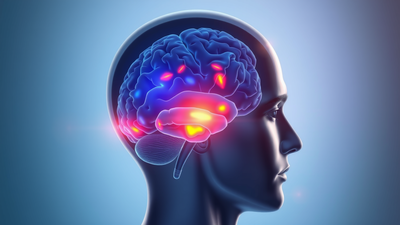
Detailed profile of a human head with a translucent brain scan overlay, highlighting active regions in blue and orange during anesthesia and language processing. Image Credit: TIL Creatives
General anaesthesia, which has long been regarded as a condition where awareness has effectively been turned off, now appears to offer much more potential according to recent studies.
It has always been well-known in the medical community that the brain does not become entirely inactive during anesthesia. However, new research has found that the human brain is still capable of complex language processing even when a patient is entirely unconscious.Scientists at Baylor College of Medicine discovered that during general anaesthesia, the human brain was still able to differentiate between various types of words, respond to the patterns within stories, and even predict upcoming words.
These findings contradict the common understanding of the link between consciousness and cognition while offering new possibilities for studying brain diseases and restoring speech technology.Brain stayed surprisingly activeThe study, titled Plasticity and language in the anaesthetised human hippocampus, was published in the journal Nature on 6 May 2026. Scientists measured the activity of several hundred individual neurons from the hippocampus - the brain part most famous for its involvement in memory and learning.
The measurements were taken from patients undergoing epilepsy surgery while they were under general anaesthesia. In the process, researchers utilised a technology called Neuropixels probes, which enables monitoring the activity of large numbers of neurons at once. The researchers claim that it is the first time such technology has been used to investigate language processing in the hippocampus under the conditions of general anaesthesia in humans.The scientists started by playing a series of repeating tones, occasionally replacing one tone with an unusual sound. The hippocampus detected the difference each time. The brain’s response grew stronger over time, suggesting that some adaptation or learning was still possible despite the patients’ unconsciousness.According to Nature Study, this indicates that the brain retains a degree of plasticity even during general anaesthesia.Unconscious listening to narrativesThe researchers went on to take the experiment one step further by exposing the participants to short spoken narratives, all the while monitoring brain activity. According to the study, patterns in brain activity revealed that the hippocampus was able to differentiate between nouns, verbs, and adjectives from the stories being told. In simpler terms, the unconscious brain wasn't just reacting to sounds; it was actually processing various components of language.Moreover, there was some evidence that neural activity was also reflective of predictions about future words before they were uttered. This cognitive process, called predictive coding, is often discussed in relation to conscious or awake brains.Speaking in a Baylor College of Medicine news release, senior author Professor Sameer Sheth said the findings show that "the brain is far more active and capable during unconsciousness than previously thought."
Co-author Professor Benjamin Hayden noted that predictive coding is usually considered to require consciousness, which made this discovery rather fascinating.
A hyperrealistic human brain, glowing with intricate neural pathways, suggesting complex unconscious processing. Image Credit: TIL Creatives
Why does it matter for comprehending consciousness?These results add new evidence to a scientific debate about the nature of consciousness.In scientific literature, there have long been discussions about whether complex thoughts can be possible without consciousness. This study suggests that at least some sophisticated cognitive functions can occur without consciousness.Consciousness does not stem from the activity of one brain area but rather from the connection between different brain networks working together.According to the ScienceDaily summary of the research, these observations confirm the hypothesis that the brain works with data "in the background" despite the absence of consciousness. These findings also match well-known notions of predictive processing theories of neuroscience stating that the brain creates expectations about incoming data rather than reacts to them.Possible implications for future medical technologyWhile the research is devoted to basic science, it can have practical uses as well.The researchers say the findings could eventually help improve brain-computer interfaces, especially speech prosthetics for people who have lost the ability to speak because of stroke or other brain damage. Also, an interesting analogy was made between brain mechanisms and current artificial intelligence. Large language models create text by guessing what word would come next, depending on the previous context.
It seems that the hippocampus was doing the same while processing verbal information, even though the patients were unconscious.This analogy does not mean that the brain works like artificial intelligence, but it may offer insight into shared principles of biology and AI.The results, however, have a number of critical limitationsFirst of all, the researchers caution against interpreting the findings as proving the unconscious understanding of all activities occurring in the environment by the participants in the experiment.
Second, only one type of general anaesthetic was studied, so the conclusions cannot be generalised to other unconscious states, such as sleep or coma, or to other types of anaesthetics.Finally, the research was limited to the hippocampus and did not cover the whole brain, making researchers wonder about the activity of other brain structures in unconscious conditions.However, the study offers strong evidence that language comprehension may not cease altogether even when consciousness is lost.Future studies of the unconscious brain can significantly change our understanding of its processes.









 English (US) ·