

 1 week ago
6
1 week ago
6
ARTICLE AD BOX
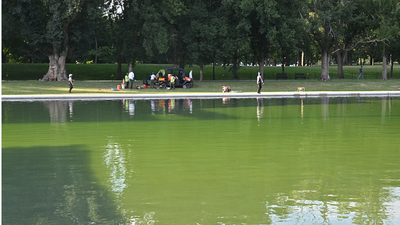
Soon after the Lincoln Memorial Reflecting Pool was resurfaced and refilled with water there was an algae bloom in it. Image Credit: Wikimedia Commons
People who visited the popular Reflecting Pool of the famous Lincoln Memorial in Washington, DC, noticed something unusual. The green hue of the water replaced its usual mirror-like quality that reflected the monument.
While the change in the colour intrigued and led to discussions on social media, scientists say that the phenomenon serves as a reminder of a much broader environmental issue that is happening across the globe.The change in water colour is due to cyanobacteria, commonly known as blue-green algae. While not all cyanobacteria are hazardous, certain species can produce toxins that are dangerous for humans, animals and drinking water.As reported by Phys.org, Steven Chapra, an environmental engineer and Professor Emeritus from Tufts University School of Engineering, says that the conditions in the pool were perfect for the bloom to occur.Why was the Reflecting Pool green?There has always been some algae in the Reflecting Pool at the Lincoln Memorial, but the recent bloom was unique because of the way it covered the entire surface of the water.As per Chapra, there are three components that play a crucial role in the sudden growth of algae.
Those factors are nutrients, sunlight, and warm water. Nutrient-filled water from the Potomac flows into the Reflecting Pool via the Tidal Basin. It gets lots of sunlight on most days and is stagnant. The renovated Tidal Basin has a blue-colored floor, which retains heat in the day and releases it at night.Such conditions create the ideal breeding ground for cyanobacteria. As per Tufts University, such a combination of factors created “a perfect recipe for an algal bloom” as mentioned by Chapra.Why should scientists be concerned about the bloom?What makes the bloom relevant is not just the location where the bloom occurred, but the environment that caused it, which is becoming increasingly common. Based on a study done by Chapra et al. in 2017, published in ACS Publications, climate change may lead to an increase in harmful algal blooms in the contiguous United States by anywhere between two and more than five times the levels recorded historically. Particularly high risks were identified for the northeast United States, due to rising temperatures.Warmer temperatures increase the growth period for the cyanobacteria, and warmer water is beneficial for their growth compared to that of other algae.

The Washington Monument reflecting in the Lincoln Memorial Reflecting Pool after the pool was restored and painted blue. Image Credit: Wikimedia Commons
Why can cyanobacteria pose hazards to humansCyanobacteria are some of the oldest life forms on Earth and occur naturally in lakes, rivers and reservoirs worldwide. If conditions are right, they have the capacity to proliferate quickly and create dense surface scums.According to the World Health Organization (WHO), some cyanobacteria produce toxins that may harm the liver, central nervous system, or skin.
Human exposure can come from ingestion of contaminated water or from recreation like swimming. Dogs are especially susceptible to cyanobacterial toxins because they tend to ingest water while playing in such environments.Apart from their health effects, dense cyanobacterial scums lower water quality and restrict the recreational use of water bodies and adversely impact ecosystems by shading and suffocating the water below.Harmful algal blooms and drinking water sourcesScientists say harmful algal blooms are no longer just an environmental problem; they are also an increasing challenge for drinking water supplies. The most notable case took place in 2014 when about half a million people living in Toledo, Ohio, were warned against using tap water due to its contamination by toxins from cyanobacterial blooms in Lake Erie.According to the U.S. Environmental Protection Agency (EPA), harmful algal blooms can increase the cost of treating water as well as cause temporary drinking problems because of high toxin concentrations.
An incident in Washington state showed how nutrient pollution and a warming climate can create conditions that threaten drinking water reservoirs.Is it possible to prevent such blooms?According to experts, there are ways to minimise blooms by improving water quality management practices.For instance, Chapra claimed that recirculating and treating water from the Reflecting Pool will help decrease nutrient content to the level at which it will inhibit the development of algae while maintaining its reflecting qualities.
He added that repainting the surface with lighter paint can also decrease heat absorption and therefore decrease bloom frequency.However, on a larger scale, scientists point out that preventing nutrient pollution may become the most efficient way. Excess nutrients such as nitrogen and phosphorus enter waterways through agricultural runoff, sewage and livestock waste, fueling rapid cyanobacterial growth.
The United Nations Environment Programme (UNEP) also considers nutrient pollution among the main factors causing algal blooms.Local bloom with global messageWhile the green water in Washington’s Reflecting Pool may eventually clear, experts warn that the broader problem will persist.With continued warming trends and nutrient pollution, algal blooms are anticipated to be a growing problem across the world. Not only is this a cause for concern in terms of its effects on tourist destinations, but also on the many freshwater bodies of water used to supply people with their drinking water.The bloom that occurred in one of Washington’s most recognisable locations is a wake-up call to those concerned about the health of freshwater resources.









 English (US) ·