

 1 hour ago
4
1 hour ago
4
ARTICLE AD BOX
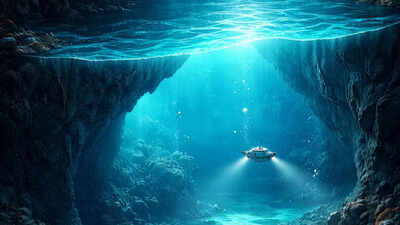
For decades, the idea sounded almost mythical. Fresh water is buried under the Atlantic seabed, sitting quietly off the eastern coast of the United States. Old geological surveys hinted at something unusual, but the data were patchy and easy to ignore.
Then, in 2025, scientists returned to those forgotten coordinates, and what they uncovered appears far from a minor anomaly. Researchers confirmed a vast underwater aquifer formed around 20,000 years ago during the last ice age. Some estimates suggest the freshwater reservoir could supply a city the size of New York for centuries. The discovery feels both hopeful and complicated. A massive water source, untouched by industrial pollution, lies offshore. Yet surrounded by legal uncertainty, engineering challenges, and environmental questions, no one seems fully prepared to answer.
Scientists confirm a hidden fresh water source under the ocean floor
The story reportedly begins in Cold War archives. Old US geological records showed faint signals of fresh water beneath saltwater sediments near the New Jersey coastline. Scientists suspected trapped glacial meltwater, but the evidence was incomplete.Interest resurfaced when an international team launched Expedition 501 in 2025.
Using the liftboat L/B Robert, researchers drilled three holes off Martha’s Vineyard and Nantucket between May and August. The operation retrieved more than 13,000 gallons of water from depths reaching roughly 400 metres below the seafloor.Salinity varied across sites. Water closest to Nantucket measured about one part per thousand, well within drinking standards. Further offshore, salinity rose but remained far below seawater levels.Experts say the discovery confirms a massive subsea freshwater aquifer rather than isolated pockets.
Ice-age meltwater trapped beneath the seabed for 20,000 years
The leading explanation seems rooted in the last glacial maximum. Around 20,000 years ago, sea levels were much lower and vast ice sheets covered parts of North America. The immense pressure of glaciers forced meltwater deep into coastal sediments.Rising seas flooded the continental shelf, burying the freshwater deposits beneath layers of clay and silt.
These marine sediments formed a natural seal that appears to have preserved the reservoir for millennia. Scientists analysing isotopic signatures and noble gases say the water likely represents a mix of glacial melt and rainfall trapped during that period. A frozen memory of Earth’s climate history.
Scientists study water quality inside ancient subsea aquifer
One of the most intriguing aspects involves water quality. Because the aquifer formed long before industrialisation, researchers say it may be free from modern contaminants such as PFAS chemicals and agricultural runoff.Yet scientists urge caution. Some experts believe the water has interacted with surrounding rocks for thousands of years, potentially increasing dissolved mineral content. That could make treatment necessary before any human use.
Who owns offshore freshwater remains unanswered
The reservoir lies within the United States Exclusive Economic Zone, a maritime area where the federal government controls natural resources. Oil, gas, and minerals are regulated here.
Freshwater extraction, though, sits in a legal vacuum. No permitting frameworks. No environmental review guidelines tailored to subsea aquifers. No precedents for ownership or management. Researchers say governance simply hasn’t caught up with science.
Scientists study risks before tapping offshore aquifer
Even if legal hurdles were resolved, technical barriers remain substantial. Estimating the reservoir’s total size requires complex modelling of sediment porosity, hydraulic connectivity, and geological structure across a formation potentially stretching from New Jersey to Maine. Scientists are still analysing core samples in laboratories.Extraction itself poses risks. Pumping could trigger saltwater intrusion from above, destabilise sediments, or disrupt seabed ecosystems. Conventional groundwater techniques don’t translate easily to marine environments.









 English (US) ·