

 6 days ago
6
6 days ago
6
ARTICLE AD BOX
On occasions like International Women’s Day, it’s tempting to fall back on familiar phrases—calling women “goddesses,” celebrating them as the “fairer sex,” or praising their “softness.
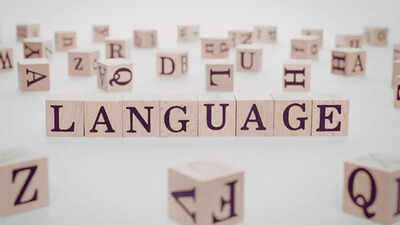
” But do these clichés truly reflect equality, or do they quietly reinforce outdated ideas?In this thought-provoking narrative, a speaker challenges a group of bright college students to look beyond surface-level praise and examine something far more subtle yet powerful: the language we use every day. Through a simple but striking classroom exercise involving Tamil and Telugu translations, she uncovers how deeply ingrained gender bias can be—right from our homes and childhood conversations.
The piece ultimately argues that real change doesn’t begin with grand speeches or slogans, but with small, conscious shifts in how we speak—because language not only reflects our beliefs, it shapes them.I was to address a bunch of college students on Women’s Day. The students of a prestigious IIIT, no less. What can you tell these brilliant young minds that they don’t know? I knew that cliches like ‘Women are like Goddesses on earth’ or that they represent ‘the softer side of life’ or they are the ‘fair sex’ wouldn’t work.
After all, if even I, someone more than double their age, don’t believe these anymore, why should they? I was mulling this over for a few days and hit upon the key idea just a few minutes before the talk.
I decided to pick on where we begin our change. Many of us, even champions of equality, have some unconscious habits that show there is still some way to go, and the obvious place to begin is HOME.I began my talk by saying that I am conversant in two languages intimately, as used in their native environments.
So, my experiments would be based on these languages. I asked my audience how many of them spoke Tamil or Telugu. Quite a few hands went up. So, I called a couple of them to help me translate a few English sentences into their language, in casual, day-to-day usage and write them on the board. Here is the dialogue I had with the students: ME: Father is coming.Tamil Student: Appa Varaanga. Telugu Student: Nanna garu vastunnaaru.ME: Bus is coming. Tam: Bus Varudu. Tel: Bus vastunnadi.Me: Dog is coming.Tam: Naay varuthu. Tel: Kukka vastunnadi.Me: Brother is coming.Tam: Thambi varaan. Tel: Tammudu vastunnaadu.Me: Sister is coming.Tam: Thankacchi …Tel: Chelli ….. There was a long pause. They got an idea of what I was trying to say. I insisted. They hesitantly wrote the answer. Tam: Thankacchi Varuthu. Tel: Chellu vasthunnadi. I pushed harder. “Come on, let us take it further.” Me: Mother is coming.Tam: Amma…. Tel: Amma ….Both of them dropped their markers and said, “We got it, mam.” But then we have to spell it out for all. The answers were…Tam: Amma Varuthu. Tel: Amma vastunnadi. Now go back a few lines and check what else has been referred to in the same terms.While the father gets full respect, the brother gets acknowledgement as a peer, the sister, and the most venerated mother are treated on par with a pet dog or even an inanimate object. Let me clarify here. It is not my case that Indians don’t love their mothers. We do. Perhaps more than many other cultures. She is the super-perfect, all-time go-to person in our lives. Why, most of our movies about maternal love are box-office hits. It is not my case that this happens only in Tamil and Telugu cultures either. I profoundly apologise if I have given this impression. I have taken these examples because these are languages I know very well.
I have lived in these places and understand their cultures. In fact, this is an example of majoritarian language use. There may be regional and community variations. There must be similar non-gender-balanced words in other languages, too, if not in this context, in some other context. So let me clarify that these are just examples. Going back to the examples, the immediate reaction I get when I point out this language discrimination is that ‘It is out of greater closeness.’
Well, even lady teachers and female colleagues are referred to in the same way. Does this mean we are ‘close’ to them? Let us accept it. We take women for granted. But more importantly, consciously or unconsciously, we are all part of it. It is happening right before our eyes. At home.
And right from childhood. It is manifest in our everyday language. Our language expresses our thoughts, and those thoughts reflect our attitudes and beliefs. If we believe there must be equality, we need to consciously reverse this process. And the most powerful way to start this is through LANGUAGE. Let us start early and start at home. If we start using gender-balanced words with our kids, right in our homes, in our primary schools, in the playground, we can reorient our thoughts, thereby building the right values. There is no doubt that the concept of gender sensitivity will be deeply etched into our culture once again. Our language can become the chisel to sculpt our culture.Authored by : V.G. Bhooma. She is a senior Indian Railway Personnel Service (IRPS) officer, currently serving as the Additional Member (HR) and Additional Member (Staff) at the Railway Board, Ministry of Railways.






 English (US) ·