

 1 hour ago
3
1 hour ago
3
ARTICLE AD BOX
Last Updated:May 14, 2026, 11:43 IST
On Day One itself, Udhayanidhi Stalin made it clear that while Vijay may now occupy the Chief Minister’s chair, the DMK intended to assert its political seniority inside the House.


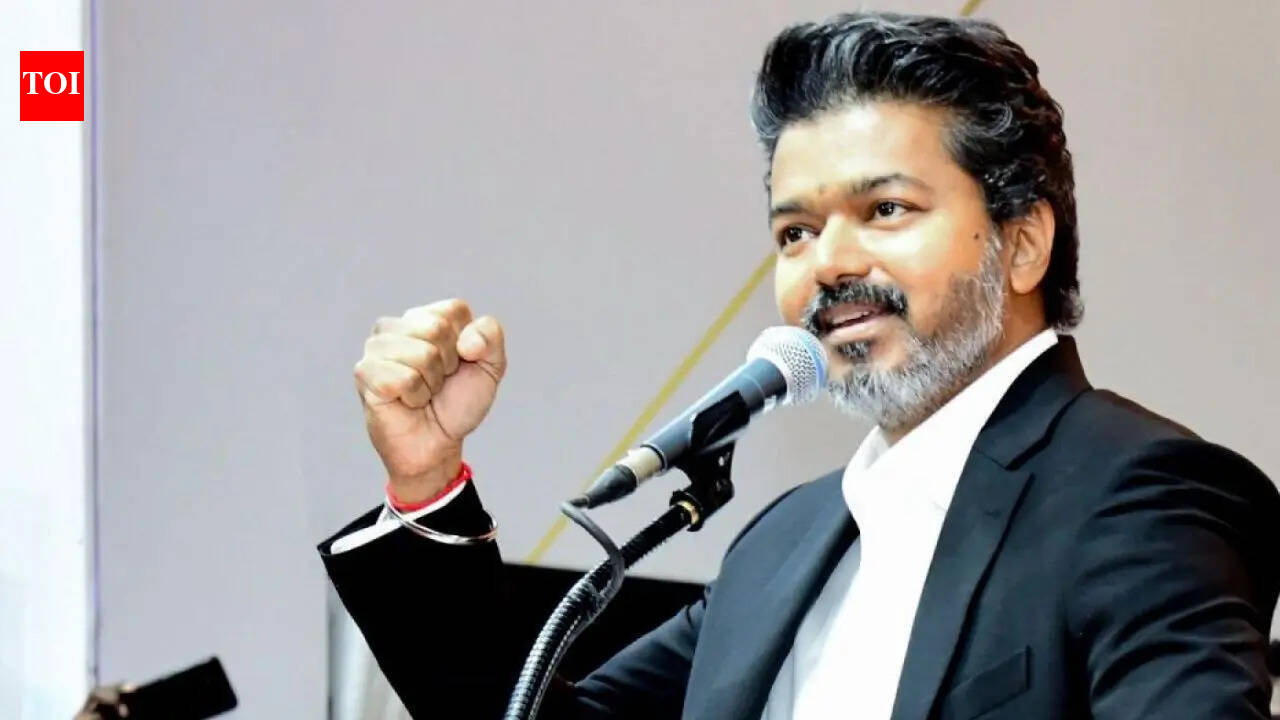
Udhayanidhi Stalin Jabs At Vijay (Photo: X)

This is no ordinary rivalry. It is shaping up as a larger battle between two sharply different political projects — one rooted in the entrenched Dravidian establishment, the other attempting to position itself as a disruptive political alternative.
Udhayanidhi Stalin walks into the House as the political heir to the DMK’s vast ideological machinery, the son of MK Stalin, the inheritor of the Dravidian legacy, and the face of a system that has long defined Tamil Nadu’s governance model.
Vijay, on the other hand, enters as something very different — a mass political experiment built not on organisational legacy, but on personal charisma, anti-establishment sentiment, youth appeal and cinema-fuelled public energy through Tamilaga Vettri Kazhagam (TVK).
Inside the Assembly, this battle may appear legislative. In reality, it is deeply political.
On Day One itself, Udhayanidhi Stalin made it clear that while Joseph Vijay may now occupy the Chief Minister’s chair, the DMK intended to assert its political seniority inside the House.
In his speech, Udhayanidhi struck a mix of humour, symbolism and sharp political messaging. Referring to their shared educational background, he said both he, Vijay and the Speaker had studied at the same college — Loyola — but quickly turned that into a political punchline.
“Even if we studied in the same college, DMK is the senior batch in politics and governance. We came to power in 1967. We have that experience," he said, in what was widely seen as a pointed reminder that while TVK may be the new ruling force, DMK is the senior batch.
The line was politically loaded. It was not just banter — it was DMK framing itself as the experienced Dravidian establishment and TVK as the newcomer still learning governance.
Udhayanidhi also signalled that the DMK would play the role of a vigilant but constructive opposition, stressing that the party’s electoral strength showed people had not handed TVK unchecked dominance. At the same time, by invoking DMK’s long governance history, he subtly positioned himself as both heir to that legacy and its current defender against Vijay’s disruptive politics.
In essence, his message was simple: Vijay may lead the government now, but DMK still sees itself as Tamil Nadu’s political old guard – the “senior batch" watching the freshman government closely.
At one level, the clash is governance versus promise politics.
The DMK, through Udhayanidhi, is likely to repeatedly question TVK’s administrative experience, policy seriousness and institutional depth. For a party like the DMK, which thrives on projecting itself as governance-tested, attacking TVK’s inexperience could become a central line of assault.
But Vijay’s counter is equally potent. He has the space to sharpen attacks on corruption, dynasty politics, unemployment, institutional fatigue and public frustration with traditional power structures. Every intervention from Vijay can potentially be crafted not merely as opposition, but as a larger indictment of old-order politics.
The sharper contest, however, may be over youth.
Both Udhayanidhi and Vijay are fishing in the same electoral waters — aspirational young Tamil Nadu. Udhayanidhi’s pitch is likely to be that of a next-generation administrator emerging from governance continuity. Vijay’s pitch is more emotionally disruptive — the outsider promising transformation, unburdened by traditional political baggage.
That makes this rivalry especially dangerous for both. It is not just about who speaks better in the Assembly, but who owns the future voter.
And in Tamil Nadu, cinema is never far from politics.
The state’s political history is deeply shaped by actor-politicians — MG Ramachandran, J Jayalalithaa and, in more fragmented ways, Kamal Haasan.
Vijay’s arrival inside the Assembly inevitably triggers comparisons with these larger-than-life precedents. But unlike MGR or Jayalalithaa, Vijay’s immediate test is not merely public adoration — it is legislative legitimacy.
Can he move from mass hero to political performer?
That is where Udhayanidhi becomes crucial. Because unlike street politics or campaign rallies, the Assembly offers structured confrontation. Udhayanidhi is likely to lean on data, welfare architecture, policy continuity and ideological positioning. Vijay’s strength, meanwhile, lies in symbolic punches, emotional resonance and sharp messaging designed not just for those inside the House, but for those watching outside.
And that is perhaps the most important point — the real battlefield may not be the Assembly floor at all.
The real war will likely play out on social media reels, meme ecosystems, first-time voters, urban middle-class dissatisfaction, television narratives and digital political storytelling.
Every line delivered inside the Assembly could become political ammunition outside it.
For Vijay, a strong Assembly performance could do three things at once — legitimise him beyond cinema, consolidate anti-DMK sentiment and rapidly expand TVK’s image as a credible statewide force.
For Udhayanidhi, effectively countering Vijay is equally critical. It is not merely about debating the Chief Minister — it is about proving he can carry the DMK’s future against a high-voltage challenger.
Then came one of the more striking moments of political timing.
During Vijay’s first Assembly session, Udhayanidhi Stalin revived his controversial “eradicate Sanatan Dharma" line, declaring directly in the House: “Sanatan, which divided people, should be eradicated."
It was a loaded ideological signal, delivered while staring at Vijay.
Vijay’s response was notably restrained. Without directly entering the Sanatan minefield, he folded his hands and replied with calibrated inclusivity: “Everyone is important here. Even if they are from a party with just one candidate, their opinion will be treated equally to TVK’s. Good suggestions will be accepted, and bad suggestions will be rejected."
It was politically cautious — avoiding direct ideological confrontation while projecting administrative balance.
But within hours, Vijay’s own appointment of his personal astrologer as Officer on Special Duty triggered a storm, creating a striking contrast between DMK’s anti-Sanatan rhetoric and TVK’s astrologer optics.
The timing alone fuelled political chatter. Then there was the symbolism of Vijay’s first courtesy visit to former Chief Minister M.K. Stalin’s Alwarpet residence.
The optics were warm — handshakes, embraces, shawls and bouquets. Udhayanidhi greeted Vijay personally at the door, while M.K. Stalin’s hug sent a message of institutional civility despite political rivalry.
But perhaps the sharpest symbolic gesture was the book Udhayanidhi presented to Vijay — “Kaalathin Niram Sivappu Karuppu" (“The Colour of the Times is Black and Red").
This was not a casual gift.
The 1,120-page volume is essentially a political document chronicling 75 years of DMK history, ideology and national influence, featuring essays from more than 80 leaders and public figures.
In political terms, it was almost a statement: before you attempt to rewrite Tamil Nadu’s future, understand who shaped its past. That single gesture captured the deeper subtext of this rivalry. The DMK continues to signal legacy, ideological depth, while Vijay is attempting disruption, emotional connection and political reinvention.
Tamil Nadu may now be witnessing not just a contest between two leaders, but between inheritance and disrupt or politics.
Handpicked stories, in your inbox
A newsletter with the best of our journalism
News india Senior Batch Vs New Wave: Inside Tamil Nadu’s Defining Udhayanidhi-Vijay Political Clash
Disclaimer: Comments reflect users’ views, not News18’s. Please keep discussions respectful and constructive. Abusive, defamatory, or illegal comments will be removed. News18 may disable any comment at its discretion. By posting, you agree to our Terms of Use and Privacy Policy.
Read More



 English (US) ·