

 1 hour ago
7
1 hour ago
7
ARTICLE AD BOX
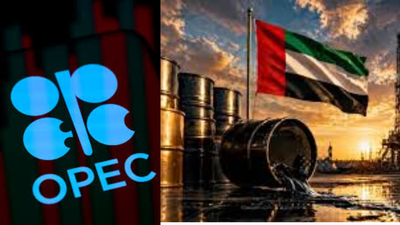
The United Arab Emirates' exit from OPEC has stirred up a whirlwind of uncertainty in the oil sector, prompting analysts to ponder the future of the cartel. While the UAE boasts considerable production capabilities, the market's reaction has been surprisingly subdued, likely due to distractions from other geopolitical shifts. However, Opec is unlikely to collapse overnight.
When the United Arab Emirates announced that it would leave OPEC, the oil market did not panic. That calm was revealing. A 66-year-old cartel had just lost one of its most important members, a Gulf producer with money, ambition, and spare capacity, and the market seemed almost too distracted to care.TL;DR: Driving the newsThe UAE’s surprise decision to leave Opec has triggered one of the cartel’s biggest crises in decades, raising a blunt question for global energy markets: Can Opec survive without one of its most important producers?According to an FT report, oil markets barely flinched after Abu Dhabi announced its exit. Brent crude continued rising, but traders were more focused on the Iran war and the closure of the Strait of Hormuz than on the UAE’s departure from the 66-year-old oil cartel.That muted reaction may itself be the warning sign. Analysts told FT that Opec’s influence has already been eroded by rising output from non-Opec producers, especially the US, and by the cartel’s struggle to enforce production discipline.“This is the beginning of the end of Opec,” Saul Kavonic, an energy analyst at MST Financial, told FT. “Saudi Arabia will struggle to keep the rest of Opec together. We could see other members follow suit, including Venezuela.”
The UAE said it was leaving so it could raise production independently and respond to long-term market demand. But the move lands far beyond oil policy.As per an NYT report, the UAE announcement came just as Saudi Crown Prince Mohammed bin Salman opened a Gulf summit, making the timing a powerful symbol of Abu Dhabi’s growing willingness to challenge Saudi-led regional structures.Why it matters
- Opec’s power rests on coordination: producers agree to raise or cut supply to shape prices. The UAE’s exit weakens that mechanism by removing one of the few members with real spare capacity.
- Jorge Leon, head of geopolitical analysis at Rystad Energy, told FT that the UAE is one of the few members, alongside Saudi Arabia, with “meaningful spare capacity,” which is how the group influences the market and responds to shocks.
- “Its departure therefore removes one of the core pillars underpinning Opec’s ability to manage the market,” Leon said.
- “A structurally weaker OPEC, with less spare capacity concentrated within the group, will find it increasingly difficult to calibrate supply and stabilize price,” Leon told AP.
- The risk is not immediate collapse. The risk is slower decay: less credibility, weaker compliance, more producers testing Saudi Arabia’s patience and eventually more oil hitting the market outside the cartel’s control.
- According to a Bloomberg report, officials from other Opec+ members were blindsided, though several did not expect an immediate wave of exits. The group is likely to stay together for now but will lose part of its power over the oil market, as per a Reuters analysis.
The big pictureOpec has survived many shocks since its founding in 1960, from wars and embargoes to price crashes and the rise of US shale.
But the UAE’s exit is different because it comes from inside the Gulf core, not from a smaller or marginal member.Qatar, Ecuador, Indonesia and Angola have left before. But FT noted that the UAE is the cartel’s third-biggest producer and one of its most influential members. Reuters reported that Abu Dhabi was producing around 3.4 million barrels a day before the Iran war disrupted Gulf flows, and could eventually lift capacity toward 5 million barrels a day.That makes the UAE’s move a direct hit to Saudi Arabia’s leadership.For years, Riyadh has favored managing supply to support higher prices. Abu Dhabi has wanted to monetize its expanded capacity before the energy transition reduces long-term oil demand. NYT reported that the UAE has increasingly pursued its own economic and foreign-policy interests, even where they collide with Saudi preferences.“While Saudi Arabia aims to sustain oil markets for the next century, the U.A.E.
feels no such urgency,” Bachar El-Halabi, senior analyst in Dubai for Argus Media, told NYT.The split reflects a broader Gulf rivalry. NYT, Bloomberg and The Conversation all described tensions over Yemen, Sudan, Iran, business competition and regional leadership. The UAE’s Opec exit is therefore not just an energy story. It is a signal that Abu Dhabi no longer sees Saudi-led institutions as binding.“It is an Emirati declaration of independence,” Kristin Diwan, a senior resident scholar at the Arab Gulf States Institute in Washington, told NYT.
“They no longer feel beholden to institutions that don’t align with their interests.”Between the linesThe war with Iran has scrambled the immediate oil-market impact.The Strait of Hormuz - through which about one-fifth of global oil normally moves- remains the bigger short-term driver. With that chokepoint effectively closed, Gulf producers cannot freely export anyway. That makes Opec quotas less relevant for now.Michael Brown, research strategist at Pepperstone, told AP, “As for crude in the here and now, all that really matters is whether the Strait of Hormuz is open or closed.”But once flows normalize, the UAE’s independence could pressure prices lower. UBS analysts told FT the exit is unlikely to move prices much immediately but could weigh on prices over the longer term if the UAE produces more.Bloomberg quoted Clayton Seigle of the Center for Strategic and International Studies saying, “If oil producing capacity is leaving the cartel’s influence, that’s bearish” over a three-to-five year period.The deeper threat for Opec is the domino effect. If the UAE proves it can gain flexibility without paying a serious diplomatic or market cost, others may push harder for special treatment. FT quoted Raad Alkadiri of CSIS saying the UAE’s departure would probably not be “fatal” unless it sparked other exits.“The end of Opec has been written a whole host of times, and Opec has been able to adapt,” Alkadiri told FT. But he added that if Venezuela, Iraq or Iran considered leaving, the organization would be significantly weakened.
- What they are saying
Saudi-linked voices are playing down the damage. Mohammad al-Sabban, Saudi Arabia’s former senior oil adviser, wrote on X, according to FT, “The UAE’s exit will not have much impact on global oil markets, as it has been and still is exceeding its production quotas.” He added, “It has always been ‘the naughty boy’.” - Emirati officials deny the move targets Saudi Arabia. NYT reported that UAE Energy Minister Suhail Al Mazrouei said the decision had “nothing to do with any specific producer,” adding that Saudi Arabia and the UAE are “brothers.”
- But analysts see a political message. “This smacks of a political motive far more than an oil market motive,” Alkadiri told FT. “It speaks to the geopolitical faultlines in the Middle East as much as it does to anything market related in the short- to medium-term.”
- Abdulkhaleq Abdulla, an Emirati political scientist, told NYT, “What we’re seeing today is like a new U.A.E.” He added, “This is how the UAE will be behaving, and will be conducting itself regionally, globally.”
What's nextOpec can survive the UAE’s exit - but it will survive as a weaker, more Saudi-centered group.Saudi Arabia will still have enormous influence because it remains the producer most capable of cutting or adding supply at scale. As Gary Ross told Reuters, “At the end of the day, Saudi Arabia was essentially OPEC - the only country with spare capacity.”The bigger challenge is Opec+. Reuters reported that the wider alliance’s share of global oil production would fall after the UAE exit but remain substantial.
FT quoted Alkadiri saying the key test is whether Saudi Arabia can keep that broader, more fragile coalition together.“If Saudi leadership holds that more fragile alliance together, the impact of the UAE departure can be managed,” Alkadiri said.The bottom line: Opec is unlikely to collapse overnight. But the UAE’s exit strips away capacity, credibility and Gulf unity at once. The cartel may endure - but its era as the unquestioned referee of oil markets looks increasingly over.(With inputs from the agencies)







 English (US) ·