

 44 minutes ago
3
44 minutes ago
3
ARTICLE AD BOX
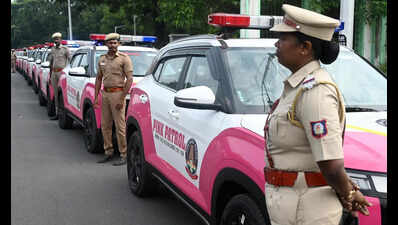
Chennai: Chief minister C Joseph Vijay’s flagship inaugural announcement for women’s safety – the Singapen Special Task Force – has come into existence, but without any teeth nor the wherewithal to achieve anything.A week after the announcement, the govt has formed the special force under an inspector-general of police rank officer K Bhavaneeswari, along with 36 personnel of different ranks. That is, a mere 36-member force across 37 districts and nine city police commissionerates.But the state already has a special unit -- the Crime Against Women and Children (CAWC) wing-- headed by an additional-director general of police (ADGP) rank officer, supported by an inspector-general and a network of specialised units spread across districts and commissionerates.
Official data show that the CAWC wing currently has a strength of nearly 5,300 personnel, including 1,635 Child Welfare Police Officers.Tamil Nadu also has 244 all-women police stations, 32 Anti-Human Trafficking Units, seven Investigative Units of Crime Against Women, 43 Anti-Child Trafficking Units and 39 Special Juvenile Police Units functioning across the state.Despite this elaborate structure, chief minister Vijay’s new 36-member Singapen Special Task Force appears to mirror many of the same functions already entrusted to the CAWC wing — surveillance, identification of vulnerable zones and monitoring of crimes against women.
Police sources said many of the personnel are being redeployed from existing units, leading to concerns that the initiative may merely redistribute already stretched manpower. “This newly created post has simply paved the way for another posting for an IPS officer,” said another officer. Chennai city alone already has close to 79 personnel attached to the CAWC structure, besides Pink Patrol teams, awareness programmes and digital initiatives like the Kavalan Udavi app.Experts say that the government risks creating another layer of bureaucracy without addressing the core issues affecting women’s safety.Senior police officers say the CAWC often functions more as a monitoring and coordinating agency rather than an empowered operational wing. “Even senior officials in the CAWC cannot independently take key decisions such as registering FIRs. Most matters ultimately go to the Commissioner or DGP-level leadership,” said a senior police officer.Former DGP C Sylendra Babu said policing needs to focus more on tracking repeat sexual offenders and strengthening preventive intelligence rather than repeatedly launching new branded initiatives. “Maintaining offender databases and continuous field surveillance are more effective than symbolic announcements,” he said.S Aravindhan, a retired senior police official, said without dedicated recruitment, stronger investigative autonomy, coordination with district police and measurable accountability, he said the Singapapen force risks becoming another visibility-driven exercise rather than a meaningful intervention in women’s safety.








 English (US) ·