

 1 hour ago
3
1 hour ago
3
ARTICLE AD BOX
Last Updated:March 28, 2026, 08:19 IST
Can any leader rename a global waterway? And if not, why does such rhetoric matter, especially in the throes of a war?


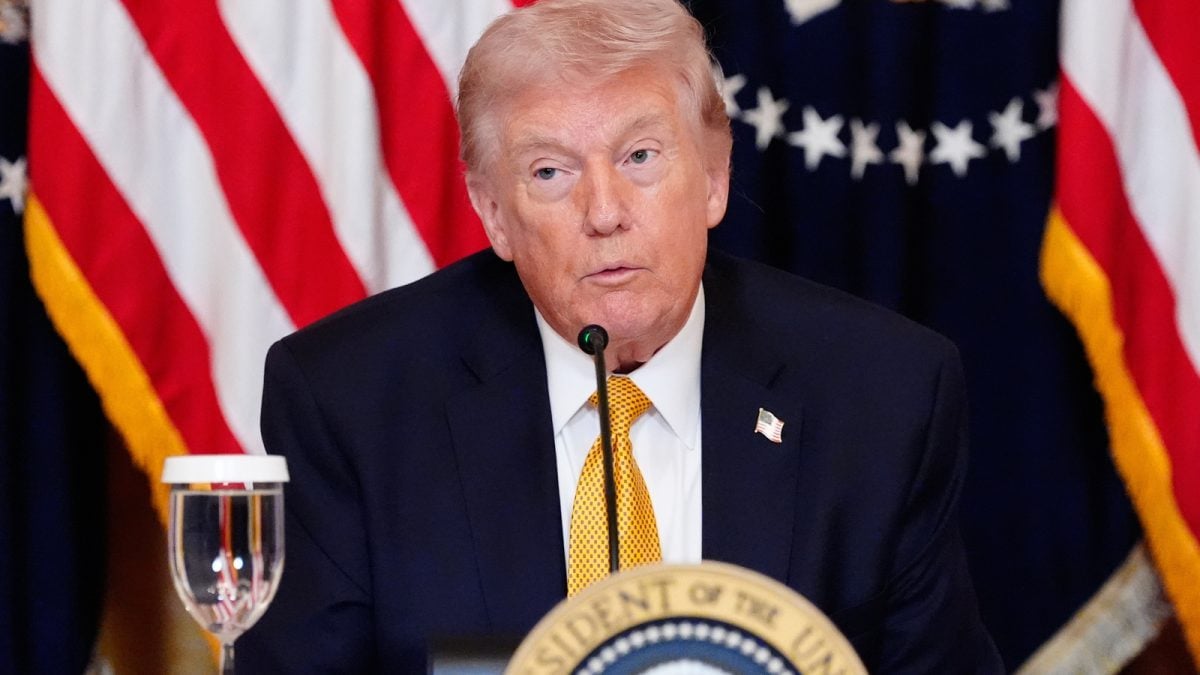
Trump’s characteristic style often blurs the line between off-the-cuff remarks and calculated messaging. (AFP)
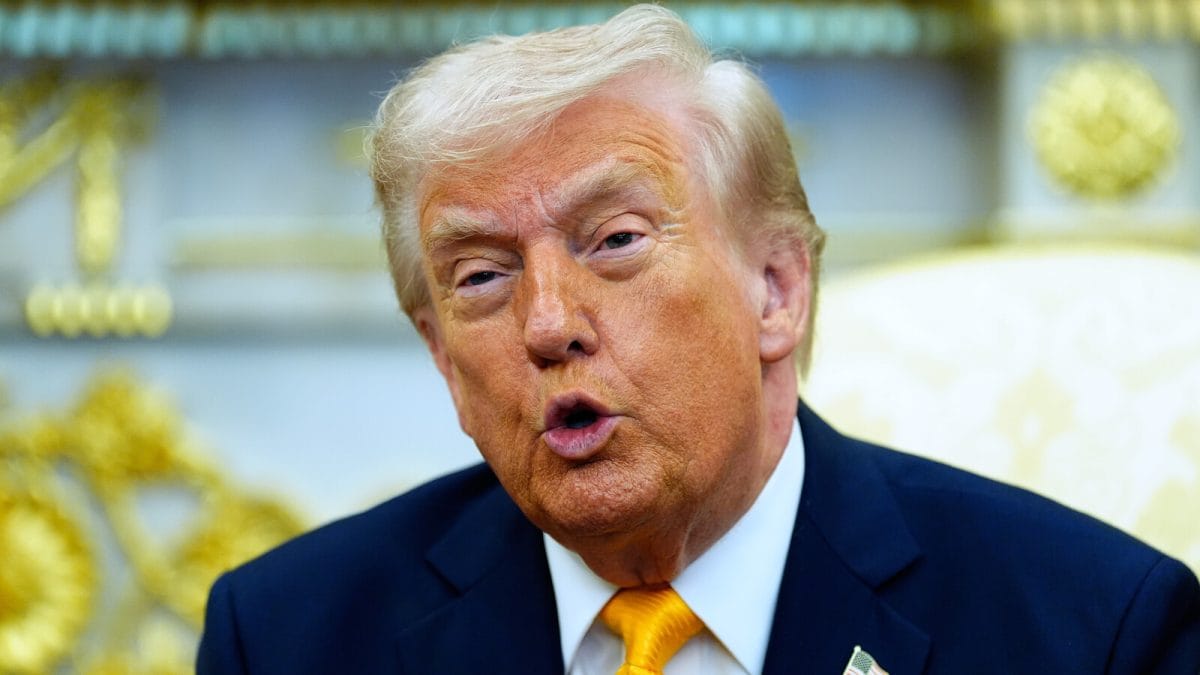
Donald Trump loves renaming landmarks after himself. On Friday, amid the escalating Iran war, the US President took his penchant a notch further when he insisted that Iran must open up the Strait of Hormuz to oil traffic to make a peace deal and dubbed the crucial waterway the “Strait of Trump".
Trump, who has renamed several buildings in Washington after himself during his second term, said his comment was a “mistake", but then quickly added that “there’s no accidents with me".
While his comment sparked a mix of amusement and disbelief, beyond the headline-grabbing moment, lies a more serious question: Can any leader, even a US President, rename a global waterway? And if not, why does such rhetoric matter?
Can You Actually Rename The Strait Of Hormuz?
The one-word answer is No.
International waterways like the Strait of Hormuz are governed by global conventions such as the United Nations Convention on the Law of the Sea and long-standing geographic consensus. No single country has the authority to unilaterally rename them.
Such names are recognised through international usage and mapping bodies, embedded in treaties, navigation systems, and global commerce, and maintained by broad international agreement, not political decree. So, legally speaking, the “Strait of Trump" does not and cannot exist.
Why Is The Remark Crucial Then?
Even if it has no legal standing, the comment is not insignificant because in geopolitics, language is power.
ALSO READ | After Hormuz, Is Bab al-Mandeb Strait Iran’s Next Flashpoint? Here’s What It Means For Oil & Prices
Naming something, even rhetorically, can imply influence, control, and ownership. And this is exactly where the remark shifts from a joke to a potential signal.
Trump’s characteristic style often blurs the line between off-the-cuff remarks and calculated messaging. Referring to Hormuz in personal terms fits a broader pattern where he chooses to personalise geopolitical spaces, attempts to assert dominance through rhetoric, and plays on ambiguity by saying something provocative and then downplaying it. Cue his sudden decision to suddenly pause military strikes by the United States on Iran for five days, bringing back the infamous term TACO, which stands for “Trump Always Chickens Out".
Even when walked back, such statements can test reactions and reshape narratives. The situation becomes more mercurial as it comes in the context of an all-out war.
The Strait of Hormuz Is Too Important for ‘Jokes’
The significance of Hormuz makes any such remark more consequential. Nearly 20 per cent of the world’s oil supply flows through it. It is the main gateway between the Persian Gulf and global markets and even the smallest disruption can trigger energy shocks worldwide.
Rhetorical assertions of controlling the global economic lifeline can not only lead to economic fallouts but also prolong hostilities.
The timing of the remark is also crucial.
Amid rising tensions with Iran, the US has pressured Tehran to keep the strait open, warned against any blockade, and positioned itself as the guarantor of maritime security. Iran, meanwhile, has repeatedly maintained that the strait is only closed for enemy country ships, warning that allies of the US standing against Tehran will not gain access to the arterial chokepoint.
ALSO READ | Trump Thought Iran War Would Be Cakewalk. Five Reasons Why He Was Wrong
Given the context, calling it the “Strait of Trump" can be read as more than humour; it echoes a broader posture of asserting dominance over a global lifeline.
Not Just Foreign Policy But A Domestic Message Too
Trump’s rhetoric often operates on two levels. Internationally, it signals unpredictability and strength, while domestically, it reinforces a familiar image of a leader in control who is willing to break convention and project power in unmistakable terms.
The remark is also political theatre, aimed at audiences back home as much as adversaries abroad.
Symbolism vs Reality
While no leader can officially rename a global waterway, symbolic language still shapes geopolitical perception.
History shows that naming reflects influence and perception can be as powerful as policy. In volatile regions, even casual remarks can ripple into real-world consequences, from market reactions to diplomatic tensions.
Location :
United States of America (USA)
First Published:
March 28, 2026, 08:19 IST
News explainers 'Strait Of Trump'? Here's Why Even The US President Can't Rename The Hormuz Artery
Disclaimer: Comments reflect users’ views, not News18’s. Please keep discussions respectful and constructive. Abusive, defamatory, or illegal comments will be removed. News18 may disable any comment at its discretion. By posting, you agree to our Terms of Use and Privacy Policy.
Read More





 English (US) ·