

 5 days ago
7
5 days ago
7
ARTICLE AD BOX
Last Updated:May 22, 2026, 17:55 IST
In high-stakes criminal litigation, the choice of the surrender venue is a carefully timed chess move


Jabalpur houses the principal bench of the Madhya Pradesh High Court, where Samarth Singh’s pre-arrest bail arguments were actively playing out before their withdrawal on Friday. File image
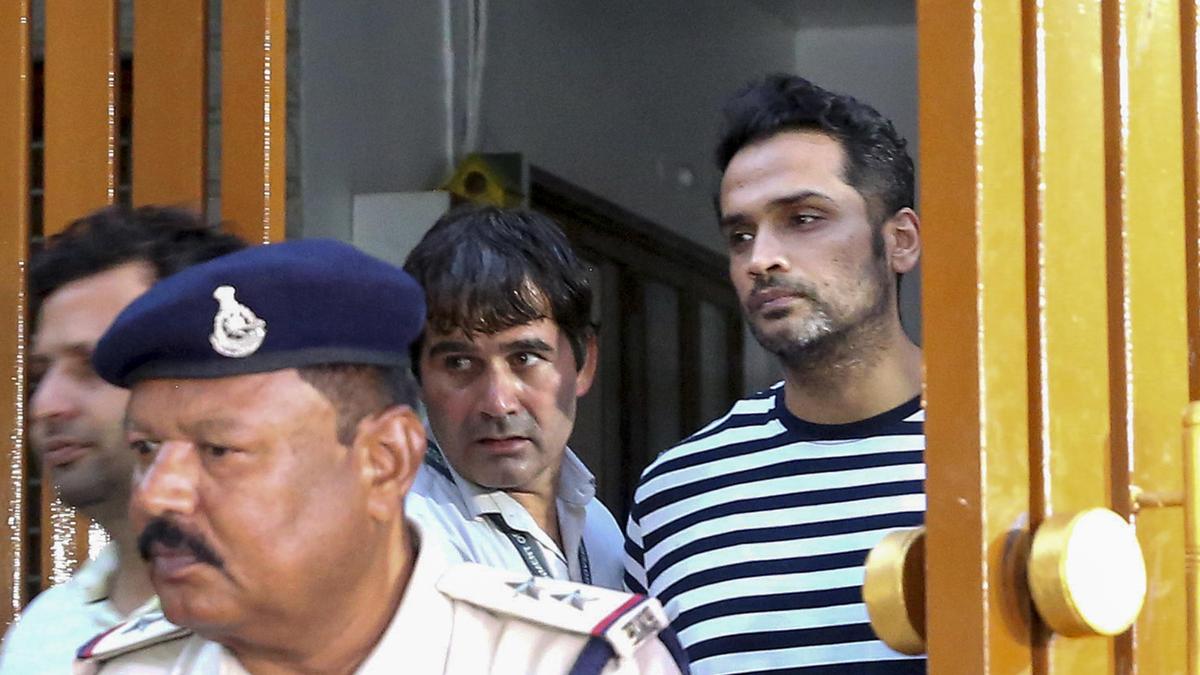
In a dramatic twist to the investigation into the death of 33-year-old communications professional Twisha Sharma, her absconding husband, Samarth Singh, arrived at a court in Jabalpur on Friday afternoon to formally surrender. The development came just hours after Singh’s legal counsel abruptly withdrew his anticipatory bail application from the Madhya Pradesh High Court. Singh, an independent criminal defence litigator and National Law School (NLS) graduate, had been evading a multi-state police dragnet for ten days following an FIR registered under Section 80(2) of the Bharatiya Nyaya Sanhita (BNS) for dowry death.
While the Bhopal Police Commissioner’s Special Investigation Team (SIT) had announced a bounty on him, Singh’s appearance in Jabalpur—rather than surrendering to the local police in Bhopal where the incident occurred—exposes a highly calculated legal strategy. His surrender coincided with a landmark High Court order mandating a second independent autopsy on Twisha’s body by a team from AIIMS Delhi, overruling an earlier order by a Bhopal magistrate.
The Jurisdiction Play: Why Do High-Profile Accused Avoid Local Police Surrenders?
To the public, an accused person surrendering in a completely different city or specific judicial zone seems counterintuitive. However, in high-stakes criminal litigation, the choice of the surrender venue is a carefully timed chess move. When an individual surrenders directly before a judicial magistrate rather than walking into a local police station, they effectively strip the investigating officers of their immediate advantage.
By surrendering in court, the accused transitions directly into judicial custody under the protection of the magistrate. This prevents the local police from executing an immediate, unmonitored arrest on the streets or at an airport, which frequently results in aggressive, immediate interrogations before a legal team can intervene. For a trained criminal litigator like Singh, a court surrender ensures that every step of his initial detention is recorded under strict judicial supervision, heavily mitigating the risk of alleged custodial pressure.
The Legal Mathematics: Why Pick Jabalpur Over Bhopal?
The choice of Jabalpur as the surrender site is deeply linked to the geography of the state’s legal infrastructure. Jabalpur houses the principal bench of the Madhya Pradesh High Court, where Singh’s pre-arrest bail arguments were actively playing out before their withdrawal on Friday.
By remaining in proximity to the principal seat of justice, an accused person’s legal team can monitor real-time judicial observations. More importantly, surrendering outside the home district where the crime was registered—Bhopal, in this instance—temporarily slows down the local investigative machinery. The Bhopal SIT cannot immediately access the accused; they must formally file an application for a transit remand or travel to Jabalpur to seek police custody from the local magistrate, buying the defence crucial hours to structure their subsequent regular bail applications.
The Overlapping Crisis: How Judicial Influence and Forensic Timelines Dictate Strategy
The strategic timing of the surrender also reflects the rapidly shifting dynamics of the case. Singh’s mother, Giribala Singh—a retired district judge who is also named in the FIR—had recently drawn immense public backlash for attempting to publicise allegations regarding Twisha’s health. With the High Court actively issuing notices to review her status and ordering elite forensic scientists from AIIMS Delhi to take over the allegedly tampered medical trail from AIIMS Bhopal, the window for evading arrest had effectively closed.
When a high-profile case reaches national scrutiny and anticipatory options are systematically shut down, a voluntary surrender becomes the final mechanism to project cooperative conduct. By choosing a courtroom in Jabalpur to end his ten-day run, Singh has attempted to control the optics of his capture, setting up a protracted legal battle over the forensic findings that AIIMS Delhi will soon unearth.
Handpicked stories, in your inbox
A newsletter with the best of our journalism
News india Strategic Surrender Bid: Why Twisha Sharma's Husband Samarth Singh Chose Jabalpur Court After 10 Days On Run
Disclaimer: Comments reflect users’ views, not News18’s. Please keep discussions respectful and constructive. Abusive, defamatory, or illegal comments will be removed. News18 may disable any comment at its discretion. By posting, you agree to our Terms of Use and Privacy Policy.
Read More






 English (US) ·