

 1 hour ago
5
1 hour ago
5
ARTICLE AD BOX
But the feat has deeper meaning and wider ramification. It’s a moment of catharsis for several generations of Zimbabwean crickets; it’s a fillip for the sport itself that Zimbabwe is reacquainting with the old giant-slaying habits that once made them equally feared and loved.
It was a triumph of two generations of Zimbabwean cricketers. One that saw the good and hard times; political unrest crumbling their dreams, the pangs of living in a post-colonial world, poverty and inflation sweeping by. The other was born into the milieu of an unstable economy, hyperinflation, rampant unemployment, and grew up in a repressed social environment.
Robert Mugabe had begun his tenure in 1980 with a Bob Marley song and a vision that cricket could make Zimbabwe a nation of gentlemen. Two decades later, the once benevolent leader had become despotic, forcing mass exodus of white Zimbabweans.
Into this uncertain world was born the current brigade of Zimbabwe cricket. One of them was their pace bowling hero Blessing Muzarabani. He was born into penury. His parents died when he was eight. His grandparents sold fruits and tomatoes to support a family that also included five siblings. He had no sports shoes or formal training. But cricket transfixed him, he lingered on beside the nets at the Takashinga Cricket Club. As destiny was to wink, former Zimbabwe skipper Tatenda Taibu noticed his height and love for the game.
Fellow pacer Brad Evans is the son of former cricketer Craig. The latter stayed back during the period of crisis and encouraged his son to pursue the sport. With Richard Ngarava, the left-arm seamer, they formed an efficient pace-bowling trifecta. Evans is slippery and hits the deck, the six-foot-eight-inch Muzarabani discomfits with bounce and produces sharp seam movement. Ngarava is six-feet-six- inches tall and seams the ball. Grooming them to world-beating standards is West Indian legend Courtney Walsh, the bowling consultant.
Opening batsman Brian Bennett was born in Harare, but his cricketing smarts were shaped in South Africa. Every year, his father, a blueberry farmer who played club cricket with the Flower brothers Grant and Andy, would take him to the cricket festival in Eastern Cape. Last year, he reeled off the fastest hundred by a Zimbabwean (against England).
Story continues below this ad
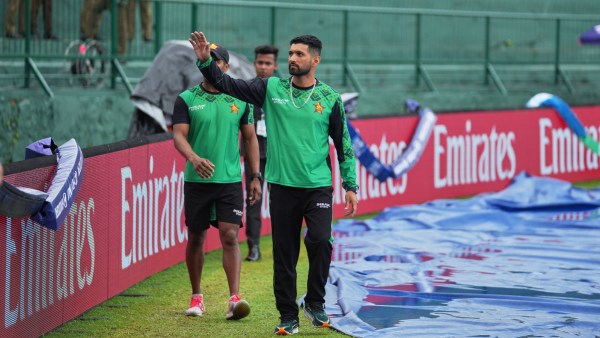 Zimbabwe skipper Sikander Raza acknowledges the support from travelling fans in Pallekele. (PHOTO: AP)
The youngsters are well groomed by battle-scarred, seasoned hands. The tides of life have taken them through different routes. Sikandar Raza, who spent three years at the Pakistan Air Force boarding school but was denied a pilot’s licence because of an eye condition, had deliberated quitting the sport and becoming a software professional.
“With the uncertainty around the sport and livelihood, I have thought of quitting the sport,” he once told the newspaper. But the love for the game was unshakeable and its myriad charms pulled him back. He became a franchise freelancer, performing odd jobs to sustain his family.
Gradual resurgence
Zimbabwe’s dalliances with suspensions became infrequent. More games, even though against the lower-tier teams, meant more exposure and revenue. “At least, we did not need to burn our kits,” he would say. However, reducing the 50-over World Cup, a stage for several Zimbabwean upsets, to 10 teams hurt them.
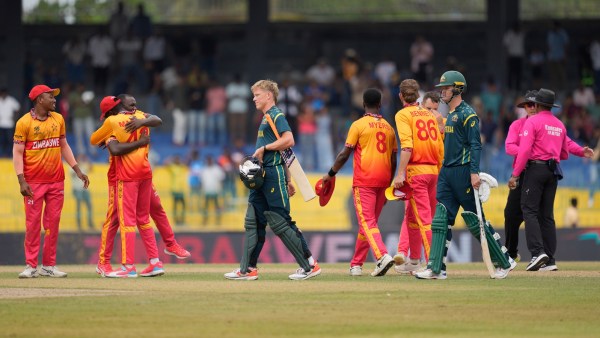 This is the first time Zimbabwe advanced from the group stages of the T20 World Cup. (PHOTO: AP)
It’s a story of those that simply refused to let the game slip into oblivion. Graeme Cremer left the country of his birth and relocated to Dubai where his wife, a pilot, joined the Emirates. He took up a coaching job at the Rajasthan Royals Academy in Dubai and had nearly committed himself fully to a coaching profile before his old friend Brendan Taylor asked him if he could dust up the old association. He had no second thoughts. “It was tough, leaving the kids and wife, but then it was too irresistible,” he would say.
Story continues below this ad
Taylor, whose injury cut short his World Cup sojourn, was the glue that gelled the past and present of Zimbabwean cricket. He turned 40 this month, and carries both the wealth and burden of a long career. He was one of the architects of Zimbabwe’s heist against Australia at the 2007 ICC World T20, and was touted as the future of their batting after Andy Flower. But the turmoil around him left him tormented, he took a three-year break from Tests, tried his fortunes in franchise cricket without glowing success, served a three-year-ban for not informing the ICC about a match-fixing approach, spent time in rehab for drug addiction and alcoholism. But he waged and won the battles for a late blaze for his country.
Their re-emergence cannot pass by without the stories of those that left the country at the stroke of the century, due to political upheaval during the Mugabe regime. Two of their finest — Murray Goodwin and Henry Olonga — emigrated to Australia. Goodwin turned into a real estate agent and groomed his sons to represent Australia in age-group cricket; Olonga became a singer. Neil Johnson shifted to South Africa, became a coach and shaped the early days of South Africa paceman Lungi Ngidi.
The Flower brothers transformed into coaches of repute. Heath Streak, one of the finest all-rounders then, chose the road to perdition before passing away three years ago. It was a day Zimbabwe’s lost generation would have rejoiced too.






 English (US) ·