

 2 weeks ago
4
2 weeks ago
4
ARTICLE AD BOX
Last Updated:May 06, 2026, 17:38 IST
In the event of a hung assembly, the Governor exercises 'situational discretion' under Article 163 of the Indian Constitution


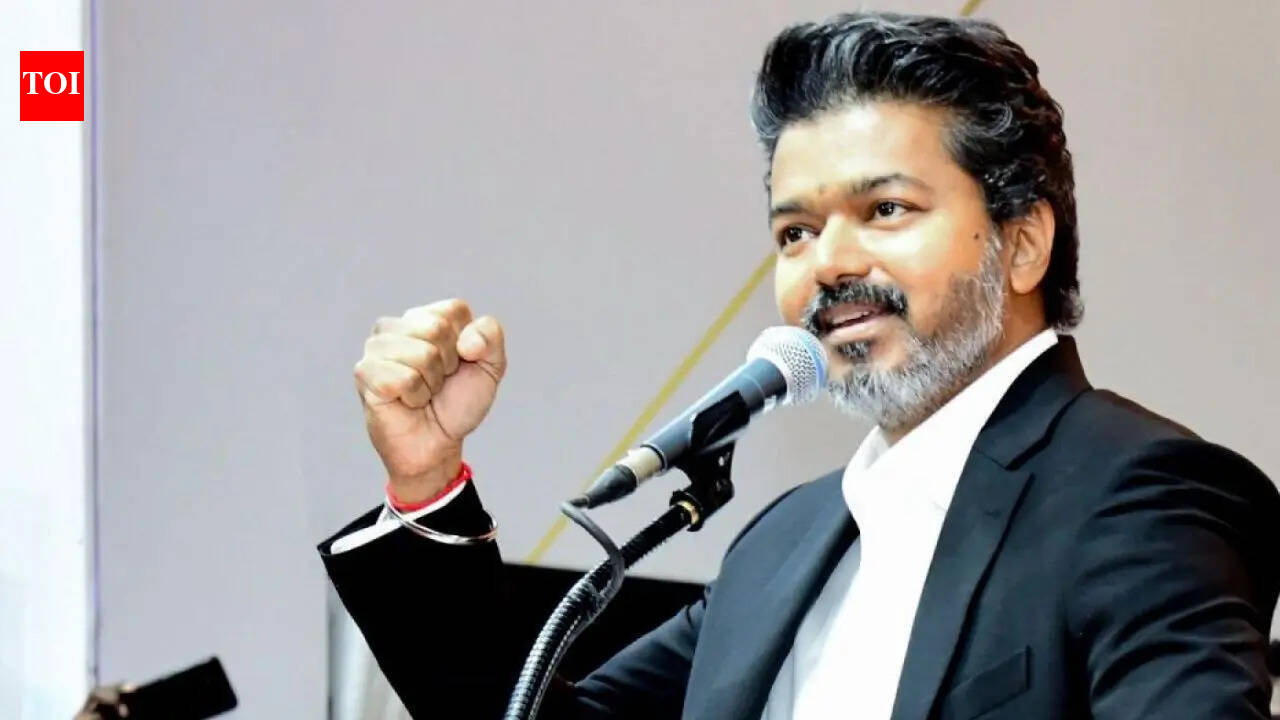
Tamil Nadu Governor Rajendra Arlekar with Tamilaga Vettri Kazhagam (TVK) chief Vijay during a meeting, at Lok Bhavan, in Chennai, Wednesday, May 6, 2026. Image/PTI
The political atmosphere in Tamil Nadu has reached a constitutional impasse following reports that Governor Rajendra Arlekar is “not convinced" by the support figures presented by Vijay, the leader of the Tamilaga Vettri Kazhagam (TVK). While the TVK-Congress alliance has laid claim to the administration, its current tally of 112 seats—comprising 107 from the TVK and five from the Congress—remains six short of the crucial 118-seat majority mark in the 234-member assembly. This deficit has shifted the spotlight from the electoral mandate to the discretionary powers of the Raj Bhavan, as the Governor weighs his constitutional obligations against a fragmented legislative arithmetic.
What are the Governor’s discretionary powers in a hung assembly?
In the event of a hung assembly, where no single party or pre-poll alliance secures an absolute majority, the Governor exercises “situational discretion" under Article 163 of the Indian Constitution. The primary duty of the Governor is to appoint a Chief Minister who, in his assessment, is most likely to command the confidence of the House. This is not a mere mathematical exercise but a qualitative judgement. The Governor can choose to invite the leader of the single-largest party, the leader of a pre-poll alliance, or the leader of a post-poll coalition. In the current Chennai standoff, the Governor is scrutinising whether Vijay’s 112-seat bloc has the “stable" support required to sustain a government, or if the claim rests on precarious political foundations.
Can the Governor demand a physical parade or a floor test?
The Governor has the authority to verify claims of support before administering the oath of office. While the landmark SR Bommai v Union of India (1994) judgement established that the floor of the Assembly is the only place to prove a majority, the Governor acts as the gatekeeper to that process. He may ask the TVK-Congress alliance to provide signed letters of support from Independent candidates or smaller parties to bridge the six-seat gap. If the Governor remains unconvinced by documentary evidence, he can insist on a time-bound floor test after the appointment. However, if no group can demonstrate a clear path to the magic number of 118, the Governor is well within his rights to delay the invitation to form a government to prevent potential horse-trading.
What happens if the constitutional deadlock persists?
If the Governor determines that no party or alliance is in a position to form a stable administration, he may send a report to the President of India under Article 356. This could lead to the imposition of President’s Rule, effectively placing the assembly in a state of suspended animation. Such a move is generally considered a last resort, as the Governor’s constitutional mandate is to explore every possible avenue for a democratically elected government. The current scrutiny of Vijay’s 107+5 formula suggests that the Raj Bhavan is exercising extreme caution to ensure that any invited administration does not collapse during its first legislative session, which would trigger further instability in the state.
Is there a precedent for the Governor’s current stance?
The history of Indian federalism is replete with instances where the Governor’s discretion has been the focal point of power struggles. From the 2018 Karnataka assembly crisis to the recent political shifts in Maharashtra, the Raj Bhavan’s role in “inviting" the leader has often been contested in the Supreme Court. The current situation in Tamil Nadu is particularly sensitive because it involves a “disruptor" party unseating established Dravidian titans. By questioning the numbers, the Governor is adhering to a strict interpretation of constitutional stability, ensuring that the transition from a decade-long hegemony to a new political order is backed by a verifiable legislative majority. The next 48 hours will be critical as the TVK-Congress alliance seeks to “convince" the Lok Bhavan of its governing viability.
Handpicked stories, in your inbox
A newsletter with the best of our journalism
News india Tamil Nadu Numbers Game Turns Nerve Game: What Can Governor Do As TVK-Congress Alliance Comes Up Short?
Disclaimer: Comments reflect users’ views, not News18’s. Please keep discussions respectful and constructive. Abusive, defamatory, or illegal comments will be removed. News18 may disable any comment at its discretion. By posting, you agree to our Terms of Use and Privacy Policy.
Read More





 English (US) ·