

 40 minutes ago
2
40 minutes ago
2
ARTICLE AD BOX
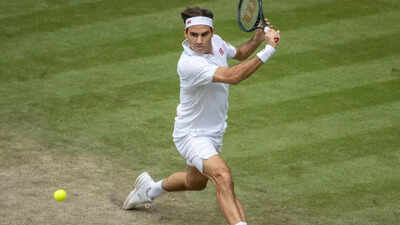
Roger Federer (Image Via Getty)
Before becoming the calm and graceful champion fans admired around the world, Roger Federer was known for losing his temper on court. Former Olympic champion Marc Rosset recently shared stories from Federer’s younger days and explained how one heartbreaking moment completely changed the future of the Swiss star.
Speaking in the documentary Damn Tennis, This Sport That Drives You Crazy from L’Équipe, Rosset said Federer often struggled with his emotions early in his career. He complained during matches, got frustrated easily, and sometimes even broke rackets. Rosset also remembered one incident in Bienne, Switzerland, where Federer behaved badly enough that officials reportedly made him clean the tennis courts as punishment.Still, Rosset believes the biggest change in Federer’s life came in 2002 after the death of his longtime coach Peter Carter. Carter died in a car accident in South Africa at the age of 37. Federer was deeply affected by the loss because Carter had helped guide him from his teenage years and played a major role in shaping his game.Marc Rosset says Peter Carter’s death changed Roger Federer’s mindset and emotional control
According to him, the tragedy helped Federer grow up mentally and understand that he could not waste his incredible talent.“For me, the turning point for Roger at that level was the death in 2002 of Peter Carter, his longtime coach,” Rosset said in the documentary.“There is a before and an after. That’s when he matured a lot. He told himself he couldn’t waste his talent.”After that period, Federer slowly became more focused and emotionally balanced on court.
He went on to win 20 Grand Slam titles and became one of the most respected athletes in sports history. But Rosset said Federer never stopped being emotional, even during the biggest victories of his career.“If you look at the Grand Slams he won, often he would cry,” Rosset added.“That proves he experienced monstrous emotions during matches and that his nerves would give way. He was not some kind of Teflon-coated war machine with zero emotion.”Rosset also shared another memory from the 2013 Basel tournament. He recalled Federer winning a difficult three-set match while still looking nervous and emotional. Rosset jokingly reminded Federer how surprised he once was to see older players feel pressure near the end of their careers.Key moments Marc Rosset mentioned about Roger Federer
- Federer often lost his temper early in his career
- He reportedly had to clean courts in Bienne after misbehaving
- Peter Carter’s death in 2002 became a major turning point
- Federer became more mature and focused after the tragedy
- Even during Grand Slam wins, Federer openly showed emotion
Federer’s story shows that greatness did not come overnight. Long before becoming tennis royalty, he had to learn how to control pressure, emotions, and expectations. According to Marc Rosset, that personal growth became one of the biggest reasons Roger Federer later turned into one of the sport’s greatest champions.






 English (US) ·