

 1 hour ago
3
1 hour ago
3
ARTICLE AD BOX
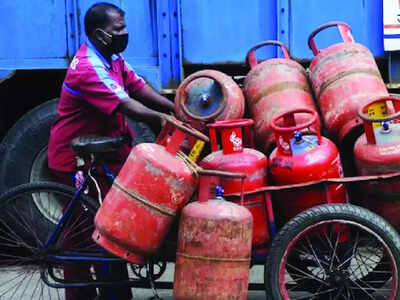
Government advisories meant to reassure instead amplified the frenzy of LPG and induction stoves, turning whispers of scarcity into roars of alarm. This “anatomy of panic” dissects why humans react this way—through psychological triggers, physiological imperatives, and social dynamics—and why pleas for calm so often ignite outrage. Drawing on research, we see panic not as irrationality, but as a predictable cascade of instincts clashing with reality.
No one in the history of human civilization has ever calmed down when asked to calm down. We all know this because either we have asked someone, at our peril, to calm down, and seen a completely opposite reaction to it; or worse, someone has asked us to calm down, only to get the full extent of our rage.
That’s because panic is a primal force... an evolutionary relic that surges through our veins when threats loom large. It’s not mere chaos; it’s a structured response wired into our biology and psychology, designed for survival but often misfiring in modern contexts. Take the scenario in India amid the Iran conflict: fears of fuel shortages sparked hoarding, long queues at gas stations for LPG, and a rush on induction stoves, even as supplies remained stable in many areas. Government advisories meant to reassure instead amplified the frenzy, turning whispers of scarcity into roars of alarm.
This “anatomy of panic” dissects why humans react this way—through psychological triggers, physiological imperatives, and social dynamics—and why pleas for calm so often ignite outrage. Drawing on research, we see panic not as irrationality, but as a predictable cascade of instincts clashing with reality.A study titled, ‘Exploring the Evolutionary Origins of Panic’ by pmc.ncbi.nlm.nih.gov, the biomedical and life sciences journal at the US National Institutes of Health (NIH/NLM), says, the overwhelming surge of fear that grips the body and mind, is not a modern affliction but a deeply rooted evolutionary adaptation.
It emerges from the same primal mechanisms that once shielded our ancestors from saber-toothed tigers and rival tribes. At its essence, panic is an intensified form of the fear response, designed to mobilize resources for survival in the face of imminent threats.
In mammals, this evolved into the fight-or-flight response. When a threat is perceived—real or imagined—the amygdala, an almond-shaped brain structure, acts as the alarm center, releasing stress hormones like adrenaline and cortisol.
People stockpile not out of greed, but to alleviate anxiety
At its core, panic begins in the brain’s fear circuitry. The amygdala, our emotional alarm system, detects threats and floods the body with adrenaline, priming us for fight-or-flight. In crises like wars or pandemics, perceived scarcity acts as the spark. Studies show that when people sense resources dwindling—be it LPG in India or toilet paper during COVID-19—they experience heightened uncertainty and fear of the unknown.
This perception isn’t always tied to actual shortages; it’s amplified by rumors and media, creating a self-fulfilling prophecy. For instance, research on panic buying during health crises identifies four key drivers: perception of threat and scarcity, fear of unknowns triggering emotional pressure, coping behaviors to regain control, and social influences from networks. People stockpile not out of greed, but to alleviate anxiety, viewing hoarding as a way to assert agency in chaos.The educational and research site of National Geographic, education.nationalgeographic.org, cites, “Fear or panic primes the body: heart rate spikes, muscles tense, and non-essential functions like digestion shut down, redirecting energy to evasion or confrontation. For early humans in the Pleistocene era (about 2.5 million to 11,700 years ago), this was crucial. Hunter-gatherers faced constant perils—predators, environmental hazards, and intraspecific violence—and those with hyper-responsive fear systems were more likely to survive and reproduce.Psychologically, this ties into evolutionary adaptations. Humans are wired to imagine the worst, a trait honed in ancestral environments where scarcity meant death. Modern panic buying echoes this: a 2023 study on COVID-19 behaviors found it stems from instinctive reactions to perceived threats, motivated by fears of being unprepared. Intolerance of uncertainty plays a big role; those with high levels are more prone to impulsive purchases, as stockpiling reduces distress.
Narcissism, fear of missing out, and social anxiety also fuel it, per a 2023 analysis. In the Indian context, advisories extending gas cylinder booking periods were interpreted as signals of impending doom, prompting immediate action. I’ll give an example. Talking to a friend last night, about the LPG and induction shortages, I learnt that a family known to her bought 3 extra induction plates, apart from the one in their home.
This may seem like stupidity but it’s not. It’s the brain's bandwidth narrowing under stress, focusing on short-term survival at the expense of rational assessment.
Humans are wired to imagine the worst
Physiologically, panic manifests as a stress response. Cortisol surges, heart rates spike, and the body shifts into conservation mode. Research also points out that regions with famine histories show higher obesity rates: epigenetics wires bodies to store fat for future shortages, a “thrifty gene” hypothesis supported by research on famine survivors. In scarcity threats, this extends to behavior—people prioritize immediate needs like food and fuel, reallocating budgets away from health or luxuries. During Shanghai’s COVID lockdown, perceived scarcity boosted stress and risk aversion, with participants favoring groceries over health items. This bodily wiring explains why panic feels visceral: it’s not just mental, but a full-system alert, conserving energy for perceived famines ahead.The *evolutionary mismatch hypothesis* (also called evolutionary mismatch theory) posits that traits, behaviors, or physiological responses that were adaptive in our ancestral environments—primarily the Pleistocene era of hunter-gatherer life—can become maladaptive or problematic when the environment changes rapidly, as it has in modern times due to agriculture, industrialization, urbanization, and technology.
This “mismatch” arises because biological evolution is slow compared to cultural and environmental shifts, leading to outdated adaptations clashing with current realities.Socially, panic spreads like contagion through herd behavior. Information cascades occur when individuals mimic others, assuming crowds know something they don’t. In crises, social media accelerates this; a 2020 study linked viral negative posts to mass anxiety during toilet paper shortages.
Online influence heightens perceived threats, leading to stockpiling even without personal scarcity. Historical examples abound: Y2K fears prompted tech hoarding, while COVID saw global runs on essentials, lasting 7-10 days post-announcements.
In India, restaurant closures from regulated gas echoed this, as precautionary measures signaled broader crisis, prompting overreactions. Research reframes “panic buying” as “crisis stockpiling,” driven by optimism and anger as much as fear, not blind hysteria.
Demographics matter: women, higher-income families with kids, and those with income loss are more susceptible, per a UK-Ireland study.
We are suffering from The Streisand Effect. But what is it?
Yet, why do calls to “maintain calm” often backfire, fuelling outrage? This paradox roots in psychological reactance: when perceived freedoms—like the right to worry or act—are threatened, people rebel to restore autonomy. Advisories against hoarding are seen as restrictions, prompting defiance.
Enter the Streisand Effect: attempts to suppress information (or emotions) amplify it. Named after Barbra Streisand’s failed bid to hide her home photo, it shows how censorship draws scrutiny (Google this, it’s an interesting insight into human behaviour).
In crises, reassuring messages can be read as cover-ups, heightening suspicion. A 2023 piece notes trying to relax amid anxiety reinforces the need to control it, prolonging distress.
During India's fuel scare, anti-hoarding steps were perceived as admissions of vulnerability, sparking the opposite effect. Research on crisis communication warns that downplaying threats invites reactance, especially if trust is low. Instead, transparent acknowledgment builds credibility, mitigating backlash.In essence, panic’s anatomy reveals a survival toolkit maladapted to abundance. It’s psychology’s fear lens distorting reality, physiology’s ancient defenses kicking in, and society’s echo chambers amplifying noise. To counter it, leaders should emphasize facts over suppression, fostering control through clear info. As crises multiply—from wars to climate—understanding this anatomy equips us to respond, not react, turning panic into preparedness.







 English (US) ·