

 1 hour ago
5
1 hour ago
5
ARTICLE AD BOX
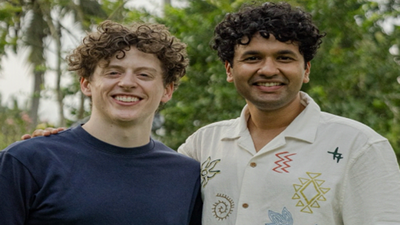
Stephen Turban & Dhruva Bhat, builders of Lumiere
How Stephen Turban is building a global classroom, and why his latest acquisition signals a deeper shift in how the world learnsWhen Stephen Turban speaks about education, he sounds like a thoughtful cartographer trying to redraw the map of how young people grow up.On a recent afternoon from Vietnam, where he has been spending time building, thinking, and operating, Turban reflected on his latest move: the acquisition of UK-based Immerse Education by Lumiere Education Group, the company he co-founded with Dhruva Bhat.For decades, the dominant model of success was to attend a good school, score well on standardized tests, enter a prestigious university, and step onto a predictable ladder of achievement. Turban’s work suggests that this ladder is no longer enough and that a different kind of scaffolding is emerging around it.Lumiere began as an experiment in intellectual apprenticeship. Rather than focusing on test preparation, it paired high school students with researchers (faculty and scholars embedded in leading institutions) who guided them through short, intensive research projects.The idea was exposure: giving teenagers a taste of what serious thinking actually feels like.“The goal isn’t to turn every student into a mini-academic,” he explained. “It’s to help them understand how knowledge is created, not just consumed.”Over time, Lumiere has grown into a truly global platform. Today, no single city accounts for more than 10% of its students. Its largest markets are America, India, and China, with significant participation from the UAE, Singapore, South Korea, Brazil, Turkey, and the UK.
The acquisition of Immerse Education is about complementarity. If Lumiere represents the cerebral side of learning through rigorous research, mentorship, and intellectual depth, Immerse represents its social and experiential dimension. Immerse runs short residential programs on university campuses in New York, Boston, Berkeley, Toronto, Singapore, and Tokyo, as well as in the UK.Students live together, collaborate, debate, and inhabit academic environments.
Learning becomes immersive, quite literally and metaphorically.Turban sees this as essential.“One of the limitations of online learning is that it can isolate students,” he said. “But real intellectual growth also happens in conversations, shared struggles, and the experience of being part of a community.”By bringing Immerse under the Lumiere umbrella, Turban is effectively stitching together two halves of the same vision: deep thinking and shared experience.Together, they form what he calls a more “rounded” model of education, one that mirrors how adults actually learn in professional and intellectual life.A key concept Turban invoked is a Chinese term: “Juan”(卷), roughly translated as “rolling competition.” It describes a cultural dynamic in which everyone feels compelled to work harder because everyone else is working harder. In education, this manifests as an escalating arms race of extracurriculars, internships, certifications, and achievements.Families today are far more intentional about how students spend their time outside school. Summers are planned like investment portfolios; extracurriculars are evaluated for their signaling value.“Competition isn’t going away,” he noted. “The question is: Can we channel it toward something genuinely meaningful rather than purely performative?”This is where Lumiere and Immerse converge. Instead of encouraging students to accumulate shallow credentials, they invite them to engage deeply with real ideas, real problems, and real mentors.In doing so, Turban is attempting to reframe what “competitive advantage” looks like in education, away from box-ticking and toward intellectual substance.Turban’s perspective is deeply shaped by his own background. He often speaks about his father, a middle school professor with an almost childlike curiosity about the world. Learning, in his household, was not a means to an end; it was an end in itself.His co-founder, Dhruva, had a formative experience in high school debate in India, which changed his confidence, thinking style, and life trajectory.
Both men were shaped by experiences at the margins of school: clubs, research, debates, and independent exploration.That ethos is now baked into Lumiere’s DNA.One of the most striking aspects of both Lumiere and Immerse is their international reach.While many elite educational programs are concentrated in a handful of Western cities, Turban’s ecosystem draws students from every continent. Immerse, for instance, serves students from Turkey, Brazil, China, India, the US, and across Europe, even as it retains a strong U.K.
academic orientation. For Turban, this is a moral project.“We live in a world where young people will increasingly work across borders,” he said. “It makes sense that their education should prepare them for that reality.” In this sense, Lumiere is less a company than a prototype of a borderless intellectual community.Turban’s current base in Vietnam is itself symbolic. Rather than anchoring himself in Silicon Valley or London, he has chosen a location that reflects his global outlook.
It is a reminder that the future of education, and innovation more broadly, will not belong to one country alone. From Southeast Asia, he is thinking about students in Mumbai, Seoul, Palo Alto, São Paulo, and beyond.At its core, Turban’s work forces a deeper reckoning with what education is for.Is it primarily about credentials? Economic mobility? Social status? Or is it about cultivating curiosity, resilience, and intellectual independence? His answer leans toward the latter, even if the former still matters. By combining Lumiere’s research-driven model with Immerse’s experiential approach, he is attempting to balance both.In a world awash in information yet starved for wisdom, Turban’s model suggests that the most valuable resource is community, mentorship, and meaning. The acquisition of Immerse Education is one more step in that direction.









 English (US) ·