

 58 minutes ago
5
58 minutes ago
5
ARTICLE AD BOX
Last Updated:June 11, 2026, 23:14 IST
DR Congo's export clampdown has sent cobalt prices past all recorded benchmarks, left Chinese smelters stranded, & may put India's 100% import-dependent EV ambitions on notice.
![Junior Hannah/ AFP]](https://images.news18.com/ibnlive/uploads/2021/07/1627283897_news18_logo-1200x800.jpg?impolicy=website&width=400&height=225 "Junior Hannah/ AFP]")

Dela wa Monga, an artisanal miner, holds a cobalt stone at the Shabara artisanal mine near Kolwezi on October 12, 2022. [Image Courtesy: Junior Hannah/ AFP]
Before cobalt became the mineral that keeps electric vehicles moving, it kept Chinese porcelain blue. Cobalt oxides have coloured Tang and Ming dynasty ceramics for centuries. Today, the same element goes into the cathodes of rechargeable batteries, including those powering the electric vehicles that India, China, Europe and the United States have each staked a portion of their energy futures on.
Globally, cobalt demand crossed 200,000 tonnes in 2024, with 76 per cent driven by battery applications and electric vehicles accounting for 61 per cent of market growth. The problem, is its sourcing. The Democratic Republic of Congo is responsible for roughly three-quarters of global cobalt supply, and in early 2025, Kinshasa turned off the tap.
The Export Ban, The Quota, & What Happened To Prices
The DRC imposed an export ban on cobalt hydroxide in February 2025, later replaced by strict quotas, after years of persistently low prices and a market glut had left the country’s dominant resource chronically undervalued.
The intervention worked, in price terms at least. Cobalt metal prices more than doubled by year-end, surging from near nine-year lows of $21,502 per tonne to $48,570 by October. The Cobalt Institute recorded a 130 per cent rise in refined metal prices over the same period, with hydroxide prices quadrupling.
The squeeze has since reached a threshold with no historical precedent. According to price-reporting agency Fastmarkets, the price smelters pay for cobalt hydroxide has risen to match the price of the cobalt metal they produce from it, a dynamic that has persisted since March and has never previously appeared in data going back to 2019.
In other words, the raw material now costs as much as the finished product. Tony Southgate, a trader at Stratton Metals, described what that looks like on the ground, whilst speaking to The Financial Times, saying that the prices smelters were paying for feedstock had “gone to levels that don’t really make financial sense. They just need the units."
Chinese Smelters Scrambling For Alternatives
China, as the world’s largest EV market and dominant battery manufacturing hub, faces particular challenges adapting to these constraints while maintaining ambitious electric vehicle production targets.
Chinese refiners, who process the bulk of Congolese hydroxide, are now turning to shredded batteries, known as black mass, and recycled cobalt metal as substitutes. One alternative, mixed hydroxide precipitate containing nickel and cobalt, has seen demand rise sharply, but its own supply is now compromised.
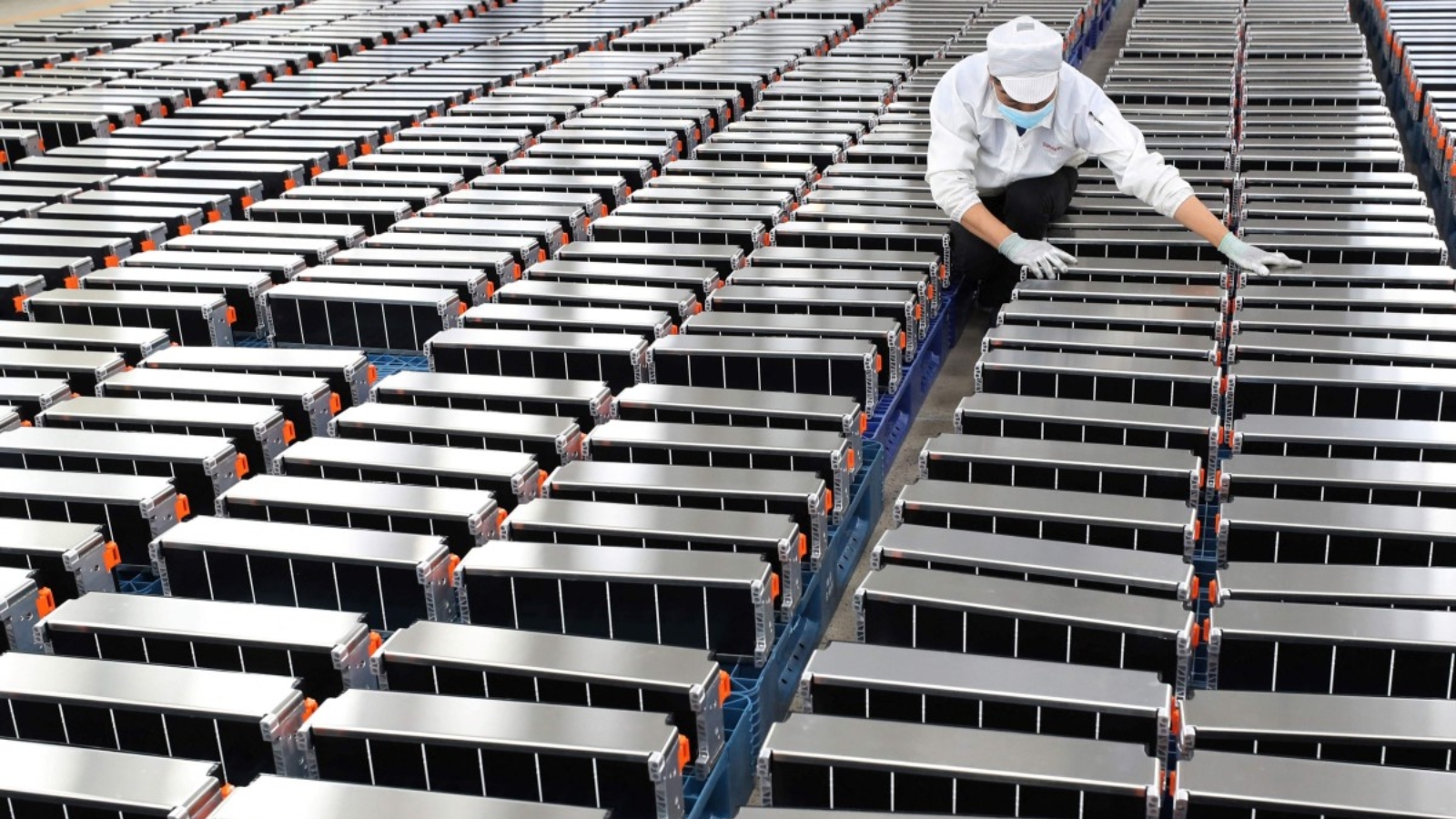
Production of Mixed Hydroxide Precipitate (MHP) is also expected to fall this year because the Iran war has triggered a global shortage of the sulphuric acid used in its production, closing another exit just as smelters were running toward it.
Andries Gerbens, trading director at Darton Commodities, said that the demand for MHP had “picked up quite significantly, but now also MHP availability is compromised," pushing smelters further toward cobalt recycling.
Jervois Global, which operates one of the largest cobalt production facilities outside China, said its profitability was “currently severely impacted" by the market dynamics. Fastmarkets cobalt expert Olivier Masson said elevated prices across hydroxide, black mass and other alternatives were “not sustainable. The numbers don’t add up" for smelters, he said while speaking to FT.
India: 100% Import Dependent, With No Reserves Of Its Own
For India, the DRC’s policy shift lands on particularly thin ground. India is currently 100 per cent import dependent for lithium, cobalt and nickel, according to an April 2026 briefing note by the Institute for Energy Economics and Financial Analysis.
India has no commercially viable reserves of lithium, cobalt or nickel. This matters because EV sales in India reached approximately 25,16,000 units in FY2026, a 24.2 per cent year-on-year increase, with electric car sales nearly doubling and electric truck sales rising 2.5 times, and these trajectories now run directly into a cobalt supply chain that is being tightening at every node.
Also Read: How India’s Rare Earth Strategy Is Combatting The China Threat
India’s cobalt imports are concentrated across a narrow set of supplier countries, amplifying supply risks even as the country accelerates its clean energy transition. The government launched the National Critical Mineral Mission in 2025 with an allocation of Rs 16,300 crore to secure supply of minerals including cobalt, and India and the DRC are expected to sign an MoU for critical mineral access, particularly copper and cobalt.
India has also applied to the International Seabed Authority to explore the cobalt-rich Afanasy Nikitin Seamount in the central Indian Ocean, approximately 1,350 kilometres east of the Maldives, over a 15-year programme covering 3,000 square kilometres. While these bets lie beyond the horizon, and may curb the nation’s dependency in the long run, the supply squeeze is happening now.
The Alternative Gaining Ground: Batteries Without Cobalt
Markets worldwide are already exploring other options. NMC batteries, which contain nickel, manganese and cobalt, have been losing ground to lithium iron phosphate (LFP) batteries, which contain none of it.
LFP cells continued their rapid ascent in 2025, driven by cost advantages and growing adoption in China and in entry-level electric vehicles. Morgan Stanley analysts noted last month that LFP batteries were “less exposed to nickel and cobalt supply risks," a seemingly straightforward observation that is now reshaping procurement decisions across the industry.
By 2040, secondary cobalt from recycled batteries is expected to approach the volumes currently mined in the DRC, making recycling infrastructure as strategically important as any new mining agreement.
The DRC’s export policy has done what years of market advocacy has been unable to, it has made the cost of single-source dependency impossible to ignore.
Handpicked stories, in your inbox
A newsletter with the best of our journalism
About the Author

Anoshito Banerjee is a digital journalist at CNN-News18, specialising in Indian foreign policy, global diplomacy, South and West Asian geopolitics, and strategic affairs. His reporting spans hard news...Read More
News world The Democratic Republic of Congo’s Cobalt Export Ban Spells Trouble For The World, Puts EV Battery Supply At Risk
Disclaimer: Comments reflect users’ views, not News18’s. Please keep discussions respectful and constructive. Abusive, defamatory, or illegal comments will be removed. News18 may disable any comment at its discretion. By posting, you agree to our Terms of Use and Privacy Policy.
Read More






 English (US) ·