

 1 week ago
13
1 week ago
13
ARTICLE AD BOX
Last Updated:June 17, 2026, 07:15 IST
The development comes at a time when the opposition INDIA bloc is already grappling with a series of setbacks nationally.


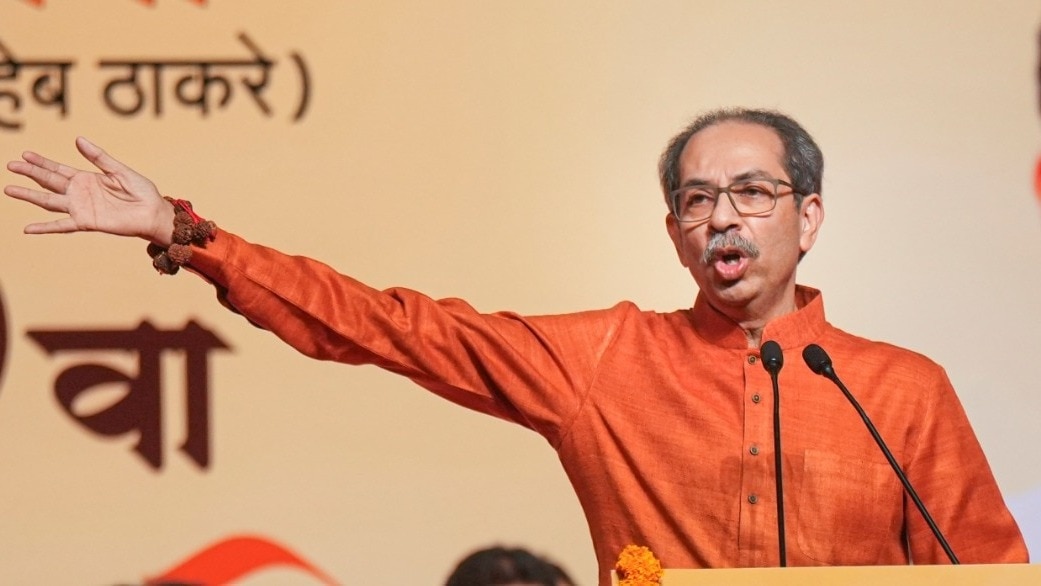
Shiv Sena (Uddhav Balasaheb Thackeray) chief Uddhav Thackeray with party leader Sanjay Raut. (PTI File)
Four years after the rebellion that split the Shiv Sena and altered Maharashtra’s political landscape, Uddhav Thackeray finds himself confronting yet another familiar challenge. Reports of a fresh revolt within the Shiv Sena (UBT) have triggered intense political activity, with the focus this time shifting from Mumbai’s corridors of power to New Delhi.
Speculation is rife that six to seven Lok Sabha MPs and as many as 14-16 MLAs could leave the Uddhav camp and align with the Eknath Shinde-led Shiv Sena in the coming days. While no formal split has taken place yet, the buzz has become strong enough for party leaders to convene emergency meetings and issue public denials.
The development is significant not just because it could further weaken Uddhav Thackeray’s faction, but also because it comes at a time when the opposition INDIA bloc is already grappling with a series of setbacks nationally.
Reminder Of The 2022 Earthquake
In June 2022, Eknath Shinde led a rebellion against Uddhav Thackeray while serving as a senior Shiv Sena leader. The revolt eventually saw 40 of the Sena’s 55 MLAs back Shinde, triggering the collapse of the Maha Vikas Aghadi government headed by Uddhav Thackeray.
The split did not remain confined to the Assembly. Over time, most of the party’s organisational structure, a large section of legislators and eventually the party name and the iconic bow-and-arrow symbol went to the Shinde faction after decisions by constitutional authorities.
Uddhav Thackeray responded by rebuilding under the banner of Shiv Sena (Uddhav Balasaheb Thackeray), banking on the Thackeray legacy, cadre loyalty and sympathy generated by the split.
The 2024 Lok Sabha election offered some relief. The UBT emerged as one of the strongest opposition forces in Maharashtra and won nine Lok Sabha seats, becoming an important constituent of the INDIA bloc. But the current reports suggest that even this parliamentary strength could now come under pressure.
Why MPs Matter More Than MLAs This Time
Unlike 2022, the current battle is centred on Parliament rather than the Maharashtra Assembly.
According to reports, at least six UBT MPs are considering approaching the Lok Sabha Speaker to seek recognition as a separate group. Some reports suggest seven MPs are in touch with the Shinde camp. Since Shiv Sena (UBT) currently has nine Lok Sabha MPs, any movement involving six or seven MPs would represent a substantial chunk of the party’s parliamentary strength.
The numbers are politically important because parliamentary strength determines visibility at the national level. MPs get speaking time in Parliament, committee representation, influence within alliances and leverage in negotiations over future seat-sharing arrangements.
That is why the current crisis is being watched as closely in Delhi as in Mumbai.
The anti-defection law also looms large. Under existing provisions, at least two-thirds of MPs would have to move together to avoid disqualification proceedings. With nine UBT MPs in the Lok Sabha, that threshold effectively means seven MPs. This is one reason why the figure of “six or seven MPs" has repeatedly surfaced in political discussions.
The Curious Case Of The Missing MPs
The latest round of speculation began after reports emerged that several MPs were either unavailable or not immediately reachable when party chief Uddhav Thackeray sought to assess the situation.
Conflicting accounts subsequently emerged. While some reports claimed only four MPs attended a key meeting physically, the party maintained that all nine MPs participated, either in person or virtually, and denied any rebellion.
At the same time, Shiv Sena (UBT) leader Sanjay Raut alleged that MPs were being offered inducements worth Rs 15 crore each to switch sides, a charge that has not been independently verified.
The very fact that senior leaders have felt compelled to issue clarifications suggests the party sees the threat as serious enough to warrant damage control.
The INDIA Bloc Challenge: Why This Matters Beyond Shiv Sena
A successful split would not merely be a Maharashtra story. It would strike at a time when the opposition INDIA bloc is already facing turbulence on multiple fronts.
In recent weeks, the DMK announced its exit from the INDIA bloc and skipped alliance meetings, creating one of the biggest ruptures within the opposition coalition since its formation. The Trinamool Congress has also been dealing with a major internal crisis, with reports of a significant parliamentary split that saw a large group of MPs move to a newly formed political entity.
The Aam Aadmi Party, meanwhile, has increasingly charted an independent political course rather than functioning as a fully integrated component of a unified opposition front.
Against this backdrop, any weakening of Shiv Sena (UBT) would further reduce the collective parliamentary weight of parties that once formed the backbone of the INDIA alliance.
For the Congress, which has already faced criticism from allies over leadership and coordination issues, another setback involving a key regional partner would deepen concerns about opposition cohesion.
What Eknath Shinde Stands To Gain
For Eknath Shinde, attracting MPs from the UBT camp would be about more than numbers. His 2022 rebellion established control over much of the original Shiv Sena’s legislative machinery. Winning over MPs from the Thackeray camp would strengthen his argument that the shift towards his faction remains an ongoing political process rather than a one-time event.
It would also reinforce the narrative that elected representatives continue to see greater political prospects within the ruling NDA ecosystem.
Recent defections by local-level UBT leaders, including office-bearers in Nagpur, indicate that organisational churn within the Sena universe has not entirely ended.
The Stakes For Uddhav Thackeray
For Uddhav Thackeray, the challenge is existential. After losing the party name, symbol and much of the legislative wing in 2022, his parliamentary contingent became one of the most visible symbols of political survival.
A fresh exodus would not automatically erase the UBT’s political relevance. The Thackeray name continues to carry emotional resonance among sections of the Shiv Sena’s traditional support base. However, it would raise uncomfortable questions about the party’s ability to retain elected representatives despite electoral success.
The coming days could therefore determine whether the current speculation fades away like many previous rumours or evolves into the second major chapter of the Shiv Sena’s long-running civil war.
The first battle was fought in Maharashtra’s Assembly corridors. The next one, if it materialises, may be decided in Parliament’s hallways.
Handpicked stories, in your inbox
A newsletter with the best of our journalism
About the Author
Pragati is a News Editor at news18.com. Having headed the Business and Viral sections, Pragati now ideates, writes and edits long-form features and articles on national and global affairs. She ensures...Read More
News explainers The Domino Effect: Why Another Split In Uddhav's Shiv Sena Could Hurt More In Delhi Than Maharashtra
Disclaimer: Comments reflect users’ views, not News18’s. Please keep discussions respectful and constructive. Abusive, defamatory, or illegal comments will be removed. News18 may disable any comment at its discretion. By posting, you agree to our Terms of Use and Privacy Policy.
Read More







 English (US) ·