

 1 hour ago
4
1 hour ago
4
ARTICLE AD BOX
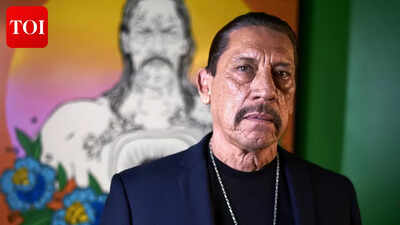
Not many Hollywood stories hit as hard as Danny Trejo’s. He’s a guy who got caught up in crime and chaos, and then turned it all around to become one of the most recognizable tough guys on screen. Leather vest, tattooed muscles, a face that looks like it’s seen everything — Trejo arrives with his past stories written all over him, and yet he does not give them the power to govern his future life.When you see those marks and lines on him, you don’t have to guess if he’s been through some rough times. In fact, the truth is, he almost didn’t make it out alive. But somehow, Trejo took all that grit and pain and built a career playing the kind of roles most people would be too scared to live, let alone act.Here’s the story of Danny Trejo: the man who allowed himself second chances, fought back, and refused to quit.
Early life and a rough start
Danny Trejo was born in Los Angeles in 1944, and right from the start, life wasn’t easy.
Per Grunge, he grew up with Mexican American parents and in a tough neighborhood where violence was just part of the scenery. His dad, Dionisio, ran to California after stabbing someone in Texas, but eventually turned himself in and disappeared from Danny’s life. After that, Danny ended up at his grandmother’s house, sharing a room with cousins and getting close to his uncle Gilbert, who was barely older than Danny himself.
Per All That’s Interesting, Gilbert was more like a big brother than an authority figure. He taught Danny how to box, which sounds good, but he also led him down some dark paths. By the time Danny was eight, he’d tried marijuana. At twelve, he shot up heroin for the first time, thanks to Gilbert. “He was the cool one,” Danny remembered. “He always had a fat wad of cash.”It wasn’t long before Danny found himself in trouble with the law.
He got arrested for the first time around age ten. Through his teens, drugs, robbery, and gangs became a regular part of his life. He kept landing in juvie and, eventually, jail. Addiction took hold fast. He and Gilbert started robbing and dealing just to keep up with their habits.By eighteen, Danny was locked up for the first time as an adult. Cocaine addiction piled onto everything else. Through the late ’50s and ’60s, he bounced back and forth between freedom and prison, getting picked up for assault, theft, drugs — you name it.At twenty-one, he got caught selling heroin to an undercover agent. That earned him eleven years behind bars. From prison riots, solitary confinement, to even the threat of death row, Danny saw it all.
Inside prison: Riot, survival, and a turning point
It goes without saying that prison was brutal for Trejo, especially at such a young age. Per All That’s Interesting, during one short stay in the county in 1961, Danny even crossed paths with Charles Manson, the American criminal and cult leader who formed the ‘Manson Family’ in California during the late 1960s.After getting out, Danny only got deeper into trouble. He robbed liquor stores with live grenades, got into drive-by shootings, and once stabbed a man in the face with a broken bottle during a bar fight. “We had a lot of pistols, and you really don’t want to mess with someone who’s got a lot of pistols,” he said, per All That’s Interesting. “People aren’t scared of tough guys. People are scared of crazy people.”But 1965 changed everything. Danny got busted again. Although he swears it was only sugar, not heroin, he got ten years in some of California’s toughest prisons: Folsom, Soledad, San Quentin.
Life inside those prisons was a nightmare, full of gang violence, drugs, and the constant threat of death.In fact, San Quentin stands out in his memory. “When you pull up to San Quentin, you see two lights up on the North Block,” he said, per All That’s Interesting. “A red one and a green one. If the red light’s on, they’re killing someone. That’s the first thing you see, so you know—this is a death house. People come in here and don’t come out.”In a place like that, boxing wasn’t just a hobby; it was survival. Those lessons from his uncle kept him alive. “I was lightweight and welterweight champion in every penitentiary I was in,” he said, “and I was in all of them.”But no matter how good he got, fear was always there. He might’ve been a known hustler behind bars, but once you hit the yard, anything could happen. He remembered watching an inmate get stabbed in the back while everyone else just laughed, and thinking, “Danny, you’re going to die here.”“He was walking around the upper yard, reaching for the knife and coughing up blood,” Trejo said. “What a messed-up ‘splace!”Then, in 1968, Trejo landed right in the middle of a prison riot at Soledad State Prison. That’s where things really went off the rails for him. He fought with other inmates, swinging a rock, and ended up hitting a guard in the head by accident. That single moment threw his whole life into chaos. They locked him in solitary confinement for three months, and suddenly, he was facing the death penalty for attempted murder.At that moment, sitting alone in that cell, Trejo was convinced his life was over. He was just 24. “God, if you’re there, then it’s going to be alright. And if you’re not, I’m screwed,” he prayed, and as per him, that was the turning point that changed everything.While he waited in solitary confinement, accused of injuring a guard, Trejo started to really think about where his life was heading. He joined a 12-step recovery program behind bars, hoping to get off the path that had led him there.
It’s where he decided things had to change.Then, something unexpected happened. According to All That’s Interesting, no one out of the 3,000 inmates came forward to back up the claims against him. The charges didn’t stick.Trejo walked out on parole in August 1969, the same month Charles Manson, a former fellow inmate, ordered the infamous Sharon Tate murders. Trejo was determined not to go back to his old ways. So, he threw himself into recovery and made helping others his mission.
Recovery and rebuilding life
Per Grunge, after prison, Trejo got to work as a drug counselor in the early ’70s, steering people away from addiction and crime. Helping others became his guiding principle. Trejo always said every good thing in his life started with helping someone else first. That belief, oddly enough, is what eventually led him straight into Hollywood.His acting career started by pure accident. Trejo was doing odd jobs: gardening, construction, whatever paid the bills, and spending his nights at recovery meetings.
He started out as an extra, always typecast as a tough gang member. But one day, a screenwriter who had also done time at San Quentin spotted Trejo’s prison tattoos on set, and everything changed.According to All That’s Interesting, in 1985, Trejo went to the set of ‘Runaway Train’ to help a young guy he was mentoring, someone battling a cocaine habit. The filmmakers noticed Trejo’s tough look and asked him to be an extra in a prison scene. Because of his boxing background, they also tapped him to train Eric Roberts for a fight sequence. That gig led to more; directors and casting agents started passing his name around.
Before he knew it, Trejo was showing up on screen, starting a whole new chapter.
The Hollywood chapter
When Hollywood kept calling, Trejo didn’t turn his back on it. Sure, it took years to move from small parts to bigger roles, but Trejo slowly worked his way up, acting alongside people like Al Pacino and Nicolas Cage, and sharing his story to encourage kids to turn their lives around.Then came ‘Machete’ in 2010, a role written just for him. The movie made a splash at the Box Office.
For a guy who once faced the death penalty, walking red carpets still feels surreal. He talks about it in his documentary, ‘Inmate 1: The Rise of Danny Trejo’, and he’s never forgotten the people who helped him get there.Over the years, Trejo built a legendary film career. He’s been in hundreds of movies and shows, including ‘Heat’, ‘From Dusk Till Dawn’, and the ‘Spy Kids’ series. He became famous for playing tough antiheroes and action stars, but he’s widely loved for his realness. He’s known for his big heart and dedication to helping others. To date, he regularly visits prisons, recovery centers, and youth programs, sharing his story and proving that it’s never too late to change your life.








 English (US) ·