

 1 week ago
7
1 week ago
7
ARTICLE AD BOX
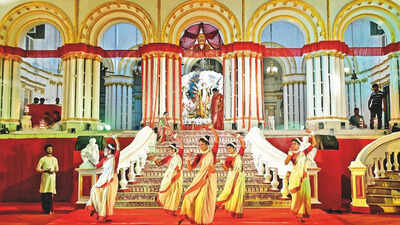
Khelat Bhawan: 55 rooms make up the sprawling layout of the mansion
Pathuriaghata’s Khelat Bhawan is a living chronicle of Bengal’s aristocratic and cultural legacy. Its story begins with Ram Lochan Ghosh, dewan to Warren Hastings, who arrived from Benares in the early 1700s and bought the family’s 46 Pathuriaghata Street residence.
His grandson Khelat Chandra Ghosh built the present mansion at 47 Pathuriaghata Street around 1845, designed by Martin & Burn. Durga Puja has been celebrated here uninterrupted since 1855. Despite multiple inheritance disputes in the past, it has also witnessed the Bongiyo Kayastha Samaj’s formation, Ramakrishna Paramahamsa’s 1881 visit, and its association with novelist Bibhutibhushan Bandyopadhyay.What it wasAccording to Samar Singha, accountant, Khelat Bhawan, at its zenith, the mansion embodied aristocratic splendour.
The family owned over 100 houses across the city. Spread across 2.5 bighas and inspired by Jaipur architecture, it features two nahabat khanas at its entrance. Though two-storied, it is equivalent to a modern four-storey structure and includes an underground level that sheltered many during the Calcutta Bombings of WWII.
The eastern corner housed a dance hall, where dancers were said to perform on kheer sweets without crushing them.
The thakur dalan still bears two idols of Shadashiva, and Durga and Jagaddhatri Pujas continue to be observed. The mansion once hosted the All Bengal Music Conference, inaugurated by Rabindranath Tagore, before gradual decline set in.
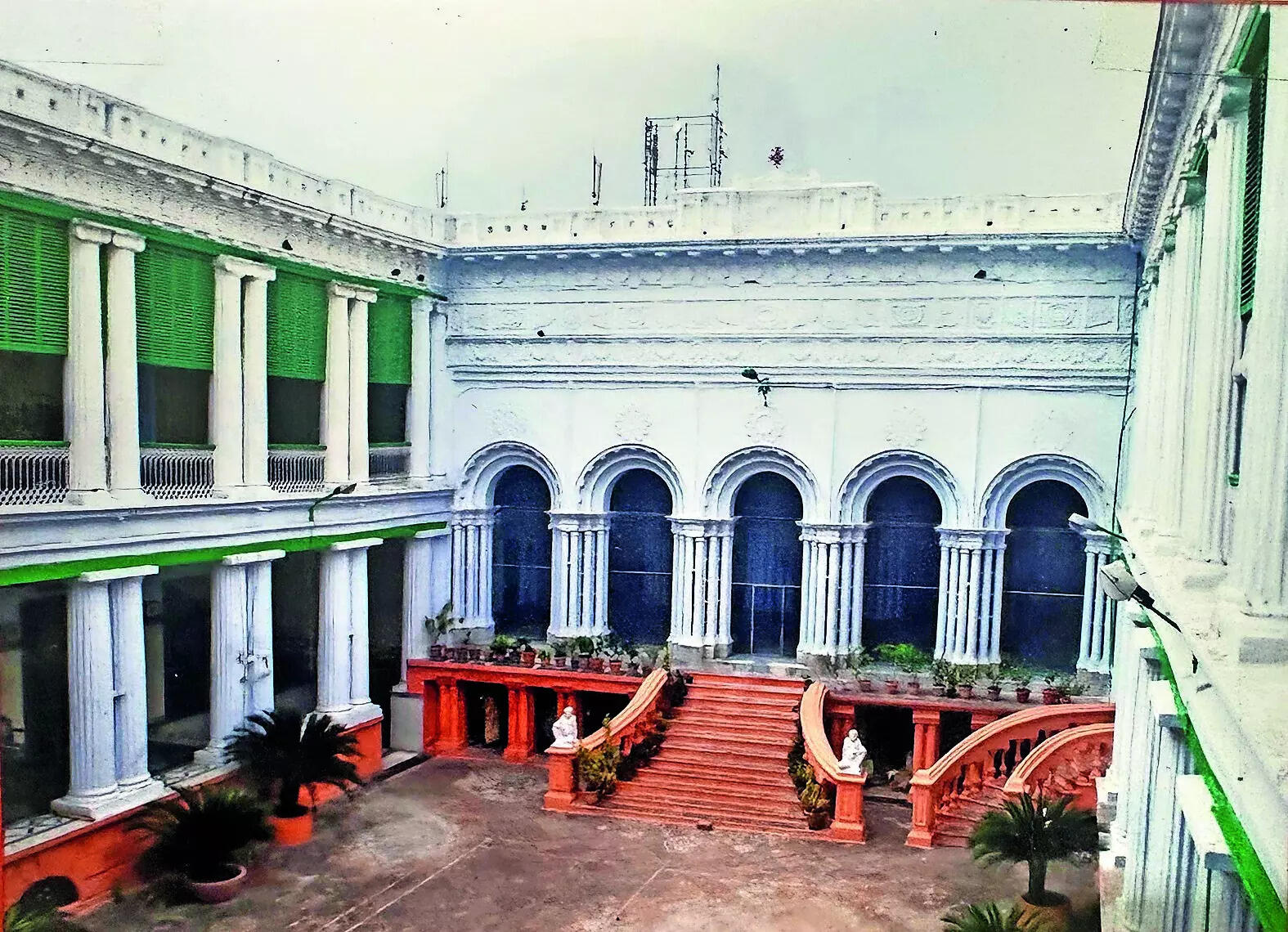
What it is nowToday, Khelat Bhawan is in revival mode. Since 2019, Karabi Ghosh has spearheaded efforts to restore both its architecture and cultural legacy. After initially hosting film shoots, the mansion began promoting cultural events from 2024, including theatre productions like Lakshmaner Shaktishel, exhibitions such as Haraf, diaspora presentations by Kolkata Unforgettable and musical events with DAG Museums.
These initiatives help fund ongoing restoration, supported by active members like Samar.
As a sixth generation member of the Ghosh family, I feel responsible for preserving this legacy, but greater support is needed
Pradipta Ghosh
Why we love itWe love Khelat Bhawan because it refuses to be forgotten. It is a house where history, faith, music and memory coexist – where Ramakrishna Paramahamsa once walked, where Rabindranath Tagore inaugurated a music movement that continued until 2015, where legends such as Bade Ghulam Ali Khan, Sandhya Mukhopadhyay & Pt Ajoy Chakrabarty performed, and where generations battled over inheritance yet protected their legacy.
Novelist Bibhutibhushan Bandyopadhyay once served as the family’s dewan and wrote Pather Panchali from their Bhagalpur residence. It is not merely a mansion of once-crumbling walls restored with care; it is an archive of north Kolkata’s bonedi culture.






 English (US) ·