

 4 days ago
5
4 days ago
5
ARTICLE AD BOX
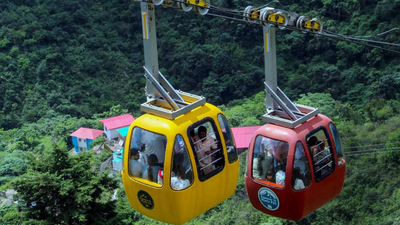
The ropeway to Kedarnath: When infrastructure serves faith
Kedarnath sits at 3,583 metres above sea level, at the head of the Mandakini valley, surrounded by some of the most dramatic Himalayan terrain in India. The Shiva temple at its centre is one of the twelve Jyotirlinga shrines — among the holiest sites in Hinduism — and draws hundreds of thousands of pilgrims each year, many of whom have dreamed of the darshan for decades.For most of its history, the pilgrimage has required a trek of approximately sixteen kilometres from Gaurikund. For the fit and the young, it is a challenge that doubles as devotion. For the elderly, the infirm, and those whose bodies cannot make the ascent, it has historically meant one thing: the quiet,unacknowledged grief of a pilgrim who reaches Gaurikund and can go no further.The Kedarnath ropeway — under development as part of the Uttarakhand government's ropeway programme — is, at its most practical level, a solution to a logistics problem. But at a deeper level it is something more: the state's recognition that access to the sacred should not depend on physical ability.The ropeway doesn't make the pilgrimage easier. It makes it possible — for the pilgrim who thought she would never reach.The pilgrim who thought she would never reachConsider the pilgrim who has spent a lifetime working toward this journey. She is in her sixties, her seventies. Her knees, after decades of labour, are not what they were.
She has saved for the trip. At Gaurikund, the sixteen-kilometre trek defeats her. A pony is expensive. A palanquin more so. She turns back. This story — not dramatic, not exceptional, but repeated thousands of times each season — is what the Kedarnath ropeway is designed to end.
When complete, it will allow pilgrims who cannot make the trek to reach the temple. The darshan she has dreamed of her entire life will be within reach.Hemkund Sahib and MussoorieThe Kedarnath project is part of a broader ropeway programme the Uttarakhand government has been pursuing across the state. The Hemkund Sahib ropeway serves one of Sikhism's most sacred sites — a gurudwara at 4,329 metres — addressing an even more demanding pilgrimage. The Mussoorie ropeway serves a different traveller: the tourist for whom the ropeway is an experience as much as a conveyance.Together these projects reflect an understanding of ropeway infrastructure as serving multiplepurposes: pilgrim access, tourism development, and emergency connectivity in terrain where roadsreach their limits.Pragati in service of sanskritiThe Uttarakhand government's three-pillar framework — Prakriti, Sanskriti, Pragati — is often understood as three separate categories. The Kedarnath ropeway is the clearest example of how they work together: Pragati, through infrastructure investment, directly serves Sanskriti, through pilgrimage and spiritual heritage, in a Himalayan setting that is itself the definition of Prakriti. The mountain does not change.
The shrine does not move. What changes is who can reach it. In a state where sacred geography is the defining feature of identity, making the sacred more accessible is not just a development goal. It is an act of profound respect for what Uttarakhand is.







 English (US) ·