

 1 hour ago
6
1 hour ago
6
ARTICLE AD BOX
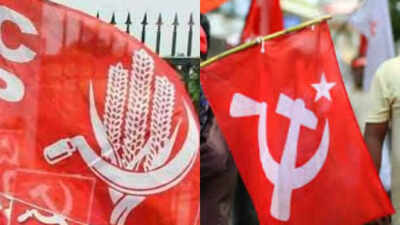
A community that marched with the Left for generations is now weighing its choices with new clarity. Aspirations, identity politics and national currents are reshaping loyalties, making the Ezhava vote more fluid, more contested and no longer something CPM can take for grantedLong regarded as CPM’s most dependable electoral backbone, the Ezhava community— forming nearly a quarter of Kerala’s population—has had a deeply rooted political alignment with the Left.
Anchored in the legacy of social reform movements and strengthened through class politics, this relationship appeared, for decades, almost unshakeable. But the 2024 Lok Sabha elections have exposed what now seem like visible cracks.BJP’s breakthrough in Thrissur, where Suresh Gopi secured a decisive victory, was powered in part by a notable shift among sections of Ezhava voters. The win signalled more than an electoral upset, it pointed to a deeper churn within one of the Left’s most dependable support bases.
The lotus finally bloomed in Kerala, leaving the Left rattled, particularly because the sway was not confined to Thrissur alone but echoed, in varying degrees, across other constituencies.The key reason for this, political scientist G Gopa Kumar said, is the weakening of the once-strong link between the reform movement and CPM. Historically, SNDP Yogam functioned as a social reform platform, while CPM emerged as the political force that carried forward its ideals.
That organic connection, he argues, has eroded over time. “Over the years, the Ezhava community has seen an upward mobility and many of them now realize that there is no relevance in talking about communism.
The poor among them are seeing a compromise between communism and corporatism. SNDP now feels the need to be always politically relevant, whoever may be in power,” he said.Adding to this is the changing social profile of the community.
The rise of a more aspirational middle class among Ezhavas has altered political expectations. A decade of BJP rule at the Centre has also amplified the visibility and pull of Hindutva politics, while CPM’s legacy narrative of social justice through land reforms and class mobilisation no longer resonates in the same way with all sections.Writer Sunil P Ilayidom points to a broader transformation in how the middle class engages with politics.
“For the middle class in Kerala, irrespective of caste, they have already got what they could get from the govt, in terms of education, health, infrastructure and jobs. Therefore, the social benefits that the govt gives to the economically disadvantaged by way of pension to one crore people or homes for five lakh poor (though it is no easy task) doesn’t concern the middle class. Therefore, it brings in a feeling in a few that the party is now no more able to meet or look into our needs.
Added with this, the communal ideology is also at work.”Yet, the emerging shift is neither uniform nor universal. Social analysts said support for CPM within the Ezhava community has historically been strongest among workers—farmers, labourers, and other economically vulnerable groups. Even today, any movement away from the Left is shaped by social differentiation within the community.Sociologist Antony Palackal describes the present moment as one of political re-evaluation.
As the earlier narrative of “liberation” associated with Left politics reaches a plateau, sections of the community are beginning to perceive a mismatch between CPM’s class-first secularism and the growing assertion of identity and representation, he said. “Additionally, a sense of limited upward mobility within the party structure, where leadership and cultural influence appear concentrated, has contributed to perceptions of a political ceiling, prompting sections of the community to reassess their long-standing alignment,” he said.At the same time, historian K N Ganesh cautions against oversimplifying the phenomenon as a straightforward community shift. Kerala’s political history, he argues, does not support the idea of any caste group voting as a monolith. “No caste or community in Kerala supported one political party in totality and the choice always depended on what a political party stood for and then the individual voter, irrespective of caste, would take a political position after assessing whether a political party stands for their rights or those of others,” said Ganesh.The current moment also has precedents. BJP’s attempts to engage with the Ezhava community date back to the mid-2010s, when it began actively courting SNDP. This period also saw emerging tensions between SNDP and CPM, including controversies such as the tableau row and allegations of minority appeasement.The formation of BDJS as the political wing of SNDP in 2015 marked a significant development, offering the community a platform for direct political participation within the BJPled NDA framework.
However, electoral success has remained elusive. Despite nearly a decade of alliance with BJP, BDJS has not secured a legislative presence.CPM, for its part, has not remained passive. In the aftermath of the Lok Sabha setback, the party has reportedly intensified efforts to reconnect with its Ezhava base through grassroots engagement, including branchlevel meetings aimed at addressing emerging discontent.
But this is no simple task. As Gopa Kumar notes, engaging with “Hindus, the most secular people in Kerala politics,” requires navigating a complex and evolving social landscape.This complexity is further shaped by broader societal changes. According to Ilayidom, a significant proportion of Kerala’s population now falls within the broad middle class, where the family remains the most influential social institution.
Within these familial spaces, ideas related to caste, religion, and identity continue to persist, even if they were previously subdued in public political discourse.As external social forces weaken, these latent sentiments are increasingly finding expression in the public sphere as well. “The past decade has accelerated this shift. BJPs power in the Centre in the last 10 years and their Hindutva policy, power, money and financial benefits is attracting people too.
Many who were earlier apprehensive about talking about communal issues are now no more shy of being communal. This has affected the society at large, including the members of the Ezhava community,” Ilayidom said.At the same time, political parties in the state have shown limited willingness to directly engage with these evolving social dynamics. That said, many within the Ezhava community continue to back the CPM wholeheartedly, but no longer uncritically—making their support both decisive and volatile in shaping Kerala’s electoral outcomes.







 English (US) ·