

 1 hour ago
3
1 hour ago
3
ARTICLE AD BOX
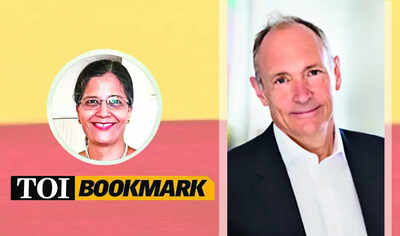
Excerpts:Q: Let's talk about the title of the book. A: 'This Is For Everyone’ is the phrase that I typed on a keyboard at the Olympics opening ceremony... And it does encapsulate really what I feel about the web, that it should be for everyone, that it should be free.
Q: There are moments where you feel certain parts of the internet are not always easily accessible. A: We started the Web Foundation because back in the day, not everybody was online. Part of the job of humanity is getting the other 20 or 30% of people who are not online access to the web. When the web first started, the spirit of it was that anybody could make their own website. We don't really have that power now. Everybody may be on Facebook or Instagram. They don't have power as individuals. One of the things that we're fighting for is for build systems where people do have that power again. Q: The web now is a far cry from when it was first launched, when it was quite democratic in its accessibility. A: I could publish a blog and you could write a blog and then you could link to my blog from your blog, and my blog will be the same status as the Times of India, so that the big companies were on level with the individuals. And so they called it the blogosphere, the space of all the people blogging. And that feeling of richness is something which to a certain extent we've lost.
Q: What did you invent at CERN that then became the bedrock of the World Wide Web? A: I had to invent it because nobody else had at the time. And, in fact, before the web, it was really hard for people to imagine what the Web was like. The internet was new, so people were not designing writing programs to run over the internet... We used to have hypertext systems on CD ROMs. So you put a CD ROM in your computer and you'd be able to click around the information on it, but with it, they would go to the same CD ROM, never go to the rest of the world.
When I designed the web, I imagined when you click on a link, you should be able to go to any piece of documentation anywhere in the whole world. Q: Did you ever in your wildest dreams imagine the impact that the World Wide Web would have upon humanity? A: I did design it so it could be you could put anything on it. And I couldn't dream that everything would be on it. And now it seems sometimes that everything is on it. Q: All of us are learning something new about it as much as it is learning something about the way we use it. A: Yes, people are learning things, but also the system, the social networks are learning things about you. And to a certain extent that means that they can service you better. And now AI can service you, but even better by allowing you to have a conversation about what's on the web. So that gave even more power to the user. Q: I liked the phrase that you used — ‘the promises and peril of AI’. A: It is evolving fast. The great thing is that as it evolves fast, the use of AI for things like drug discovery and scientific progress, curing diseases is really exciting. On the other hand, as it evolves really rapidly, there will come a time then logically there's got to be a time when it becomes more powerful than the person who created it. So we do have to think, what happens if we make a super intelligence in the future? We have to think about how we would contain that.
Mustafa Suleyman wrote a book about the coming wave in which he discusses this problem of containment. Q: I think nobodycomprehended that AI would reach the proportions that it has today. A: ChatGPT I think was a phase change. I was very surprised how powerful ChatGPT was. And all of the language models which have come along since then are really dramatically more effective than anything before ChatGPT. Q: What was it that surprised you about it? A: The fact that it could have the power to be able to have a conversation, apparently on the level of a person. In the book, I write about the fact that what's also important about an AI is who it works for... There was Apple and Alexa, which works for Amazon. And so if you ask them what to buy or what holiday to go on, what then? Because they're working for a big company. So one of the things I wrote about a long time ago was Charlie, an AI that works for you.
.. We need AI which works in your best interest. And if you combine that AI with access to all of your personal data so it can understand you very well, then that becomes very, very powerful... The Solid project has been an important part of building systems where you have control of the data. It takes this world where your data is owned by and controlled by other people and flips it the right way up, to where your data is controlled by you. Q: You were bringing back the concept of free will into every individual's hand rather than taking it away as the internet seems to do today. A: When you look at the internet, there's some things which seem to take it away, like the social networks. But other things like Wikipedia, GitHub for example are place where programmers meet and exchange open source code. So there are places on the internet which are collaborative and creative and, on a good day, compassionate. Q: But every day I bet we add on many more new users, who are just discovering the internet, and not everyone can discern which is the good part. A: If they're new to the internet, then they may get stuck on something which is addictive. Things like Instagram are carefully made to be addictive. So the trick is when, for example, you give a child a phone, you could try giving them a phone which doesn't have the addictive things on it, which only has the good things.
And teach them about the things out there which are good and constructive. Q: What would you advise people to be — a techno optimist or a techno realist? A: I think realism is always a good idea. So a blend of optimism and pessimism, but being optimistic. But spend time finding out about the wonderful things and just avoid the less wonderful things. Don't spend your time strolling through Instagram. Spend your time on things like Pinterest.







 English (US) ·