

 1 hour ago
5
1 hour ago
5
ARTICLE AD BOX
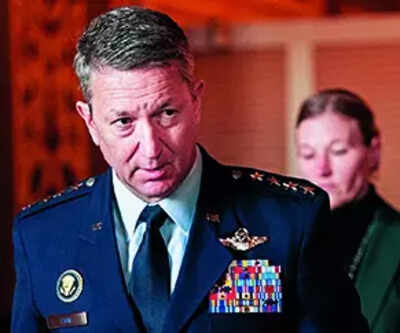
WASHINGTON: President Donald Trump said on Monday that General Dan Caine, the chair of the joint chiefs of staff, believed that any eventual military action ordered against Iran would be "something easily won.
" But that is not what Caine has told Trump and other senior advisers in recent high-level White House meetings on Iran, people briefed on internal administration deliberations said.Instead, Caine has said that the US has amassed forces in the West Asia to carry out a small or medium strike, but that there would be a potentially high risk of American casualties and that such an operation would have a negative effect on US weapon stockpiles.
Caine has also underscored that the operations under consideration in Iran would be much more difficult than the successful capture last month of President Nicolas Maduro of Venezuela.The apparent disconnect underscores the balancing act that Caine, the president's top military adviser, is carrying out: presenting the commander in chief with an array of military options, along with their potential risks and consequences, without giving his opinion about his own choice.
A spokesperson for the military's joint staff declined to comment.Trump's comment, in a social media post, appeared to be prompted by reports in New York Times and other news publications about military options he is weighing if Iran does not give up its nuclear programme."General Caine, like all of us, would like not to see war but, if a decision is made on going against Iran at a military level, it is his opinion that it will be something easily won," Trump said in his post. "He knows Iran well in that he was in charge of Midnight Hammer," Trump said"Caine has not spoken of not doing Iran, or even the fake limited strikes that I have been reading about, he only knows one thing, how to WIN and, if he is told to do so, he will be leading the pack." In fact, during the recent meetings, General Caine discussed what the military could do from an operational standpoint but declined, as he regularly does, to advocate a certain policy position.







 English (US) ·