

 2 days ago
7
2 days ago
7
ARTICLE AD BOX
Last Updated:February 04, 2026, 08:53 IST
Students at JNU staged a torchlight protest seeking implementation of UGC Equity Regulations 2026 amid legal challenges and a Supreme Court stay.

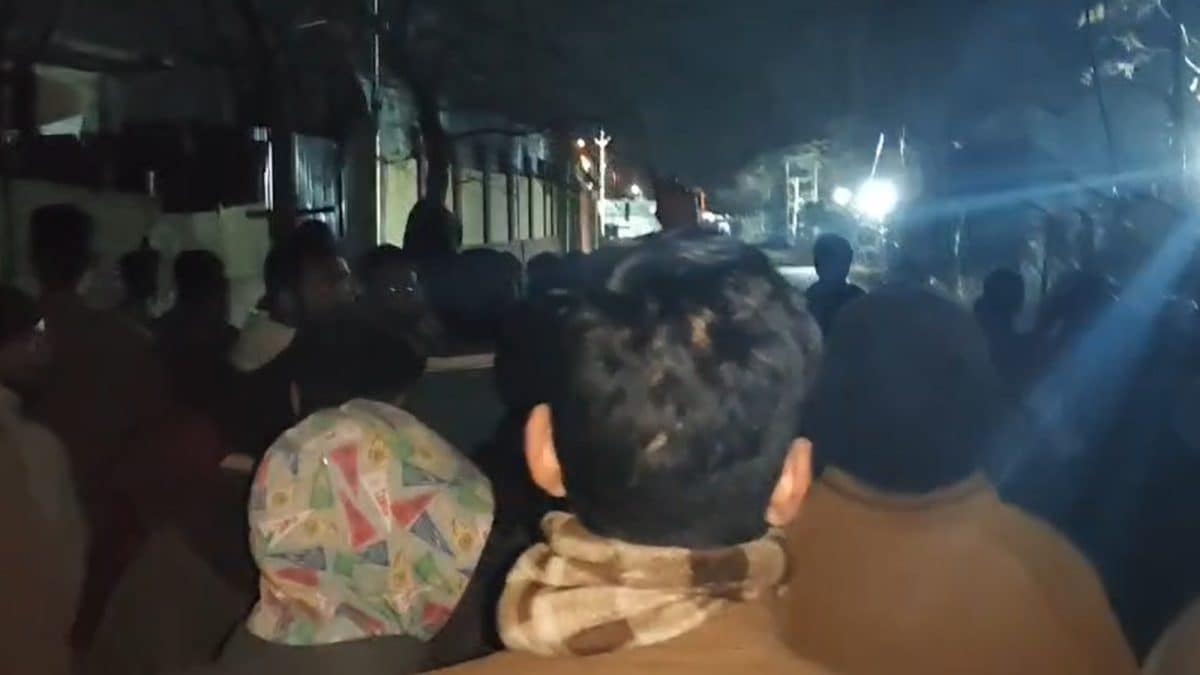
JNU students hold a torchlight protest seeking implementation of UGC Equity Regulations 2026.
Students of Jawaharlal Nehru University (JNU) on Tuesday evening took out a torchlight procession on campus, demanding the immediate implementation of the UGC Equity Regulations 2026. The protest saw students raising slogans of “Jai Bhim" and “Jai Phule" as they called on the authorities to enforce the new rules without delay, amid growing opposition and legal challenges to the regulations across the country.
JNU में UGC गजट नोटिफिकेशन–2026 को तत्काल लागू करने की माँग के समर्थन में एक विशाल मशाल जुलूस निकाला जा रहा है।हज़ारों छात्र मशालों के साथ सड़कों पर उतरकर यह साफ़ संदेश दे रहे हैं कि यह आवाज़ दबेगी नहीं, क्योंकि यह इंसाफ़ की आवाज़ है। pic.twitter.com/WY0D8Pp1hO
— Dr. Laxman Yadav (@DrLaxman_Yadav) February 3, 2026
JNUSU President Aditi Mishra said, “This torch march was held to remember the struggles of students like Rohith Vemula, Payal Tadvi and Darshan Sultanki, who became martyrs on university campuses and whose mothers fought long battles for justice. It was under this pressure that the Supreme Court directed the UGC to frame regulations, eventually leading to the Equity Regulations being issued."
She added, “We need to uphold this firmly and ensure that it is implemented everywhere. Another point that emerged during our interactions with students on campus is that an institution’s role is to conduct inquiries. When women face harassment, guidelines framed after Nirbhaya or Vishakha were introduced, and laws like the POSH Act were enacted. Even then, concerns over false cases were raised. So what is the role of the police? It is to investigate…"
Earlier, the Supreme Court of India, on Thursday, January 29, temporarily stayed the University Grants Commission’s “Equity Regulations 2026." A bench comprising Chief Justice of India Surya Kant and Justice Joymalya Bagchi heard multiple petitions challenging the new rules and ordered that the 2012 regulations will continue to remain in force until the matter is examined in detail.
Senior advocates Vishnu Shankar Jain and Vineet Jindal appeared for the petitioners, including Mrityunjay Tiwari and Rahul Dewan. They argued that the new regulations violate the principle of constitutional equality and promote what they described as ‘reverse discrimination’ against students from the general category.
Solicitor General Tushar Mehta, representing the Central Government and the University Grants Commission, defended the new framework. However, the bench raised concerns over whether the rules could take society backwards instead of ensuring equality on campuses.
The court stressed that educational institutions should reflect India’s unity and not deepen caste divisions. Drawing a comparison with issues such as ragging, the bench questioned why social problems are addressed without categorising students based on identity.
The judges also referred to divisions within reserved categories in states such as Haryana, where sub-groups based on socio-economic status already exist. They observed that these internal distinctions are creating disparities and may worsen under the new rules.
Chief Justice Surya Kant suggested that a committee of eminent jurists be formed to review the regulations while taking into account social values and ground realities. Justice Bagchi flagged concerns over vague wording in the rules, warning that it could be misused on campuses for personal vendettas.
The Supreme Court issued notice to the Central Government and the UGC, seeking their response to the petitions filed by Rahul Dewan, Vineet Jindal, and Mrityunjay Tiwari.
The UGC had notified the Equity Regulations 2026 on January 13, 2026, replacing the 2012 rules. The new framework was introduced following cases such as Rohith Vemula and Payal Tadvi, which highlighted concerns over caste-based discrimination in higher education. UGC data had pointed to a significant rise in such complaints.
The new regulations have sparked a nationwide debate and triggered protests across several campuses.
The Supreme Court has listed the matter for further hearing on March 19, 2026, and has restrained the UGC from implementing the new rules until then.
Handpicked stories, in your inbox
A newsletter with the best of our journalism
First Published:
February 04, 2026, 08:53 IST
News education-career Torchlight Protest At JNU As Students Demand Implementation Of UGC Equity Regulations
Disclaimer: Comments reflect users’ views, not News18’s. Please keep discussions respectful and constructive. Abusive, defamatory, or illegal comments will be removed. News18 may disable any comment at its discretion. By posting, you agree to our Terms of Use and Privacy Policy.
Read More





 English (US) ·