

 1 hour ago
6
1 hour ago
6
ARTICLE AD BOX
Hormuz briefly reopened, moving Indian cargoes and Iranian oil east before tensions returned.

New Delhi,UPDATED: Jun 23, 2026 17:26 IST
If the Iran war has changed one thing for the region, and by extension the world, it is the growing uncertainty surrounding the Strait of Hormuz. The waterway has shifted repeatedly between disruption and limited reopening in recent weeks, making one of the world's most important energy corridors increasingly unpredictable.
A temporary easing of tensions following the June 17 US-Iran agreement briefly reopened the Strait to commercial traffic, but renewed IRGC warnings and continued regional hostilities have again cast doubt over its accessibility. India, which imports a significant share of its crude from the region, is among the countries most closely watching developments in the waterway. 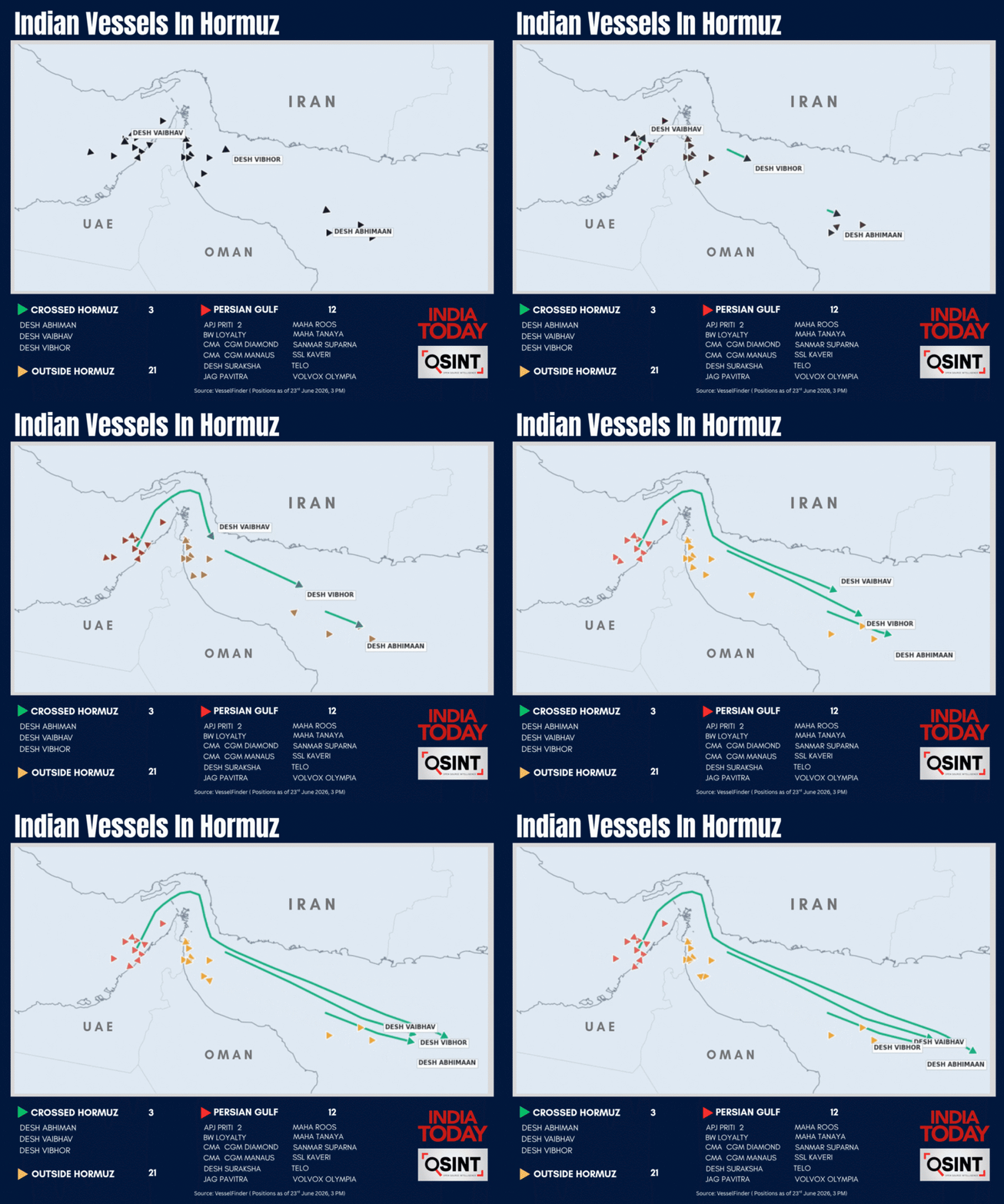
Between June 20 and June 22, three Indian flagged crude oil tankers, four fertiliser vessels, and more than 90 Indian seafarers passed through the region, according to statements issued by the Shipping Ministry and the Ministry of Chemicals and Fertilisers. An analysis of vessel movements found that while three India-linked vessels crossed Hormuz, 12 remained west of the waterway, with several others positioned across the wider Gulf region.
India Today's Open Source Intelligence (OSINT) team analysed commercial maritime tracking data, government statements, and port line-up documents to map this narrow transit window and assess how India-linked cargoes moved following the June 17 agreement.
Tracking data showed the Indian flagged tankers Desh Vaibhav and Desh Vibhor east of the Strait during the reopening period. Another Indian flagged vessel, Desh Abhiman, was observed operating within the same shipping corridor and exhibiting a broadly similar movement pattern. Together, the vessel movements provide a snapshot of how India-linked cargoes navigated the brief reopening of the waterway.
On June 20, Shipping Minister Sarbananda Sonowal announced that three Indian flagged crude oil tankers, Desh Vaibhav, Desh Vibhor, and Sanmar Herald, carrying more than 8.6 lakh metric tonnes of crude oil and 94 Indian crew members, had successfully crossed the Strait.
"Safe passage secured," Sonowal wrote, adding that safeguarding India's maritime interests, seafarers, and energy lifelines remained a top priority. 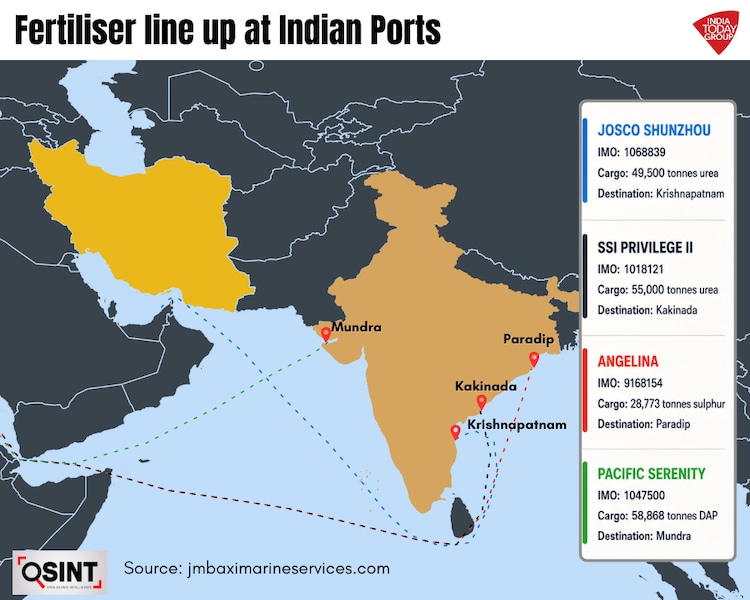
Two days later, the Ministry of Chemicals and Fertilisers said four cargo vessels carrying urea, diammonium phosphate, and sulphur had crossed the Strait the previous week and were sailing towards Krishnapatnam, Kakinada, Paradip, and Mundra to support India's Kharif requirements. The government did not disclose the names of these vessels.
An examination of port line-up records and shipping databases, however, identified several West Asia-linked cargoes arriving at these ports. These included Josco Shunzhou carrying 49,500 tonnes of urea for Krishnapatnam, SSI Privilege II carrying 55,000 tonnes of urea for Kakinada, Angelina carrying 28,773 tonnes of sulphur for Paradip, and Pacific Serenity carrying 58,868 tonnes of DAP for Mundra.
Not all of these voyages can be independently confirmed as Hormuz transits. Pacific Serenity, for instance, appears to have originated from Yanbu on Saudi Arabia's Red Sea coast, suggesting a route that bypassed the Strait altogether.
Taken together, the movement of crude tankers, fertiliser cargoes, and port arrivals suggests that several India-bound shipments utilised the narrow window created by the June 17 agreement.
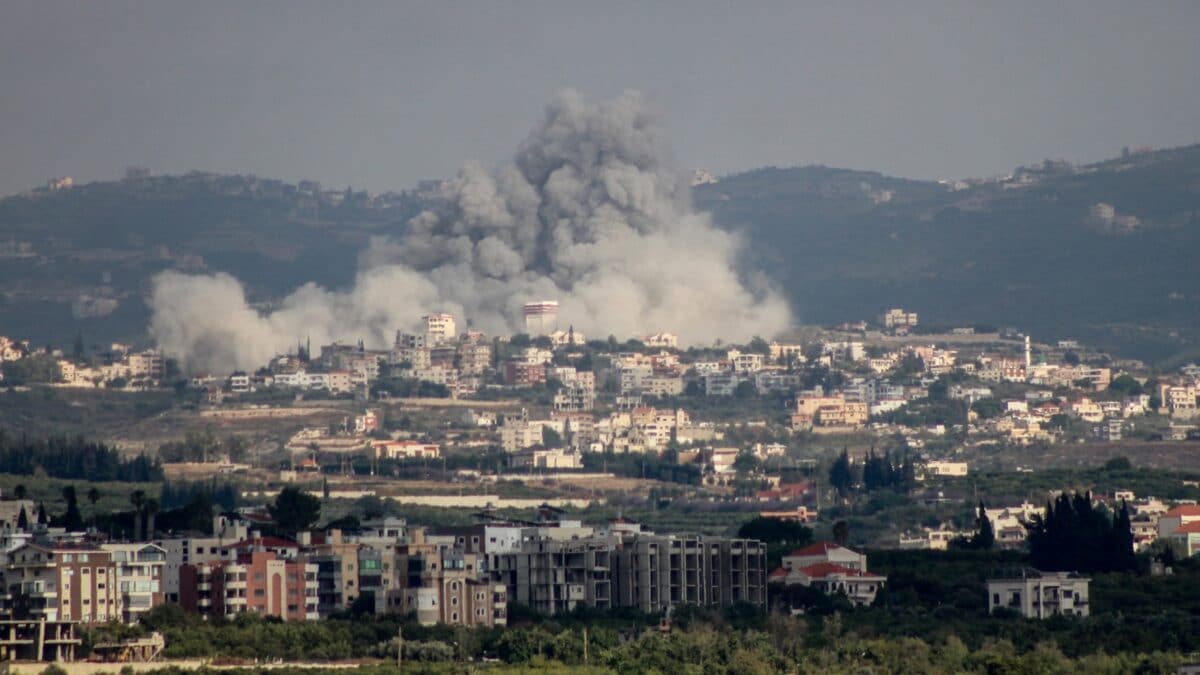
That window, however, proved short-lived. As fighting continued between Israel and Hezbollah, one of the few theatres where Tehran appears unwilling to concede strategically, the IRGC once again raised the possibility of restricting shipping through Hormuz.
The renewed warnings also drew a sharp response from Washington. "You close the Strait of Hormuz, and you won't have a country," US President Donald Trump warned Tehran. He later said Washington could "take over the Strait" if necessary, underscoring how the waterway had once again become both a military red line and a geopolitical bargaining chip.
The same waterway that briefly carried Indian crude and fertiliser cargoes quickly returned to being a geopolitical pressure point. 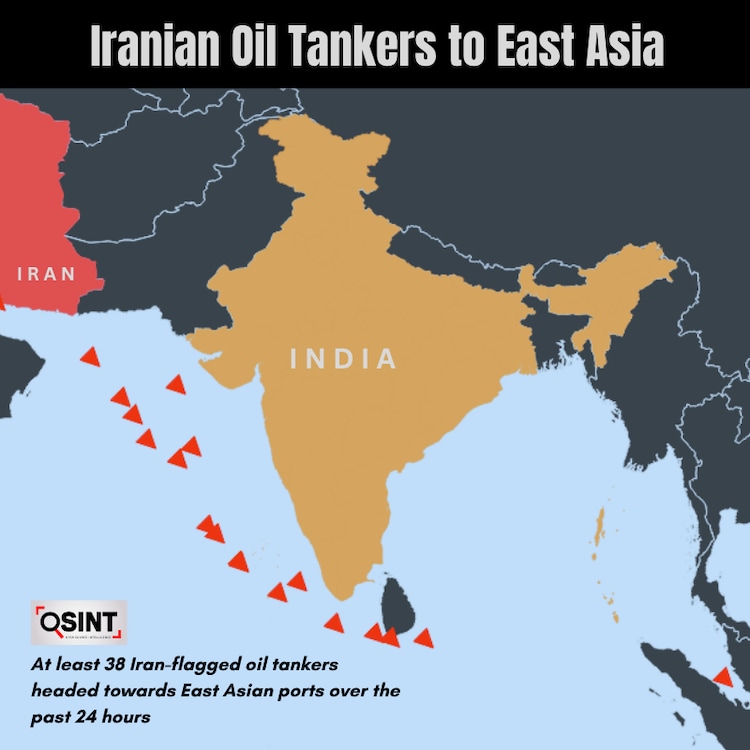
However, the easing of US restrictions on Iranian oil appears to have accelerated the return of Tehran's exports to Asian markets, even as renewed tensions continued to cloud commercial shipping through Hormuz.
Commercial maritime tracking platforms show at least 38 tankers carrying Iranian crude en route to China, South Korea, and Japan, highlighting the rapid resumption of Iranian oil exports following the lifting of sanctions and the withdrawal of the US maritime blockade.
- Ends
Published By:
bidisha saha
Published On:
Jun 23, 2026 17:26 IST





 English (US) ·