

 6 days ago
7
6 days ago
7
ARTICLE AD BOX
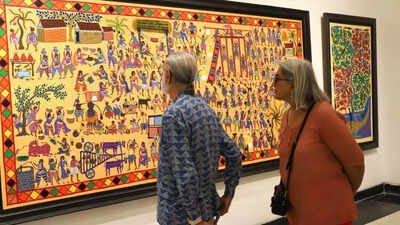
Stories that were once painted on mud walls had transformed into new expressions on canvas. The five-day Bhil tribal art exhibition March 27–31, ‘Tribal Echoes,’ held at Bikaner House, had offered audiences a unique experience.
Organized by Gallery Nifa, the exhibition had provided art lovers an opportunity to closely observe and connect with this living tradition. In its first two days, the exhibition had received immense appreciation from visitors, and the organizers had expressed hope for continued enthusiasm.The exhibition had presented the world of Bhil art, where stories were told through colors, dots, and simple forms. Each artwork had carried a rhythm, as if memories were unfolding within the layers of color.
Themes of nature, folklore, deities, forests, animals, birds, and daily life were depicted in a way that had made viewers feel like part of that world. What once had been a communal and ritualistic form of expression had evolved into a powerful contemporary visual language.
‘Tribal Echoes’ had reflected a dialogue between tradition and modernity.The exhibition had included works by senior artists like Bhuri Bai and Lado Bai, who had played a significant role in giving Bhil art a new identity.
Bhuri Bai, a Padma Shri awardee, had been among the pioneering artists who had brought this art form from walls to paper and canvas. Her art showed memories of the village, cultural traditions and real life experiences that really hit home with people. Lado Bai's works showed how the tradition has changed and stayed the same over time. Her paintings had a lot of spiritual connections to nature and patterns of dots that moved.
Her art showed how traditions can be kept alive while still changing with the times.
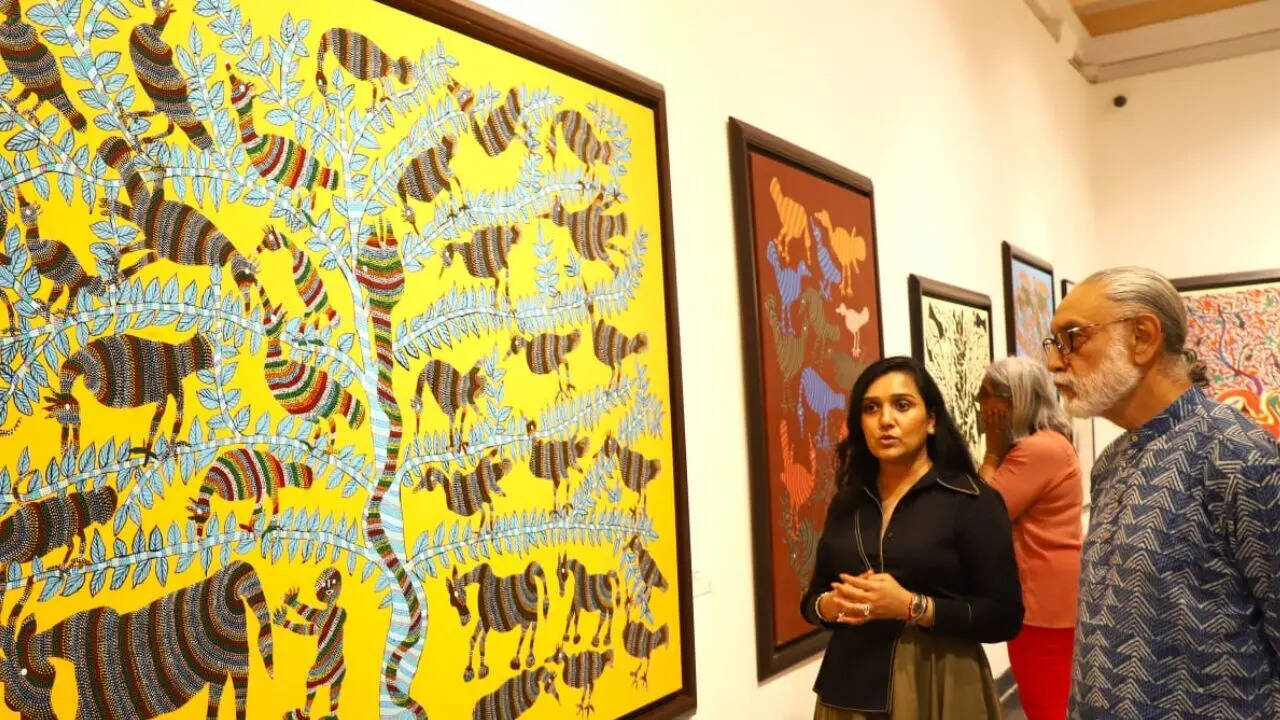
The works of both artists had been exhibited on global platforms in places like Paris, United States, United Kingdom, and Australia, reflecting the growing global recognition of Bhil art. Curator Renu Khera had said, “For me, art had always been a medium to understand and connect with India’s cultural heritage. ‘Tribal Echoes’ had been an extension of that thought.
Tribal art had embodied deep cultural richness and sensitivity.
Through this exhibition, we had aimed not only to present these works but also to help people understand their context and significance.”This exhibition had been the result of collaborative efforts involving Renu Khera’s private collection and other contributors working toward giving Bhil art wider recognition. It had stood as a testament to a time when tribal art was no longer seen only through a traditional or ethnographic lens but was increasingly recognized as fine art.
Today, collectors and institutions had been including these works in their collections, marking their entry into the mainstream.The show got good reviews in the first two days. From March 29 to 31, people could get a closer look at this type of art and learn about its subtleties. Tribal Echoes was more than just an art show it was an experience where colors talked, dots told stories and tradition connected the past to the present.







 English (US) ·