

 51 minutes ago
3
51 minutes ago
3
ARTICLE AD BOX
4 min readBhopalUpdated: May 21, 2026 06:00 PM IST
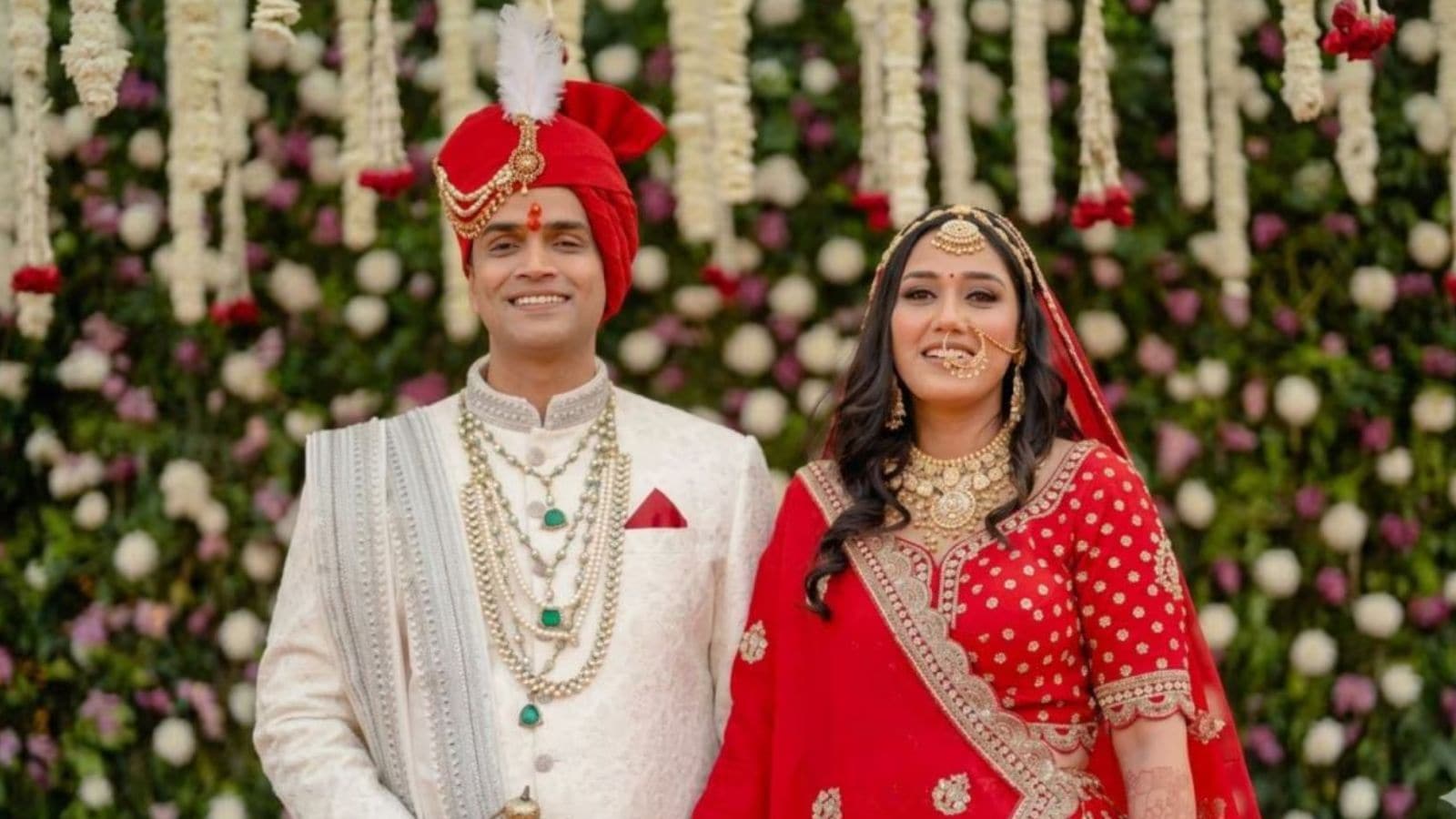 In his petition, Samarth argued that the allegations of dowry demand were inherently doubtful because he and his mother had allegedly transferred more than Rs 7 lakh to Twisha’s account. (File Photo)
The legal battle following the death of actor and model Twisha Sharma is set to move to the Madhya Pradesh High Court, with her husband Samarth Singh challenging a lower court’s rejection of his anticipatory bail plea, and Twisha’s family preparing to seek cancellation of the anticipatory bail granted to his mother Giribala Singh.
Samarth, against whom police have announced a reward after describing him as absconding, has approached the High Court, arguing that the sessions court wrongly denied him anticipatory bail despite granting relief to his mother in the same case.
In his petition, Samarth argued that the allegations of dowry demand were inherently doubtful because he and his mother had allegedly transferred more than Rs 7 lakh to Twisha’s account. “The WhatsApp chats presented by the complainant are edited and incomplete. The same being tampered cannot be relied upon,” the plea states, adding that “more than Rs 7 lakh has been transferred online to the account of Mrs Twisha by the applicant and his mother in a complaint of dowry harassment for a demand of Rs 2 lakh.”
The petition argued against the trial court’s reasoning for rejecting bail, calling the order “completely arbitrary and without any logical reason”.
Samarth further argued that the investigation so far had not produced any material directly linking him to Twisha’s death. “No material till today has been collected to display any involvement of the applicants in the sad demise of Late Mrs Twisha. The entire prosecution story being constructed and built is based on imagination and presumptions,” the petition claimed.
The plea also claimed that Twisha suffered from “drug addiction and related complications of withdrawal symptoms”, asserting that psychiatric and psychological prescriptions had been filed before the court. It additionally contended that “no custodial interrogation is required in the instant case”.
The sessions court, however, had drawn a distinction between the allegations against Giribala Singh, a retired judge, and those against her son while deciding the earlier anticipatory bail pleas.
Story continues below this ad
While granting anticipatory bail to Giribala Singh, the court had observed that the allegations against her appeared “formal in nature” and that prima facie material suggested the deceased’s “principal grievance” was against her husband. The court also noted that custodial interrogation of the retired judge did not appear necessary at that stage.
In contrast, while rejecting Samarth Singh’s anticipatory bail plea on May 18, the court cited the fact that Twisha had died “within six months of marriage under abnormal circumstances”. The court also relied on statements given by Twisha’s family members, along with WhatsApp chats placed on record, observing that these materials prima facie pointed against Samarth.
The court further noted that the investigation remained incomplete and that custodial interrogation could not be ruled out at that stage.
Twisha’s family is now expected to challenge the anticipatory bail granted to Giribala Singh before the High Court, arguing that the sessions court failed to properly appreciate the allegations of influence over the investigation and postmortem process.
Story continues below this ad
The case has snowballed into one of the most closely watched criminal investigations in Madhya Pradesh, with allegations of dowry harassment, disputed forensic findings, demands for a second postmortem, and calls for a CBI probe. Earlier this week, Chief Minister Mohan Yadav said the state government would write to the CBI seeking an investigation into the matter, while Bhopal Police Commissioner Sanjay Kumar maintained that the probe so far “points towards suicide and not murder”.

Anand Mohan J is an award-winning Senior Correspondent for The Indian Express, currently leading the bureau’s coverage of Madhya Pradesh. With a career spanning over eight years, he has established himself as a trusted voice at the intersection of law, internal security, and public policy. Based in Bhopal, Anand is widely recognized for his authoritative reporting on Maoist insurgency in Central India. In late 2025, he provided exclusive, ground-level coverage of the historic surrender of the final Maoist cadres in Madhya Pradesh, detailing the backchannel negotiations and the "vacuum of command" that led to the state being declared Maoist-free. Expertise and Reporting Beats Anand’s investigative work is characterized by a "Journalism of Courage" approach, holding institutions accountable through deep-dive analysis of several key sectors: National Security & Counter-Insurgency: He is a primary chronicler of the decline of Naxalism in the Central Indian corridor, documenting the tactical shifts of security forces and the rehabilitation of surrendered cadres. Judiciary & Legal Accountability: Drawing on over four years of experience covering Delhi’s trial courts and the Madhya Pradesh High Court, Anand deconstructs complex legal rulings. He has exposed critical institutional lapses, including custodial safety violations and the misuse of the National Security Act (NSA). Wildlife Conservation (Project Cheetah): Anand is a leading reporter on Project Cheetah at Kuno National Park. He has provided extensive coverage of the biological and administrative hurdles of rewilding Namibian and South African cheetahs, as well as high-profile cases of wildlife trafficking. Public Health & Social Safety: His recent investigative work has uncovered systemic negligence in public services, such as contaminated blood transfusions causing HIV infections in thalassemia patients and the human cost of the fertilizer crisis affecting rural farmers. Professional Background Tenure: Joined The Indian Express in 2017. Locations: Transitioned from the high-pressure Delhi City beat (covering courts, police, and labor issues) to his current role as a regional lead in Madhya Pradesh. Notable Investigations: * Exposed the "digital arrest" scams targeting entrepreneurs. Investigated the Bandhavgarh elephant deaths and the impact of kodo millet fungus on local wildlife. Documented the transition of power and welfare schemes (like Ladli Behna) in Madhya Pradesh governance. Digital & Professional Presence Author Profile: Anand Mohan J at Indian Express Twitter handle: @mohanreports ... Read More
Stay updated with the latest - Click here to follow us on Instagram
© The Indian Express Pvt Ltd



 English (US) ·