

 1 hour ago
5
1 hour ago
5
ARTICLE AD BOX
Last Updated:June 25, 2026, 14:54 IST
The twin earthquakes have killed at least 32 people and injured more than 700, with La Guaira described as the hardest-hit region.


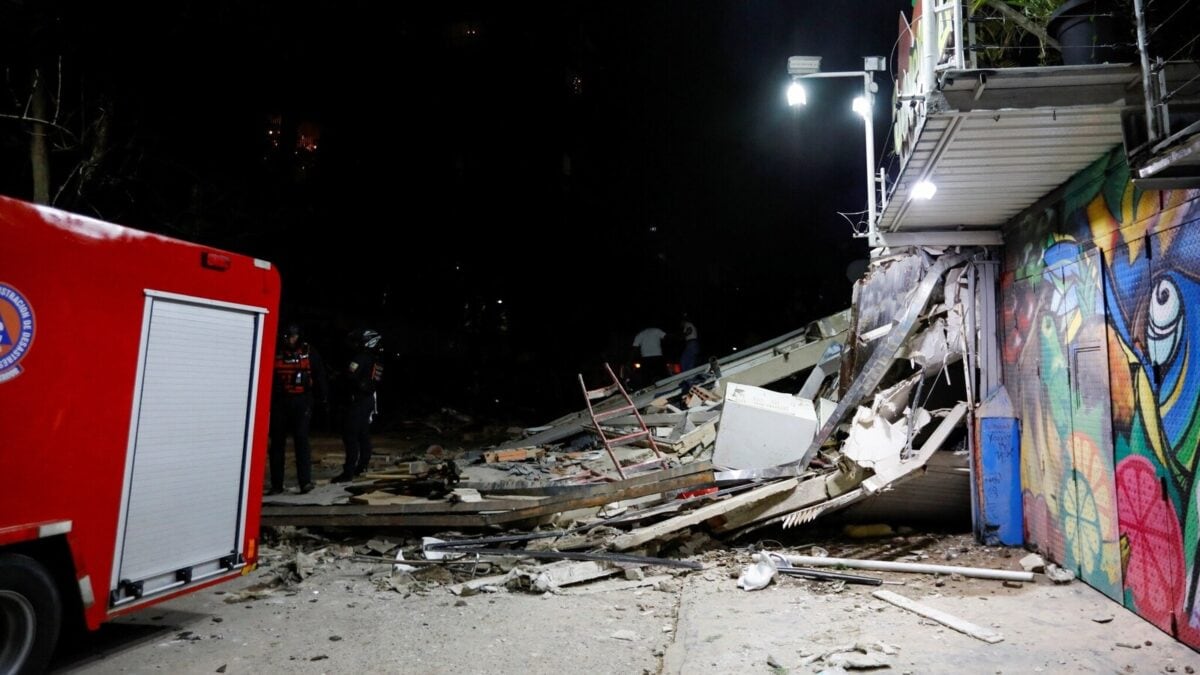
Venezuela declared a state of emergency after two powerful earthquakes struck the country within about a minute, killing at least 32 people and injuring more than 700. (AFP)
Venezuela declared a state of emergency after two powerful earthquakes struck the country within about a minute, killing at least 32 people and injuring more than 700.
The magnitude 7.2 and 7.5 earthquakes hit shortly after 6 pm local time on Wednesday, damaging buildings, roads and essential services across several states. Acting President Delcy Rodríguez warned that the toll was expected to rise as rescuers searched collapsed structures and reached areas cut off by the disaster.
The initial casualty figures did not include La Guaira, north of Caracas, which Rodríguez described as a “disaster zone" and the worst-affected region.
“Dozens of buildings have collapsed there, about 30 kilometers (19 miles) north of Caracas, and we are currently carrying out intensive rescue operations to save lives," she said.
The earthquakes were among the strongest to hit Venezuela in more than a century. Their timing, shallow depth and location near a major tectonic boundary help explain why the shaking was so intense and widespread.
Where Did The Earthquakes Strike?
According to the US Geological Survey, the first earthquake, measuring magnitude 7.2, struck west of Morón on Venezuela’s Caribbean coast, about 168 kilometres west of Caracas. It originated at a depth of approximately 22 kilometres.
A magnitude 7.5 earthquake followed about a minute later. The second quake was shallower, originating at a depth of around 10 kilometres, with its epicentre about 16 kilometres southwest of Morón.
Although the epicentres were outside Caracas, the tremors were strongly felt in the capital and across central and western Venezuela.
Shaking was reported in Carabobo, Miranda, La Guaira, Falcón and Trujillo. The earthquakes were also felt in parts of Colombia and in Brazil’s Amazon region, more than 1,700 kilometres from Caracas. Buildings were evacuated in the Brazilian cities of Manaus, Belém and Macapá.
The US Pacific Tsunami Warning Center issued several alerts after the earthquakes, but later said there was no tsunami threat.
What Caused The Venezuela Earthquakes?
Venezuela lies near the boundary between the Caribbean and South American tectonic plates.
The Earth’s outer surface is divided into large slabs known as tectonic plates, which move slowly over time. Where two plates meet, their movement creates stress in the surrounding rocks and along fractures in the Earth’s crust called faults.
The USGS said the second and larger earthquake was caused by “shallow strike-slip faulting" near the boundary between the Caribbean and South American plates.
Strike-slip faulting occurs when two sections of the Earth’s crust move horizontally past one another. The movement is sideways rather than one plate being forced sharply beneath another.
Faults do not always move smoothly. Friction can hold parts of a fault in place even as the surrounding plates continue to shift. This causes pressure to accumulate underground.
When that pressure becomes too great, the locked section of the fault suddenly slips, releasing energy in the form of seismic waves. Those waves travel through the ground and produce the shaking felt during an earthquake.
Why Did Two Large Earthquakes Strike Within A Minute?
The two earthquakes may have been part of the same complex fault movement.
According to the USGS, the first quake may have shifted pressure along the fault and triggered another section to break almost immediately. The USGS said the sequence “likely indicates a complex, rupture interaction process".
It also explained that large earthquakes do not occur at a single pinpoint location. Although maps show an epicentre, the actual rupture can spread across a much larger section of a fault.
“While commonly plotted as points on maps, earthquakes of this size are more appropriately described as slip over a larger fault area," the USGS said.
The two recorded quakes may therefore represent linked movements across different parts of the same fault system.
Why Was The Shaking So Destructive?
Both the strength and depth of the earthquakes increased the danger.
The second earthquake originated only about 10 kilometres below the surface. Shallow earthquakes often cause more severe surface shaking because the seismic waves travel a shorter distance before reaching buildings and populated areas.
The vulnerability of local construction also contributed to the destruction.
The USGS said many buildings in the affected region were made from unreinforced brick masonry or adobe. Such structures can be particularly dangerous during powerful earthquakes because they lack the reinforcement needed to absorb strong sideways movement.
Walls may crack or separate, roofs can collapse, and entire buildings can fail during intense shaking.
The USGS warned that “high casualties and extensive damage are probable". Its PAGER system estimated a 39 per cent chance of between 1,000 and 10,000 deaths and a 37 per cent chance of between 10,000 and 100,000 deaths. The estimates are based on the intensity of shaking, population exposure and building vulnerability, and are not confirmed casualty figures.
Which Areas Were Worst Hit?
La Guaira was described by the government as the hardest-hit state. Significant damage was also reported in the Altamira and El Paraíso neighbourhoods of Caracas, where rescuers searched collapsed buildings and residents gathered outside damaged homes.
In Falcón state, Governor Víctor Clark said 32 people had been hospitalised and 15 remained trapped. The earthquakes also damaged Simón Bolívar International Airport near Caracas, forcing its closure.
Schools were suspended, while subway and natural gas services in the capital stopped operating. Collapsed buildings, fallen electricity poles and debris blocked roads, complicating rescue operations. Mobile phone services were also unavailable in parts of the country, leaving families unable to contact relatives.
“It started off gently and then gradually grew, and in the end, we all had to leave our houses, go outside and gather together," a Caracas resident told AP.
Another resident told AP his building “really shook from side to side. Unreal. The force was incredibly strong."
Are Powerful Earthquakes Common In Venezuela?
Strong earthquakes are less common in Venezuela than in countries along Latin America’s Pacific coast, such as Mexico and Chile.
Those countries are located along the Pacific Ring of Fire, a highly active tectonic belt responsible for about 90 per cent of the world’s earthquakes, according to the USGS.
Venezuela is outside that belt, but its position near the boundary of the Caribbean and South American plates still exposes it to seismic risk.
The country also lies near several fault systems capable of producing destructive earthquakes, even if major events occur less frequently.
In 1812, an earthquake devastated Caracas and Mérida and killed an estimated 30,000 people, according to the USGS. Another earthquake struck Caracas in 1967, collapsing several high-rise buildings and killing about 240 people.
Could More Earthquakes Follow?
Nearly two dozen aftershocks were reported after the main earthquakes, and the USGS warned that further tremors were likely.
Aftershocks occur as the Earth’s crust adjusts to the sudden movement caused by a major earthquake. Most are smaller than the main event, but some can still produce strong shaking.
They are especially dangerous when buildings have already been damaged. A structure that survives the first earthquake may collapse during a later tremor.
Authorities have asked residents to stay away from damaged buildings and keep roads clear for ambulances and rescue teams. Many people spent the night in cars, subway stations and other public spaces rather than returning to unsafe homes.
Handpicked stories, in your inbox
A newsletter with the best of our journalism
About the Author
Karishma Jain, Chief Sub Editor at News18.com, writes and edits opinion pieces on a variety of subjects, including Indian politics and policy, culture and the arts, technology and social change. Follo...Read More
News world Two Quakes In One Minute: What Caused Venezuela’s Deadly Earthquakes
Disclaimer: Comments reflect users’ views, not News18’s. Please keep discussions respectful and constructive. Abusive, defamatory, or illegal comments will be removed. News18 may disable any comment at its discretion. By posting, you agree to our Terms of Use and Privacy Policy.
Read More








 English (US) ·