

 59 minutes ago
3
59 minutes ago
3
ARTICLE AD BOX
2 min readNew DelhiMay 16, 2026 03:18 AM IST
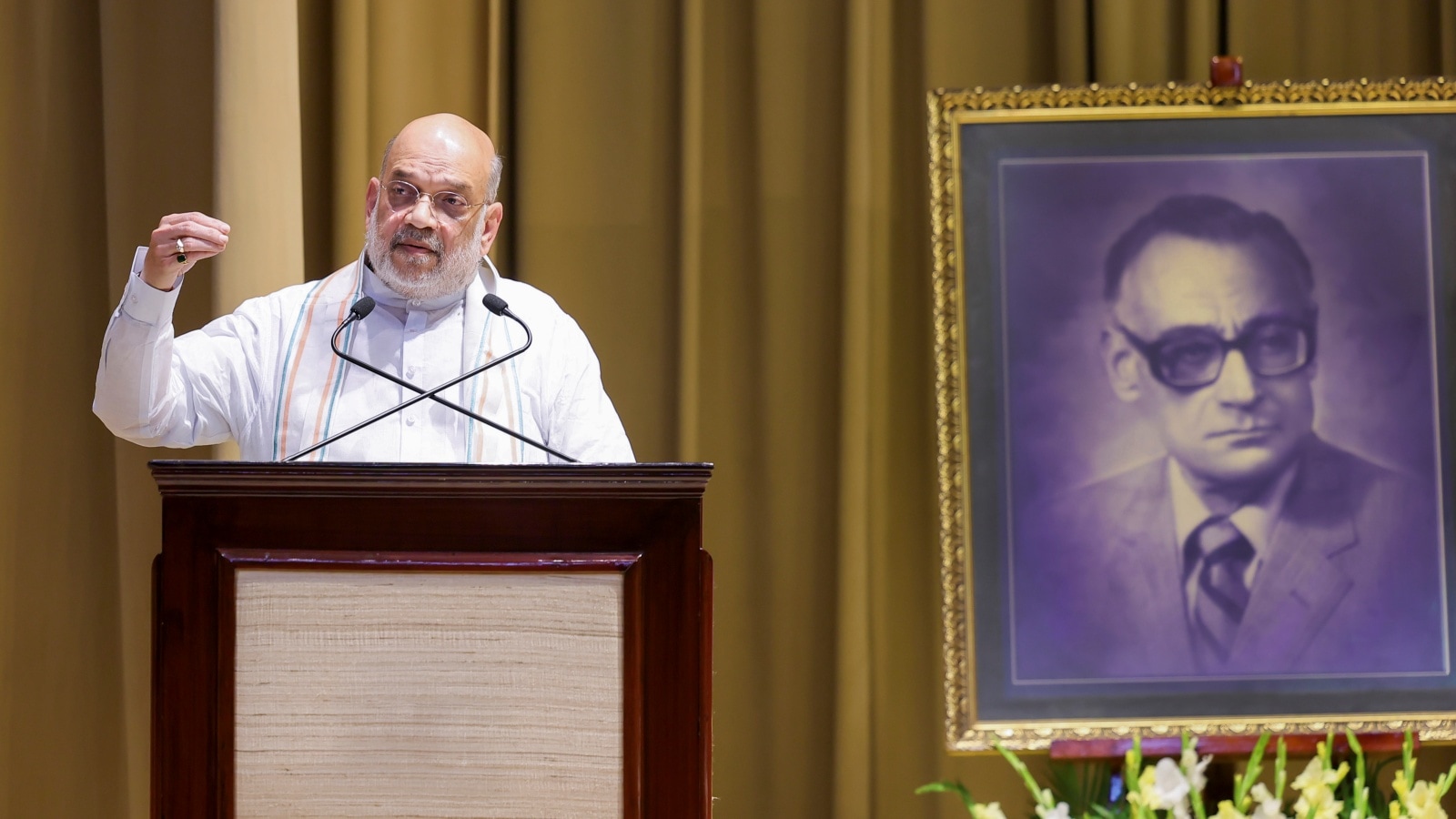 Union Home Minister Amit Shah addresses the R N Kao Memorial Lecture-2026 organised by the Research and Analysis Wing (R&AW), in New Delhi. (Handout via PTI Photo)
UNION HOME Minister Amit Shah on Friday called for a unified global response to narcotics trafficking and said that the country has set a national goal of achieving a “Drug-free India by 2047”.
Delivering the R N Kao Memorial Lecture-2026, an annual event organised by the Research and Analysis Wing (R&AW) in memory of its founder Rameshwar Nath Kao, Shah described narcotics as a borderless threat that demands collective responsibility.
He urged greater international coordination, shared legal frameworks and real-time intelligence-sharing to detain traffickers and prevent the rise of narco states. “Under our policy of zero-tolerance towards drugs, not one gram of narcotics should be allowed to enter India nor use it as a transit route,” he said.
Shah also warned that drug trafficking was not merely a law-and-order problem, but an issue that inflicts permanent damage on individuals and society. “Drug money fuels terrorism, criminal networks and a parallel economy, and cautioned that without immediate, concerted action after ten years the world would realise that it was too late to reverse the harm it has caused,” he said.
Shah underlined the need for a high degree of global alignment on what constitutes controlled substances and on standardised penalties for trafficking. “Unless countries adopt uniform laws, cartels will exploit inconsistencies and weaken global efforts,” he said, advocating a common legal framework, standardised punishments, and streamlined extradition of drug kingpins.
He also emphasised the importance of treating the war on drugs as a national security and public-health priority. “With a population of 8 billion, 195 nations, and 250,000 km of international borders, the world cannot tackle this problem through fragmented approaches,” Shah said.
Highlighting recent operational cooperation, Shah said India had successfully repatriated more than 40 transnational criminals in the past two years with help from friendly countries. “Indian security agencies have prepared a roadmap to dismantle drug syndicates and are working toward the 2047 target, though much more international cooperation is required,” he said.




 English (US) ·