

 1 day ago
7
1 day ago
7
ARTICLE AD BOX
Last Updated:April 28, 2026, 17:31 IST
Who are they? What is the coalition? Will it change Israel’s security policy amid wars? News18 explains


Naftali Bennett and Yair Lapid (right) on Sunday in Herzliya, Israel. (AP)
Two of Israeli Prime Minister Benjamin Netanyahu’s top rivals announced they would join forces in an upcoming election to oust his coalition government, with a focus mainly on domestic issues such as military conscription for the ultra-Orthodox.
Who are they? What is the coalition? Will it change Israel’s security policy? News18 explains.
WHAT IS THE NEW COALITION?
Naftali Bennett, Israel’s right-wing former prime minister, and Yair Lapid, the centrist leader of the parliamentary opposition, announced on Sunday in Tel Aviv that they would merge their parties, Bennett 2026 and Yesh Atid, into a single political force called BeYachad, Hebrew for “together", under Bennett’s leadership, to contest Israeli elections due by October 2026 in a direct challenge to Prime Minister Benjamin Netanyahu.
The announcement, made at a joint press conference broadcast live, is the latest act in a political partnership that stretches back more than a decade. It has produced one government, which briefly removed Netanyahu from power, and collapsed after 13 months.
WHY HAVE THEY JOINED FORCES?
The primary motivation for the BeYachad alliance is domestic, aiming to provide a “unifier" alternative to Netanyahu’s leadership.
Domestic Priorities: Their platform centers on universal military conscription, specifically targeting the ultra-Orthodox (Haredi) community, which remains a deeply divisive issue for Netanyahu’s current coalition.
October 7 Investigation: They have pledged to establish a formal commission of inquiry into the security failures of the October 7 attacks, an issue Netanyahu has largely resisted.
Leadership Health: Questions regarding Netanyahu’s health, following the recent removal of a malignant tumour, have added urgency to the opposition’s campaign for a change in leadership.
WHAT IS THEIR STANCE ON SECURITY FRONTS?
Despite their goal to unseat Netanyahu, Bennett and Lapid have shown significant policy continuity on major security fronts:
Iran: Both leaders have backed military action against Iran, reflecting broad public support. Lapid has described the conflict as a “just war against evil," signaling a commitment to maintaining pressure on Tehran.
Gaza: The alliance has actually criticised Netanyahu for being too soft. They argue his policies allowed Hamas to survive and regain strength, advocating for a more decisive military outcome than the current status quo.
Lebanon: Bennett and Lapid supported the March 2026 invasion of southern Lebanon. They have expressed skepticism toward ceasefires that fail to permanently remove the threat from Hezbollah.
Palestinian Statehood: Bennett remains a staunch opponent of a Palestinian state, viewing it as an “existential danger". While Lapid has historically been more open to a two-state solution, the current political climate and public opinion (roughly 70-80% against statehood) make any move in that direction politically improbable.
WERE THEY SUCCESSFUL IN THE PAST?
2013: Bennett and Lapid first joined forces to force their way into Netanyahu’s coalition government. This move successfully sidelined Netanyahu’s traditional ultra-Orthodox allies at the time.
2021: The duo formed an unprecedented eight-party coalition (including right-wing, centrist, left-wing, and for the first time, an Arab party) to end Netanyahu’s 12-year tenure. They operated under a rotation agreement: Bennett served as Prime Minister first (2021–2022), followed by Lapid (2022).
They achieved the primary goal of unseating Netanyahu, which many thought was impossible after four stalemated elections. Bennett claims they accomplished more in one year than other governments did in four, specifically citing economic improvements and a tougher stance on Qatari cash transfers to Hamas. The government was ultimately fragile due to its diverse ideological makeup. It collapsed in late 2022 after defections from Bennett’s own party, leading to Netanyahu’s return to power.
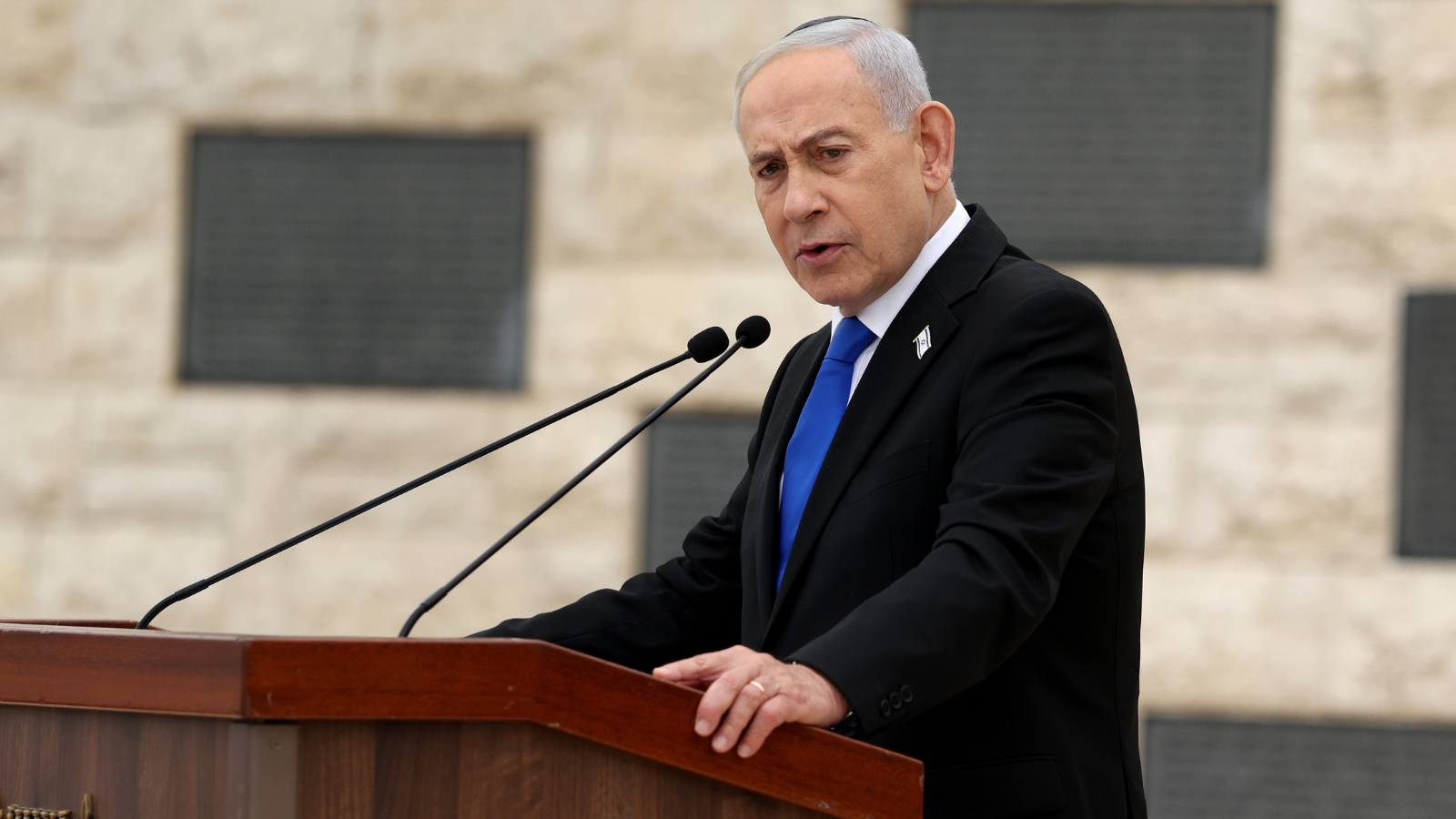
HOW DID NETANYAHU RESPOND?
Netanyahu moved within hours. On Sunday evening he posted a social media reel set to dramatic music showing an old photograph of Bennett, Lapid, and Mansour Abbas, with text reading: “They’ve done it once. They’ll do it again." He followed it with an AI-generated image of the three men in a car with Abbas at the wheel, and described Ra’am as “supporters of terrorism," the same charge Likud deployed in its 2022 campaign.
Ra’am’s inclusion in the 2021 coalition was unpopular with a section of Israeli voters. But Netanyahu enters this election weakened in ways that have no equivalent from 2022. The Hamas-led attack on Israel on 7 October 2023, the deadliest day for Jewish people since the Holocaust, occurred on his watch. The subsequent war in Gaza has passed two years without the “total victory" he pledged.
A series of operations against Hezbollah in Lebanon and direct exchanges with Iran have been significant but produced no resolution he can present as a clear outcome. Many Israelis remain angry over the intelligence failures of October 2023 and over Netanyahu’s refusal to accept personal responsibility or commission an independent inquiry. Bennett said on Sunday that such a commission would be established on the first day of any government he led.
Netanyahu is also in the middle of a long-running criminal trial on charges of bribery, fraud, and breach of trust, all of which he denies. Likud leads polling with around 25 projected seats in the 120-seat Knesset, with Bennett 2026 running close behind in pre-merger surveys.
Lapid, in his remarks on Sunday, pointed to Hungary, where Prime Minister Viktor Orbán had lost a general election this month after sixteen years in power. “They united behind one candidate," Lapid said. “The era of polarisation is over," Bennett added.
KEY FAQs
Who are Bennett and Lapid?
Naftali Bennett and Yair Lapid are prominent Israeli politicians now aligning politically to challenge Benjamin Netanyahu.
Will they change Israel’s security policy?
Unlikely in a major way. Israel’s core security stance—especially toward threats like Hamas and Hezbollah—has broad political consensus.
What could change then?
Their approach may differ in tone, diplomacy, and internal decision-making, potentially affecting relations with allies and conflict management style.
With agency inputs
Handpicked stories, in your inbox
A newsletter with the best of our journalism
First Published:
April 28, 2026, 17:30 IST
News explainers United Opponents Of Netanyahu: What Does It Mean For Israel’s Security Policy Amid Wars?
Disclaimer: Comments reflect users’ views, not News18’s. Please keep discussions respectful and constructive. Abusive, defamatory, or illegal comments will be removed. News18 may disable any comment at its discretion. By posting, you agree to our Terms of Use and Privacy Policy.
Read More






 English (US) ·