

 6 days ago
11
6 days ago
11
ARTICLE AD BOX
Last Updated:June 19, 2026, 07:47 IST
Iranian leaders and state-backed media have portrayed the agreement as proof that the United States was forced to negotiate after failing to achieve its military objectives.


US President Donald Trump and Iran's Supreme leader Mojtaba Khamenei (Photos: AFP)
The United States and Iran may have signed a memorandum of understanding (MoU) aimed at ending months of conflict, but the diplomatic breakthrough has quickly been followed by another battle – one over public perception. In Washington, US President Donald Trump has hailed the agreement as a major foreign policy achievement that ended the war, prevented Iran from acquiring a nuclear weapon and opened the door for a broader peace process in West Asia.
In Tehran, however, the message is in stark contrast. Iranian leaders and state-backed media have portrayed the agreement as proof that the United States was forced to negotiate after failing to achieve its military objectives.
The contrast underscores a familiar feature of international diplomacy: even after an agreement is reached, both sides often seek to convince their domestic audiences that they emerged stronger.
We Did Not Accept The Enemy’s Position: Khamenei
Iran’s Supreme Leader Mojtaba Khamenei publicly acknowledged that he personally had reservations about the MoU but approved it after receiving assurances from President Masoud Pezeshkian and senior officials that Iran’s rights would be protected.
In a written message, Khamenei said he authorised the agreement after officials pledged to safeguard “Iran’s rights and the interests of the Resistance Front." He also stressed that any future face-to-face negotiations with Washington “would not mean accepting the enemy’s position."
According to Iranian media, Khamenei also accused Trump of using pressure tactics to secure the agreement, saying the US president had employed “all kinds of leverage" because he was “desperate" for a deal. The remarks were presented as evidence that Washington needed the agreement more than Tehran.
The messaging serves two purposes. Domestically, it reassures conservative supporters that Iran did not capitulate under pressure. Internationally, it seeks to project that Tehran negotiated from a position of resilience despite months of military conflict and sanctions.
Trump’s Message: Historic Deal, But A Fresh Warning
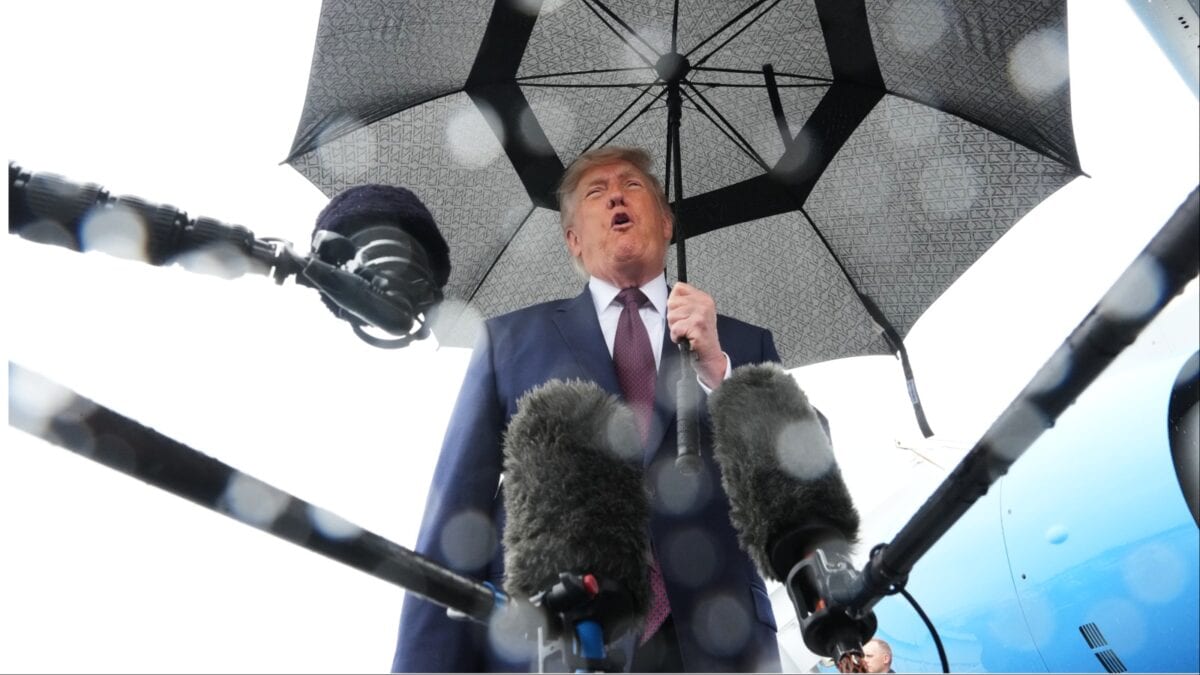
Trump, meanwhile, has continued to present the agreement as a landmark diplomatic success while simultaneously warning Iran against violating its commitments.
After the MoU was signed, Trump said that if Iran failed to honour the agreement or resumed pursuing nuclear weapons, the United States would respond with overwhelming military force, warning that it would “bomb the hell out of them." The administration has repeatedly maintained that the deal creates a pathway towards a permanent peace agreement but that military options remain on the table if Tehran defaults.
Trump has also insisted that reports claiming the United States was giving Iran a $300-billion reconstruction package were “false". The White House has argued that the proposed Reconstruction and Development Fund envisaged under the framework would be financed by private investors, largely from Gulf countries and other international partners, rather than US taxpayers.
That clarification followed reports suggesting the deal included a massive American-funded reconstruction package, a claim that quickly became a point of political debate in the US.
A Glorious Defeat: Iranian Media
Several Iranian newspapers celebrated the agreement as what they described as “a glorious defeat" for the United States. Front pages carried triumphant headlines, while caricatures mocked Trump, portraying him as a leader forced into negotiations after military and diplomatic pressure failed to produce the outcome Washington wanted.
Javan, an Iranian daily newspaper close to Iran’s Revolutionary Guard Corps (IRGC), called the US as having suffered “a glorious defeat". It said that though Israel and the US began the conflict with ambitious goals, Iran emerged stronger than its opponents expected.
CNN quoted Kahyan, the influential and conservative newspaper, posting the headline: “The Strait of Hormuz is our deterrent weapon; our lever of power is not negotiable."
Focusing on economic gains after the US-Iran agreement, the newspaper Sazandegi wrote number “300" in large letters, in reference to the potential $300 billion reconstruction fund outlined in the agreement.
The emphasis in Iran has been that the country preserved its sovereignty, protected its nuclear rights and compelled the US to negotiate on terms acceptable to Tehran.
American media coverage, meanwhile, has largely focused on whether the agreement advances Trump’s stated objectives. Much of the reporting has centred on the nuclear provisions, Iran’s commitment to allow international inspections, the reopening of the Strait of Hormuz, the proposed downblending of highly enriched uranium and the political debate over whether the framework offers sufficient guarantees against Iran eventually resuming its nuclear programme.
Questions over the reconstruction fund, sanctions relief and congressional scrutiny have also featured prominently in US coverage.
Trump’s Old Remark Returns
The political messaging has also revived one of Trump’s own past observations about negotiating with Tehran. During earlier discussions over Iran back in 2020, Trump had remarked that “Iran never lost a negotiation," a comment that has resurfaced after the signing of the MoU. Iranian media and critics of the agreement have cited the remark to argue that Tehran once again extracted concessions while preserving its core interests.
Supporters of the administration, however, argue that the agreement halted a widening regional conflict, reopened one of the world’s most important oil shipping routes and established a framework for stricter monitoring of Iran’s nuclear programme.
The Real Test Lies Ahead
Despite the contrasting rhetoric, both governments remain formally committed to implementing the memorandum.
The agreement begins a 60-day negotiating window during which both sides are expected to finalise a comprehensive accord. Iran has agreed to cooperate with international inspectors, begin addressing its stockpile of enriched uranium and continue negotiations over a long-term nuclear settlement. In return, the United States has begun easing restrictions linked to the conflict, including measures affecting maritime traffic through the Strait of Hormuz, while broader sanctions discussions are expected to continue.
Whether the current ceasefire evolves into a lasting peace will depend less on competing victory claims and more on whether both sides fulfil the commitments outlined in the MoU.
For now, the war on the battlefield may have paused, but the contest over who actually won has only just begun.
Handpicked stories, in your inbox
A newsletter with the best of our journalism
About the Author
Pragati is a News Editor at news18.com. Having headed the Business and Viral sections, Pragati now ideates, writes and edits long-form features and articles on national and global affairs. She ensures...Read More
News explainers US-Iran Deal Signed, Narrative War Continues: Why Both Trump And Khamenei Are Claiming Victory
Disclaimer: Comments reflect users’ views, not News18’s. Please keep discussions respectful and constructive. Abusive, defamatory, or illegal comments will be removed. News18 may disable any comment at its discretion. By posting, you agree to our Terms of Use and Privacy Policy.
Read More



 English (US) ·