

 1 hour ago
6
1 hour ago
6
ARTICLE AD BOX
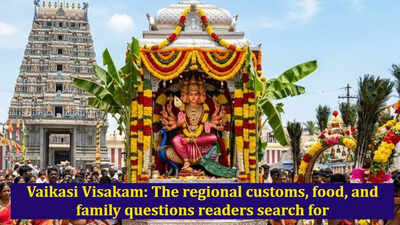
The first sign of Vaikasi Visakam in many Tamil homes is not a calendar alert. It's the scent of sandal paste dripping on a brass, vel the long spear of Lord Murugan as well as the sound of a kitchen worker asking if the payasam should be placed to the stove prior to the lighting of the oil lamp.
In some houses, children are told simply, "Today is Murugan's nakshatram.
" In others, grandparents say it with more feeling, "This is his avataradina, the day of manifestation." Either way, the week of the observance brings the same set of practical questions, especially in families spread between Chennai, Coimbatore, Singapore, Dubai, London, Sydney, and New Jersey.
Quick details for readers
Date: Tamil Vaikasi for New Delhi Observed as: Vaikasi Visakam Best reader action: check local panchang if outside IndiaFor 2026, widely used festival listings place Vaikasi Visakam on May 30, and published panchang-style listings note Visakam nakshatra beginning on May 29 and ending on May 30 in the afternoon.
Since nakshatra timing shifts by location, readers outside India should check a local panchang, the Hindu almanac, before fixing temple visits or timing-sensitive vrata, a religious observance or fast.
What most families actually do that morning
If you're wondering if this is a strict and complicated ritual there isn't any. In the majority of houses, Vaikasi Visakam is marked with a pristine puja area and a simple offering Murugan Nama Japa, which is the recurrent prayer to the god's name and a visit the Murugan temple if it's possible.
Some observe a limited fast, eating just one simple meal, or avoiding onions and garlic. Others do a fruit and milk vrata until the puja is done.
There is no single compulsory format across Tamil households.A typical home ritual starts with a bath, fresh clothing and lighting the deepam which is which is a sacred lamp. Murugan is revered in the form that is available in the home, with a frame or a small vigraha, an idol that is consecrated and even the vel itself.
The devotees present flowers, specifically red white, yellow or red flowers, sandal paste vibhuti and sacred ash and even fruits. Many recite Kanda Sashti Kavasam, Subrahmanya Bhujangam, or simply chant "Om Saravanabhavaya Namah," a well-loved Murugan mantra.If there's no puja space, don't overthink it. t. A tidy table, a lamp , a glass of water and a sincere, prayerful chant are enough. Tamil families living in diaspora perform this ritual often, particularly in homes with fire alarms.
schedules for work, and school runs leave no space for elaborate rituals.
When the date seems to differ between calendars
This is one of the biggest reader confusions every year. Vaikasi Visakam is observed in the Tamil month of Vaikasi when the moon transits Visakam nakshatra, the lunar mansion called Vishakha in Sanskrit. So the observance depends not just on the Gregorian date but on the overlap of the Tamil solar month and the star. That is why one website may highlight the civil date while another gives the nakshatra span.For 2026, many widely read sources put it on the 30th of May, a Saturday. If your family's priest, temple, or regional panchang has different dates for observing the festival in your city, then follow the guidelines of that. This isn't an issue, but rather the traditional Hindu calendar is doing what it always has done, which is to honor the sunrise, place and sunset timings, as well as elestial timing together.
Why Murugan's birth is remembered on this day
Vaikasi Visakam is cherished as the appearance day of Lord Murugan, also called Skanda, Subrahmanya, Karthikeya, and in Tamil devotion, simply Murugan, the beautiful and youthful one.
Puranic and Tamil traditions connect Murugan’s birth to Shiva’s fiery tejas and to the restoration of dharma; in many Sanskrit accounts this is linked to Tarakasura, while Tamil Murugan traditions especially remember his victory over Surapadman.
In Tamil bhakti, Murugan is not a distant war god. He is child, guru, commander, protector, and family deity all at once.That layered identity explains why the day feels intimate in homes but grand in temples.
The vel offered to him is not just a weapon. It is jnana shakti, the power of wisdom. His peacock mount is not mere ornament. It signals the conquest of ego and restlessness. Even in homes which don't read the scriptures in complete the emotional memory stays solid, Murugan as the one who conquers fear, provides the courage to pray, and receives prayers with a remarkable closeness.Certain temple traditions also link this time of year with festivals and special alankarams - sacred ornaments that highlight His regal and beautiful appearance.
In some areas local customs can blend Vaikasi Visakam celebrations with other Murugan festivals, utsavams and celebrations, so don't be surprised if a temple's schedule is more packed than the other's.
The food question, simple sattvic or family-special
Readers often ask what is "correct" to cook. The truth is that food traditions vary more with family and region than they do by a one rule. The only thing that is constant is that the meal is generally pure and serene and served as naivedya.
Food is presented to the god before eating.In the majority of Tamil homes, you'll find paalpayasam, in particular paalpayasam milk pudding, or jaggery-based sakkaraipongal. Fruits like tender coconut, panakam jaggery drinks and neer Mor, a spiced buttermilk, might also be seen in the warmer months of the year. Some cook sundal with seasoned legumes, as it is practical and clean. It's also temple-friendly. Others prepare an easy meal of rice, kootu poriyal and appalam, after the puja.Diaspora homes often adapt. If raw banana isn't available, families substitute what they have. If workday pressure is high, they may offer fruit, raisins, and milk in the morning, then cook a fuller meal in the evening. That is not a lesser observance. Hindu domestic ritual has always had room for circumstance, especially when bhava, devotional feeling, is intact.
The regional differences devotees notice first
In Tamil Nadu, Vaikasi Visakam is especially visible in Murugan temples such as those linked to the Arupadai Veedu, the six sacred abodes, though the scale differs from shrine to shrine.
In some places, there are processions, abhishekam, ritual bathing of the deity, and special darshan queues from early morning. In others, the emphasis is on archana, name-recitation offerings, and a family visit before noon.In Sri Lankan Tamil, Malaysian Tamil, and Singapore Tamil communities, temple-centered worship is often the heart of the day. In the Gulf, Europe, and North America, the observance may move to the nearest weekend, especially for cultural programmes.
The actual puja is usually done on the Visakam Nakshatra day, based on the local panchang. This is common and helps children of second generation stay connected, without turning the event into an unplanned obligation.Certain families sponsor annadanam, the donation or serving of food, or sponsor milk abhishekam, the ritual bathing of the deity, at Murugan temples. Others stay away from crowds and focus the day to themselves, focusing on reading Skanda Purana passages or singing Tiruppugazh the fabled Murugan songs of Arunagirinathar.
Mistakes that make households anxious for no reason
One mistake is assuming you must perform an elaborate vratam or not observe at all. You can keep it simple. Another is confusing temple festival extras with mandatory home ritual. A decorated kavadi, a ceremonial burden carried in devotion, belongs to specific vows and temple traditions. It is not required for every devotee on Vaikasi Visakam.A third mistake is fighting over whether the offering must be one exact dish.
It doesn't. Offer what is clean, vegetarian, and made with care. Also, don't wait for a perfect muhurta, auspicious time, for a basic home prayer unless your family tradition specifically insists on one. Morning worship during the nakshatra day is what most households aim for.And if you miss the morning? Pray in the evening. Light the lamp. Chant Murugan's name. Festivals in lived Hindu practice are steadier than internet panic makes them seem.
For children, new brides, and relatives who ask what to say
This is another family reality. A family member is watching for the first time. A daughter-in-law is curious about what her in-laws do. A child wants to know why Murugan has six faces.A cousin abroad wants a two-line message to send on WhatsApp.Keep it human. Tell them that Vaikasi Visakam is a celebration of Lord Murugan's birth star in the Tamil month of Vaikasi. Families should pray for wisdom, courage and health. They also pray for protection.
If they want one chant, give them "Om Muruga" or "Om Saravanabhavaya Namah." If they want one act, ask them to light a lamp and offer fruit.It is the way that tradition is sustained and is not a result of performance and repetition, but through the repetition with affection . At night, after the temple bells have gone out and the payasam cloth has formed an elongated layer within the bowl, a person will still be reaching for the vibhuti granules before leaving the house. The small white streak on their foreheads is the way the day continues to linger.






 English (US) ·