

 1 hour ago
7
1 hour ago
7
ARTICLE AD BOX
4 min readNew DelhiUpdated: Apr 18, 2026 05:43 AM IST
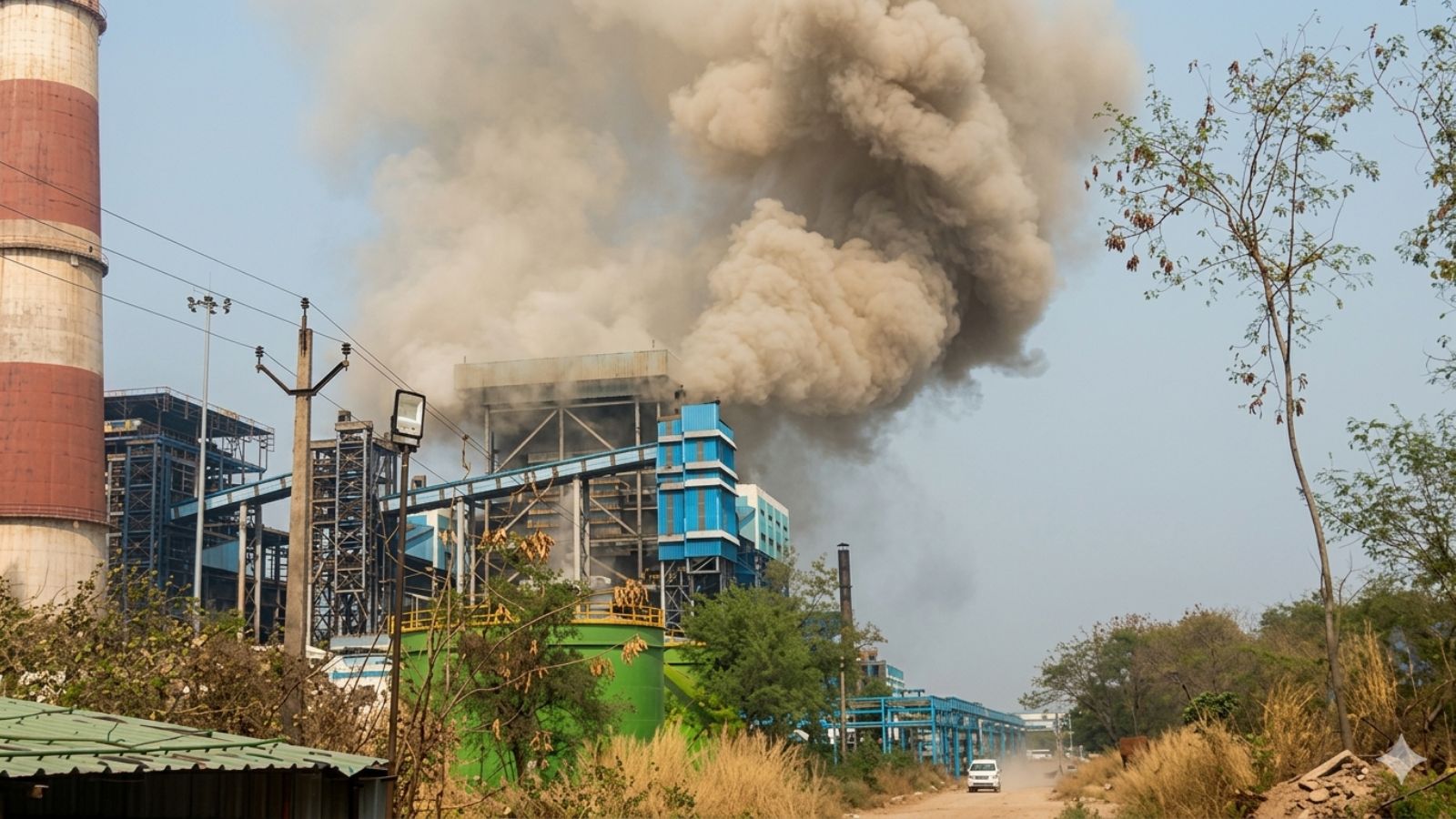 The blast occurred around 2.30 pm in a boiler tube at the power plant in Singhitarai village. (Express)
Early indications suggest that the blast on April 14 at Vedanta’s thermal power plant in Chhattisgarh’s Singhitarai, killing 21 people, was triggered by the failure of a key equipment called the Primary Air (PA) fan that may have led to a dangerous pressure build-up inside the boiler.
Data from the Central Electricity Authority (CEA) shows that Unit-1 of the plant reported an outage at around 2.33 pm on April 14 due to a “PA Fan problem”. A senior CEA official told The Indian Express that this was based on a preliminary report on the incident submitted by Vedanta Limited.
According to the official, the blast occurred because air was unable to escape even as the fuel continued to burn, leading to a pressure build-up. This, in turn, caused a downstream pipe to rupture, triggering the blast.
The PA fan is a centrifugal blower that directs high-pressure air into the boiler to maintain air-fuel balance for stable combustion. A PA fan failure typically points to a maintenance-related issue, an industry source said, adding that warning signals are usually generated ahead of such outages, allowing operators time to intervene.
As per CEA data, the plant’s boiler, turbine and generator (BTG) equipment was supplied by Chinese manufacturer Dongfang Electric Corporation.
Responding to queries from The Indian Express, a spokesperson of Vedanta Power said, “An investigation by the authorities into the incident is currently underway and is yet to be concluded, and therefore the cause cannot be determined or confirmed at this time. At this moment, our foremost priority is to ensure the best possible care and support for those affected and their families.”
Meanwhile, an inter-ministerial team has been dispatched to investigate the incident, The Indian Express has learnt. It is yet to be ascertained whether the blast was caused by maintenance-related issues, another CEA official said. Notably, Vedanta Ltd acquired the plant in 2022 through insolvency proceedings. The 600 megawatt (MW) Unit-1 has been operational since July last year, while Unit-2 is yet to be commissioned.
Story continues below this ad
In an April 14 order, the Sakti district administration attributed the incident to a technical issue in the water supply pipe linked to the boiler’s steam pipe.
Most of those killed in the blast were labourers. On Thursday, police in Chhattisgarh’s Sakti district filed an FIR, naming Vedanta Group chairman Anil Agarwal and others, in connection with the explosion.
“During the investigation, it came to light that Vedanta Company and NGSL (a sub-contractor in the project) did not properly adhere to the standards regarding the maintenance and operation of machinery and equipment. Negligence in equipment upkeep and lapses in operation caused sudden fluctuations in the boiler’s pressure, leading to the accident. Based on available evidence and technical reports, clear negligence has been observed in the incident,” the police said in a statement.
The last major fatal boiler explosion before this incident unfolded at the Feroze Gandhi Thermal Power Plant of NTPC Ltd in Unchahar in UP’s Raebareli district on November 1, 2017, which was also triggered by a pressure build-up, though due to a different cause. In that case, excessive ash accumulation had led to a tube failure. Attempts to manually dislodge the accumulated ash were identified as one of the contributing factors to the accident.
Story continues below this ad
Following the incident, a directive was issued to all thermal power plant operators stating that ash accumulation must be strictly controlled, and continuous ash removal should be ensured without blocking the furnace bottom opening and ash hopper. It also specified that opening manhole or scaffold doors during operation should be avoided, and water injection for dislodging ash should not be resorted to.
The then General Manager (Operation & Maintenance), NTPC TPP at Unchahar was penalised by way of compulsory retirement and disqualified from future employment under the Government or a corporation owned or controlled by it. EESL (Energy Efficiency Services Limited) had drafted the official’s services as a consultant for a limited period, which was then discontinued.

Anil Sasi is the National Business Editor at The Indian Express, where he steers the newspaper’s coverage of the Indian economy, corporate affairs, and financial policy. As a senior editor, he plays a pivotal role in shaping the narrative around India's business landscape. Professional Experience Sasi brings extensive experience from some of India’s most respected financial dailies. Prior to his leadership role at The Indian Express, he worked with: The Hindu Business Line Business Standard His career trajectory across these premier publications demonstrates a consistent track record of rigorous financial reporting and editorial oversight. Expertise & Focus With a deep understanding of market dynamics and policy interventions, Sasi writes authoritatively on: Macroeconomics: Analysis of fiscal policy, budgets, and economic trends. Corporate Affairs: In-depth coverage of India's major industries and corporate governance. Business Policy: The intersection of government regulation and private enterprise. Education Anil Sasi is an alumnus of the prestigious Delhi University, providing a strong academic foundation to his journalistic work. Find all stories by Anil Sasi here ... Read More
Stay updated with the latest - Click here to follow us on Instagram
© The Indian Express Pvt Ltd





 English (US) ·