

 1 hour ago
7
1 hour ago
7
ARTICLE AD BOX
Last Updated:June 05, 2026, 13:25 IST
If even a fraction of Venezuela’s untapped oil wealth returns to global markets, it could reshape global energy trade and lower oil prices. The impact could be felt even in India


For Washington, bringing more Venezuelan oil into global markets could help diversify supply and reduce pressure on prices.
When Venezuela has more oil than Saudi Arabia, how did it become bankrupt? Venezuela’s oil reserves, which stand at over 300 billion barrels — the largest in the world — should have made the South American nation one of the richest countries on earth, in theory. Instead, it became a symbol of economic collapse. Hyperinflation wiped out savings, millions fled the country and its once-mighty oil industry nearly fell apart.
But with Venezuela’s oil sector slowly coming back to life, exports are rising (1.25 million barrels per day in May) over the past year, production is recovering and global powers are diverting their attention to Caracas.
If even a fraction of Venezuela’s untapped oil wealth returns to global markets, it could reshape global energy trade and lower global oil prices. Thus, the impact could be felt far beyond Latin America, including in India.
How Did Venezuela Hit The Oil Jackpot?
Venezuela has held an estimated 303 billion barrels of proven crude reserves, accounting for nearly one-fifth of the world’s known oil. That is more than Saudi Arabia, Iran, Iraq or Russia.
For much of the 20th century, oil transformed Venezuela into one of Latin America’s wealthiest economies. The country became a major energy supplier to the US and enjoyed periods of extraordinary prosperity.
Before Nicolás Maduro’s removal and arrest by the US, Venezuela was supplying approximately 200,000 barrels per day (bpd) to the US under special licences granted to companies like Chevron. At that time, most of Venezuela’s exports were primarily flowing to China, while US imports accounted for roughly 15.8% of their foreign sales.
By the 1970s, oil revenues were funding highways, public services and ambitious development projects. Then came a dangerous dependency.
Successive governments became increasingly reliant on oil exports to finance spending. Rather than building a diversified economy, Venezuela doubled down on petroleum. By the early 2000s, crude exports had become the backbone of government finances as billions of dollars in revenues were directly diverted to social programmes and public works.
Consequently, crude exports accounted for roughly 95% of total export earnings and nearly half of overall government revenues. This absolute dependency on oil exports, which became the cornerstone of the ‘Petrostate’ model, was accelerated by the political and economic restricting of the era.
So, How Did The Oil Giant Break Down?
The cracks emerged slowly and then all at once. Under Hugo Chávez and later Nicolás Maduro, the state tightened its grip over the oil sector. PDVSA, the national oil company, became not just an energy producer but also a political and social instrument following the industries strikes.
Between December 2002 and February 2003, opposition groups and PDVSA’s technical management launched massive strikes to force President Hugo Chávez from power. The government fired approximately 18,000 employees — nearly 40% of the workforce, including senior engineers and executives. This purge stripped the company of its core expertise and severed its operational independence, allowing the administration to replace management with political loyalists.
PDVSA directed funds to massive social programmes aimed at poverty reduction, subsidised food distribution, poverty reduction, healthcare and housing. Instead of reinvesting profits into drilling and maintenance, the company became a fiscal mechanism for public spending and political mobilisation.
Thus, years of underinvestment gradually weakened production capacity. Oil infrastructure aged, refineries deteriorated, skilled engineers left the country and management became increasingly politicised.
Besides the domestic turmoil, the external pressures came with oil prices crashing in 2014. From more than $100 per barrel in 2014 to under $30 per barrel in early 2016, Venezuela went into an economic and political spiral, and despite rising prices since then, conditions remain bleak.
US sanctions against Venezuela officially started in December 2014, when the US Congress passed the Venezuela Defense of Human Rights and Civil Society Act. These initial measures were targeted, imposing asset freezes and visa bans on specific Venezuelan officials linked to human rights abuses during anti-government protests.
In 2019, the US enacted a total economic embargo via an executive order, freezing all property and assets of the Venezuelan government within US jurisdiction. The consequences included severe civilian and humanitarian crises, global supply chain disruptions, over-compliance by international banks, and retaliatory shifts in international trade.
The broader economy implications were massive. Primary sanctions and subsequent secondary sanctions forced Venezuela out of formal global oil markets. Daily oil production, which was already suffering from years of underinvestment, plummeted to extreme lows of roughly 337,000 barrels per day in mid-2020 before recovering to higher levels.
The shock contributed to a staggering economic decline, with Venezuela’s Gross Domestic Product (GDP) shrinking by an estimated 35% in 2019 alone.
With export revenues decimated, the state resorted to printing money, leading to an inflation peak that reached 344,510% in 2019. This wiped out the purchasing power of citizens.
The embargo drastically reduced the country’s ability to import basic food and medical supplies. Food availability dropped by roughly 73%, triggering severe shortages, chronic malnutrition, and mass migration. More than seven million Venezuelans eventually left the country, creating one of the world’s largest migration crises.
Who Is Controlling Venezuela’s Sales?
Following Maduro’s removal in early 2026, the US took control of Venezuelan oil sales. Instead of going directly to the Venezuelan state, the revenue is now routed through the US Treasury and restricted foreign accounts, with disbursements explicitly intended to pay public sector wages and stabilize the local currency.
Of the first $500 million generated from resumed US-coordinated oil exports, $300 million was injected into local Venezuelan private banks. This money was used by the interim government under Delcy Rodríguez to prop up the battered bolivar and protect worker purchasing power.
Disbursements to the current interim government are subject to strict US State Department approval and are specifically meant to fund public sector salaries and essential services.
Based on tanker-tracking data from Bloomberg and reports on discounts applied to Venezuelan crude, the estimated value of US-controlled oil exports has increased from $600 million in January (about 380,000 barrels per day) to about $3.7 billion in April alone (about 1.1 million barrels per day). The largest recipients of Venezuelan oil since January 3 have been the US (43%), India (26%), and Spain (8%).
The Trump administration has shared some details with Congress. Secretary of State Marco Rubio testified in January that $300 million had flowed through a “short-term" account in Qatar and been disbursed to Venezuela, while another $200 million was “still sitting" in the account. He indicated the administration would conduct a retroactive audit on the funds that moved through the Qatar account.
The following month, Secretary of Energy Chris Wright said during a press interview that the full $500 million had been transferred to Venezuela and that the administration would use US Treasury accounts going forward, according to the Council on Foreign Relations.
For Washington, bringing more Venezuelan oil into global markets could help diversify supply and reduce pressure on prices. For investors, the attraction is obvious: few places on Earth offer access to reserves of this scale.
How Can India Benefit?
Prime Minister Narendra Modi said in a post on X that President Rodriguez had extensive discussions on expanding cooperation in not just energy but also critical minerals, technology, agriculture, health and people-to-people ties. “As a valued partner in Latin America, our close cooperation with Venezuela holds immense importance for the Global South. We will continue to work together for the mutual benefit of the people of our nations," said the PM.
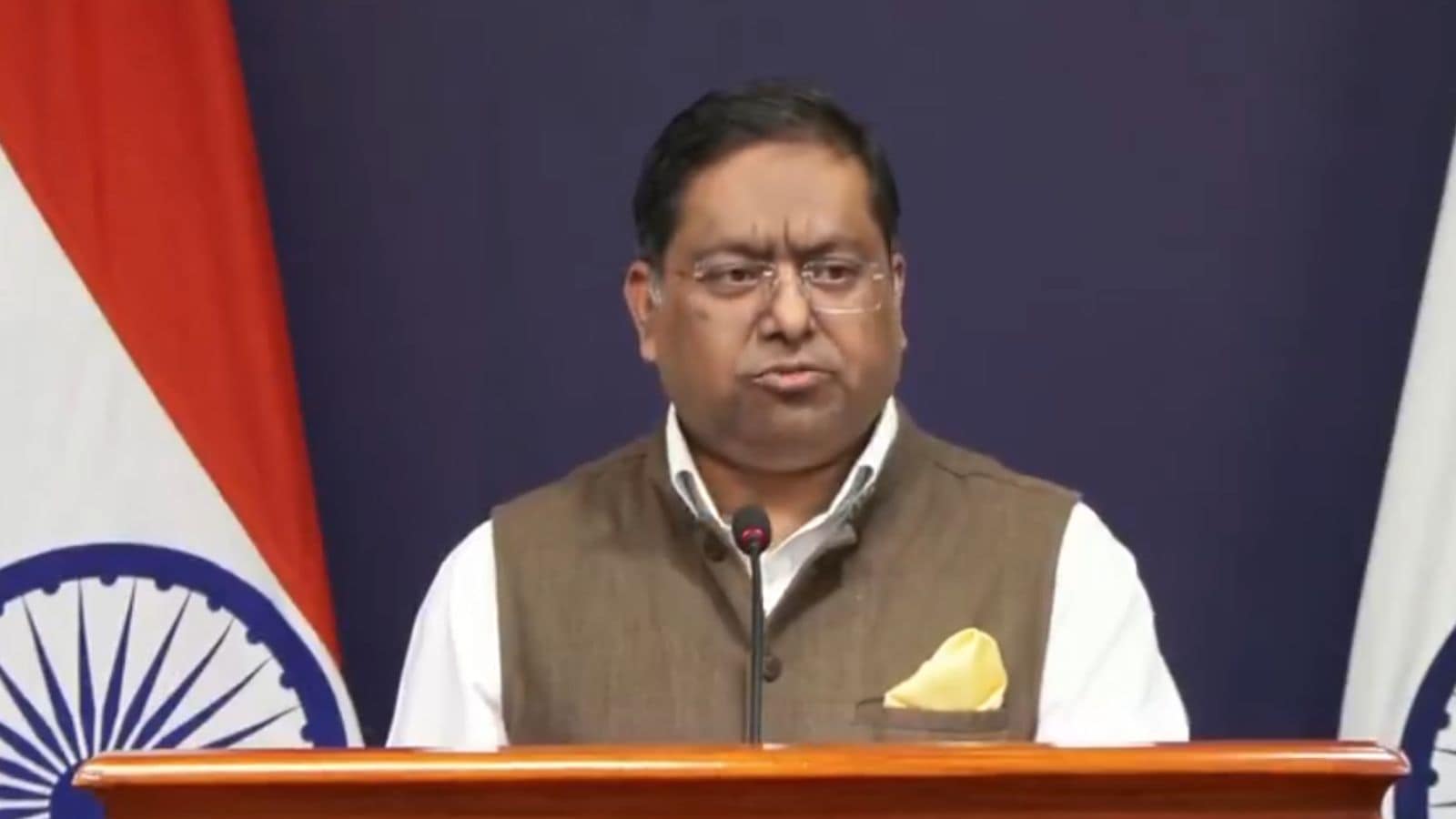
Oil minister Hardeep Singh Puri told Rodriguez in New Delhi on Thursday that Indian companies are willing to deepen their presence in the South American country.
According to a Reuters report, New Delhi was the second-largest importer of Venezuelan oil in May, with purchases of 427,000 barrels per day. India also said that the South American nation was among its largest crude oil suppliers in April and May.
Rodriguez, who is on a five-day official visit to India, discussed opportunities for strengthening the two countries’ energy partnership, and invited an Indian energy delegation to visit and explore opportunities in her country’s energy sector, the oil ministry said in a statement on Friday.
Reports say that she is expected to meet top Indian energy industry leaders in Mumbai and visit oil refining facilities in the country before her visit concludes on June 7.
Venezuela was India’s fifth-largest source of crude oil imports in May, supplying about 266,000 barrels a day, or roughly 5.3% of India’s total crude imports, according to maritime analytics firm Kpler. Only Russia, the UAE, Saudi Arabia and Brazil supplied more.
Michael Kugelman, a senior fellow for South Asia at the Atlantic Council, said Venezuela offers India an opportunity to diversify its energy supplies beyond the Middle East, while potentially aligning with Washington’s preference that India reduce its reliance on Russian oil, a report quoted by BBC read.
Can Venezuela Become An Oil Superpower Again?
Much of Venezuela’s crude is heavy oil that requires specialised technology and expensive processing. Years of neglect have left infrastructure in poor condition. Pipelines, refineries and oil fields require massive upgrades.
Bernstein compares Venezuela’s situation with Iraq and Libya, two regime-change precedents with sharply different oil outcomes. Iraqi production has tripled since the removal of Saddam Hussein, while Libya’s output has remained volatile and stagnant amid political fragmentation.
“In neither Iraq or Libya, was there “peaceful transition", but rather civil wars and ongoing insurgency between rival factions," the analysts said.
They further said there is no historical precedent for a Venezuelan “peaceful transition scenario," even though this appears to be Washington’s preferred outcome.
Though analysts believe that Maduro’s removal “is by no means a guarantee of a quick oil production recovery," adding that while markets may focus on the downside risk of additional Venezuelan barrels, they “do not see that happening quickly."
So, what happens if the Venezuela oil reserves come fully back to the global market? Analysts at JP Morgan project that with conducive policies and investment, Venezuela could increase its output to 1.3 to 1.4 million barrels per day within two years of a stable transition.
Most Venezuelan crude is heavy and tar-like, requiring specialized processing. Major buyers with complex refineries, such as those in India and the US, are actively exploring or resuming the import of these barrels to diversify their supply mixes.
Therefore, for Venezuela, successfully bringing millions of barrels back to market would generate the massive financial injections required to stabilise its struggling domestic economy.
Handpicked stories, in your inbox
A newsletter with the best of our journalism
About the Author

Shilpy Bisht is a News Editor at News18, where she leads the English app operations. She writes on world affairs, health, AI, career, business, and issues affecting women and children. A former print ...Read More
News world Venezuela Has More Oil Than Saudi Arabia. So How Did It Go Bankrupt, And What If It Returns?
Disclaimer: Comments reflect users’ views, not News18’s. Please keep discussions respectful and constructive. Abusive, defamatory, or illegal comments will be removed. News18 may disable any comment at its discretion. By posting, you agree to our Terms of Use and Privacy Policy.

Stay Ahead, Read Faster
Scan the QR code to download the News18 app and enjoy a seamless news experience anytime, anywhere.







 English (US) ·