

 1 hour ago
7
1 hour ago
7
ARTICLE AD BOX
India allowed continued use of 2,4-D after a 2020 draft proposed a ban. The reversal has renewed scrutiny over cancer risks, global restrictions and harm to bees.
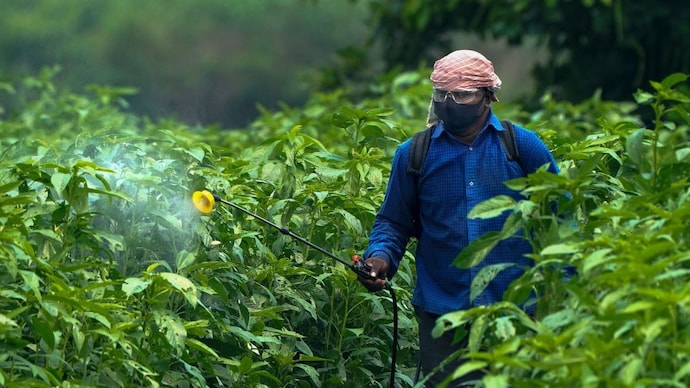
Vietnam war-era herbicide 2,4-D still used on fields. Why is its cancer warning not prominent? (Photo: PTI)
Are the chemical shields protecting our crops from weeds simultaneously digging a grave for our collective future? Is the food consumed daily by our families slowly introducing a carcinogenic slow poison into our veins? While these questions are deeply unsettling, the indifferent attitude of India's agricultural policymakers is even more terrifying. Turning a blind eye to severe warnings from the World Health Organization (WHO), the current regulatory framework has permitted a highly hazardous chemical to ravage our agricultural lands. This molecule is 2,4-D (2,4-dichlorophenoxyacetic acid)—the same ingredient used in the devastating wartime defoliant 'Agent Orange.'
Marketed as a selective herbicide targeting broad-leaf weeds, 2,4-D is actually striking at the vital core of our agricultural ecosystem. It is relentlessly devastating the local honeybee populations responsible for crop pollination and human food security. Blinded by short-term profit margins, corporate manufacturers and systemic regulators ignore a critical reality: the eradication of bees will trigger an environmental collapse. This chemical does not merely eliminate weeds; it dismantles human health and destroys nature's most vital ecological guardians.
HISTORY OF BIOLOGICAL WEAPONS
What is currently sprayed across Indian fields as an affordable farming tool possesses a dark military history rooted in classified operations. The 2,4-D molecule was initially synthesised in a US laboratory in 1941 by a scientist named R. Pokorny. However, its development into a potent agricultural weapon was jointly advanced by wartime researchers in both the United States and the United Kingdom. It was never designed to assist farmers, but was engineered strictly as a biological weapon.
During World War II, the American and British militaries sought a mechanism to completely decimate enemy crops and induce mass starvation. Due to wartime secrecy regulations, the inventors were legally barred from patenting the formula. Once the conflict concluded in 1945, commercial agrochemical companies quickly patented and marketed the molecule, permanently binding global farming systems to chemical reliance.
THE VIETNAM WAR AND 'AGENT ORANGE'
The most devastating application of 2,4-D occurred during the Vietnam War between 1955 and 1975. To strip away dense jungle canopies and expose hidden guerrilla fighters, the US Air Force dumped millions of litres of a chemical defoliant known as "Agent Orange" over the landscape. This lethal formulation consisted of equal parts 2,4-D and another toxic compound, 2,4,5-T.
By spraying this mixture continuously from aircraft, the US military stripped the thick forests bare and intentionally obliterated Vietnamese food sources, with a specific focus on destroying regional rice fields. The underlying chemical itself was completely colourless; its infamous name was derived purely from the bright orange stripes painted onto the shipping drums used to transport the toxin to the front lines.
The military operation exposed roughly four million Vietnamese citizens and thousands of American service members to the chemical, triggering severe neurological disorders and various forms of cancer. Its most harrowing legacy remains the generational trauma of children born with severe congenital deformities and lifelong physical disabilities. Under intense international condemnation and domestic backlash, the US military halted all Agent Orange operations in 1971. Yet, through the leniency of Indian policymakers, a primary component of this wartime poison remains embedded in our food system.
GOVERNMENT CONFESSION
When the Ministry of Agriculture and Farmers Welfare appointed an expert committee led by Dr. Anupam Verma to evaluate hazardous chemicals sold nationwide, the lethal nature of 2,4-D was officially documented. Following a comprehensive scientific review, the government published a formal draft order on May 14, 2020. This official gazette notification explicitly detailed the state's own alarming justifications for pursuing a complete ban on the chemical.
The government document openly acknowledged that 2,4-D contains highly concentrated levels of dioxin, a known human carcinogen. Furthermore, the chemical was classified as a Category 2 endocrine disruptor under European Union (EU) standards and was flagged on the final screening checklist of the United States Environmental Protection Agency (US EPA).
The committee discovered that essential data concerning chemical residues, long-term safety, and environmental impacts on staple Indian crops like sugarcane, potatoes, and maize were entirely missing. Based on these severe environmental and public health hazards, the official 2020 draft strongly recommended an absolute ban on 2,4-D across India.
U-TURN OF THE SYSTEM
The true administrative manipulation unfolded immediately after the publication of the 2020 draft. Rather than enforcing an immediate ban on a self-acknowledged carcinogen, the administrative system executed an abrupt reversal that stunned public health advocates.
By the time the final Insecticides Prohibition Order was officially enacted in October 2023, behind-the-scenes negotiations had quietly altered the outcome.
Through strategic bureaucratic manoeuvring, 2,4-D was completely removed from the list of prohibited chemicals. Disregarding their own published scientific warnings from three years prior, Agriculture Department officials granted the herbicide a full clearance, substituting a total ban with minor, ineffective text warnings on packaging. This raises a critical question: with its carcinogenic risks already formally acknowledged in state files, which powerful corporate lobby forced regulators to compromise the physical health of millions of Indian farmers and consumers?
WHO CONSIDERED IT DANGEROUS
While Indian regulatory bodies chose to capitulate, numerous proactive nations have entirely outlawed 2,4-D due to its extreme toxicity. Countries including Kuwait, Vietnam, and Oman have enforced absolute bans on its use in agriculture. Concurrently, the US EPA has designated several of its highly toxic ester classes as entirely "inactive."
European nations, including Sweden, Norway, and Denmark, maintain rigid prohibitions against indiscriminate spraying and the commercial distribution of its volatile ester form. These strict limitations were enacted because the gaseous state of the drug has consistently proven to devastate local water security and regional biodiversity.
THE COMPANIES' ARGUMENT
In contrast, pesticide manufacturing syndicates strongly defend the chemical's financial viability. When the central government initially proposed a ban on 27 dangerous pesticides, including 2,4-D, prominent agrochemical bodies organised aggressive institutional protests. The core corporate argument asserts that foreign prohibitions should have no bearing on Indian agricultural policies.
Industry associations claimed that a ban on these 27 chemicals would severely cripple domestic manufacturing and wipe out lucrative export markets. Corporate executives insisted their legal battles were fought entirely to protect the financial yields of Indian farmers. However, when these same companies were legally pressured to fund and establish professional Pest Control Operators (PCOs) to safeguard the physical health of agricultural labourers during application, they abandoned the initiative entirely.
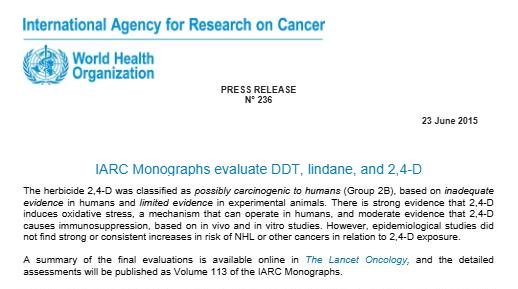
WHO WARNING ON HOLD
On one hand, there's the billion-dollar turnover of agrochemical companies and the plea of "cheap farming," while on the other, there's the serious question of human life safety. The World Health Organization (WHO)'s cancer research agency, IARC, has classified 2,4-D as a Group 2B (Possibly Carcinogenic) chemical. Many developed countries have imposed heavy restrictions on its dangerous ester formulations.
Despite this, the stance of India's policymakers and agricultural officials, "We won't ban it until we have solid and irrefutable scientific data on its effects on Indian soil and humans," demonstrates a profound lack of concern for public health. Did our officials lose faith in their own 2020 draft notification data and its Vietnamese past? This amounts to a blatant capitulation to the interests of agrochemical companies in the name of "risk management." It's as if the officials have placed public health at a secondary priority.
ENEMY OF BEES
Beyond human health, 2,4-D acts as a primary threat to the honeybees that sustain our entire agricultural framework. While the chemical might not cause immediate, outright mortality upon contact, it systematically weakens and hollows out bee colonies from within. Independent research, including studies published in the prominent journal Springer regarding pesticide impacts on honeybee foraging behaviour, proves that chronic exposure degrades a bee's memory, spatial learning, and orientation skills, causing them to permanently lose track of their hives.
Additionally, the chemical induces severe physiological stress within the hive's internal ecosystem, leading to stunted larval development and high mortality rates due to contaminated food stores. To make matters worse, the widespread application of this herbicide eradicates the diverse wildflowers that serve as the primary natural food source for these essential pollinators.
DANGER LOOMING ON THE PLATE
A chemical explicitly engineered on a mid-century battlefield to wipe out enemy food supplies is now being systematically introduced to our dinner tables under the guise of national food security. State representatives and regulators need to prioritise the literal blood flowing through the veins of our citizens over the profit margins of agrochemical corporations.
Until the people and consumer advocacy groups collectively raise their voices against this toxic encroachment, corporate entities and compromised officials will continue to feed the nation a slow poison disguised as agricultural progress.
- Ends
Published By:
Akash Chatterjee
Published On:
Jun 12, 2026 19:49 IST







 English (US) ·