

 47 minutes ago
3
47 minutes ago
3
ARTICLE AD BOX
Last Updated:May 17, 2026, 12:06 IST
For the first time in a long while, the Congress appears to be acting proactively instead of reactively


(From left) Vijay, Rahul Gandhi and VD Satheesan. (PTI/X)

The Congress took two dramatic calls this month, and together, they may end up defining the future of opposition politics in the South for the next five years.
First, the party walked out of its long-standing alliance with the Dravida Munnetra Kazhagam (DMK) in Tamil Nadu and formally joined hands with Vijay and his Tamilaga Vettri Kazhagam (TVK) government. Then came the second big call. After 11 days of intense consultations, lobbying and backroom negotiations in Kerala, the Congress leadership chose VD Satheesan as Chief Minister, despite a significant section of the MLAs backing KC Venugopal.
These are not isolated decisions. Together, they signal something bigger. They suggest that Rahul Gandhi is trying to fundamentally redesign the Congress party’s power structure in southern India. And for the first time in years, the Congress seems willing to prioritise political stability over internal balancing acts.
Was this finally a politically mature and pragmatic Rahul Gandhi? Or is Congress simply deferring deeper crises that could erupt later?
TAMIL NADU AND KERALA
The optics themselves are extraordinary. The images from Chennai dominated television screens through the week. Gandhi seated next to Vijay on stage, the Congress flag fluttering alongside the TVK colours, senior Congress leaders applauding as Vijay declared a “new era of secular regional cooperation" — these were visuals nobody imagined even a year ago.
What made the moment more striking was the reaction from the DMK camp. The bitterness of the breakup was visible. DMK insiders accused the Congress of betrayal, while Congress leaders argued that the alliance had become politically suffocating. There was an urge of younger leaders in Congress before the elections to tie up with Vijay. The old guard won then and the Congress stuck with the DMK, but now Rahul Gandhi changed his mind.
And then came Kerala.
For eleven days after the election result, the Congress high command delayed the announcement of the Chief Minister. That delay itself revealed how high the stakes were. One camp insisted that KC Venugopal’s organisational grip and proximity to the Gandhi family made him the natural choice. Another argued that Kerala could not afford a Karnataka-style dual power centre. Eventually, Rahul Gandhi sided with pragmatism over proximity. And VD Satheesan it was.
LESSONS FROM THE PAST
The Congress has a long and painful history of self-inflicted wounds in states where it is in power. Time and again, electoral victories have been overshadowed by factional wars. In Punjab, the feud between Amarinder Singh and Navjot Singh Sidhu became so toxic that it weakened the government from within and the party lost power.
In Rajasthan, the cold war between CM Ashok Gehlot and Sachin Pilot rocked the entire tenure of the Congress government till 2023. In Chhattisgarh, the power-sharing tensions between Bhupesh Baghel and TS Singh Deo constantly destabilised the administration. In Himachal Pradesh, the uneasy relationship between Sukhvinder Singh Sukhu and Pratibha Singh has triggered repeated internal tremors.
And the most visible example today remains Karnataka.
Even now, despite being in government, the Congress in Karnataka continues to struggle with the unresolved question of succession. The uneasy coexistence between Chief Minister Siddaramaiah and Deputy Chief Minister DK Shivakumar has become a constant source of speculation. Every cabinet expansion becomes a loyalty test. Every political appointment becomes a factional negotiation. Every public appearance is analysed for signs of tension.
Rahul Gandhi clearly did not want Kerala to become another Karnataka.
That explains why the final decision mattered so much.
SATHEESAN AS CM: WHAT IT MEANS FOR CONGRESS
Going against precedents when Congress High Command always cited MLA backing to hand over the CM chair to a claimant, this time the opposite happened. Even while having more MLAs backing him, KC Venugopal did not become the CM.
By selecting VD Satheesan, the Congress leadership appears to have chosen a single-command structure instead of a compromise formula. Satheesan is seen as aggressive, one who fought the Left on the ground for a decade, organisationally assertive and politically combative — qualities the Congress believes are necessary to counter the Left’s deeply entrenched machinery in Kerala.
Party insiders say Rahul Gandhi was particularly convinced by the argument that Kerala needed a Chief Minister with independent authority, not someone perceived as operating under Delhi’s shadow. More importantly, the party did not want to risk any more by-polls and hence went for an MLA rather than an MP.
But there is another layer to this.
THE SOUTHERN BELT MATTERS
The Congress today knows that southern India is no longer merely a region of comfort for the party. It is becoming the backbone of the Congress survival strategy nationally. Think about it carefully.
With the Congress now in power in Karnataka, Telangana and Kerala, and part of the ruling coalition in Tamil Nadu through the TVK arrangement, four of the five southern states are effectively under Congress influence. That gives the party administrative visibility, media relevance, financial resources and parliamentary leverage.
In many ways, the South is becoming for Congress what the Hindi belt once was decades ago.
That is why the Tamil Nadu shift is equally important.
Congress leaders privately admit that remaining permanently tied to the DMK carried long-term risks. The DMK dominated the alliance, controlled the narrative and limited Congress growth. Vijay’s emergence suddenly changed the equation.
Unlike the DMK, the TVK needed the Congress for national legitimacy, parliamentary coordination and governance experience. The Congress, meanwhile, saw an opportunity to reinvent itself alongside a fresh regional force rather than remain a junior ally forever.
The latest developments suggest the partnership is already deepening rapidly. Sources indicate the Congress may get key portfolios linked to education, social justice and urban development in Tamil Nadu. There is also speculation that joint coordination committees between the TVK and Congress are being set up to avoid friction in governance. That is significant because coalition instability has historically hurt opposition alliances.
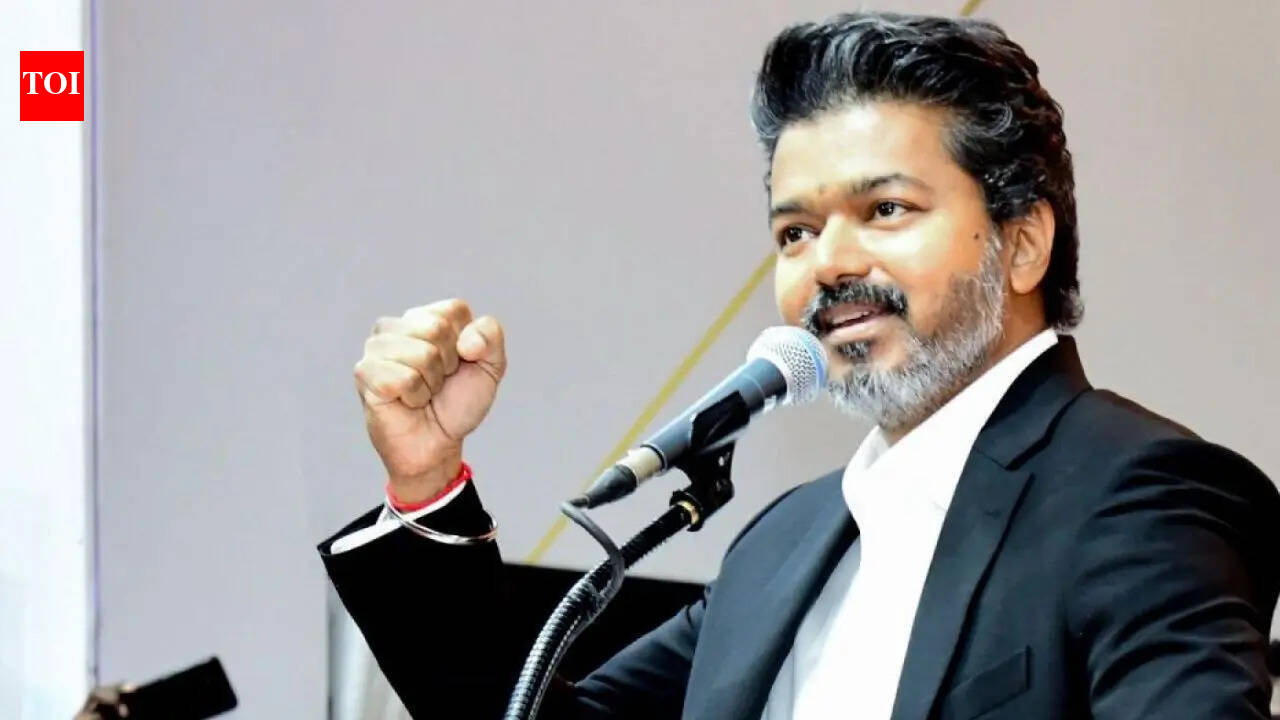
Meanwhile, Vijay’s own political rise has added enormous public energy to the arrangement. His speeches have continued drawing massive crowds, especially among younger urban voters. Political observers note that the Congress believes aligning early with Vijay could help it reconnect with youth demographics that drifted away over the last decade.
But this strategy carries risks too.
THE PATTERN
By abandoning the DMK alliance, the Congress has burned an old bridge. If the TVK experiment struggles administratively or politically, the Congress could find itself isolated in Tamil Nadu. There is also unease within sections of Congress in Kerala and Karnataka over Rahul Gandhi becoming overly dependent on charismatic regional faces rather than rebuilding the party organisation independently.
And then there is the bigger ideological question.
Is the Congress slowly becoming a federation of regional power arrangements instead of a centrally driven national party?
Look at the pattern carefully. In Karnataka, the party depends heavily on Siddaramaiah’s social coalition. In Telangana, regional leadership remains dominant. In Tamil Nadu now, Vijay is clearly the larger public face. Even in Kerala, the Satheesan decision reflects the growing importance of strong state-level personalities.
This is a very different Congress from the command-and-control model of the past.
Interestingly, Rahul Gandhi’s supporters argue that this is precisely the correction Congress needed. They say the party suffered for years because Delhi leaders imposed artificial balance formulas that weakened chief ministers.
According to them, strong regional leadership is not a threat to Congress anymore — it is the only path to revival.
Critics, however, remain sceptical.
They point out that Congress has repeatedly celebrated temporary unity before descending into fresh factionalism. The real test, they argue, will come not during victory celebrations but during ticket distribution, cabinet formation and crisis management.
And that test may arrive sooner than expected.
Already, reports from Kerala suggest some Venugopal supporters are unhappy with the final outcome. In Tamil Nadu too, sections of old Congress leaders worry that the party may get overshadowed by Vijay’s larger-than-life personality. Within the DMK, there is anger over what leaders call “political opportunism," and there are indications the party may aggressively target Congress in the coming months to reclaim opposition space.
So while Rahul Gandhi’s decisions may look decisive today, sustaining these choices politically will require constant management.
But one thing is undeniable.
For the first time in a long while, the Congress appears to be acting proactively instead of reactively. Instead of merely responding to crises, the party is attempting structural political redesign. Whether that redesign succeeds or collapses under internal contradictions is a different question altogether.
Yet politically, these two decisions — aligning with Vijay in Tamil Nadu and choosing VD Satheesan in Kerala — may well become turning points.
Because they reveal a Congress leadership that has finally understood one brutal reality of Indian politics.
Power is not lost only in elections.
Sometimes, power is lost inside the party itself. Out of power in Delhi for 12 years now, Rahul Gandhi has realised that power is most important. These may be the signs of a more mature, pragmatic Rahul Gandhi!
Handpicked stories, in your inbox
A newsletter with the best of our journalism
News india Vijay As Ally, Satheesan As CM: Congress’s Southern Gamble Shows Pragmatic Rahul Gandhi
Disclaimer: Comments reflect users’ views, not News18’s. Please keep discussions respectful and constructive. Abusive, defamatory, or illegal comments will be removed. News18 may disable any comment at its discretion. By posting, you agree to our Terms of Use and Privacy Policy.
Read More



 English (US) ·