

 3 days ago
7
3 days ago
7
ARTICLE AD BOX
5 min readNew DelhiFeb 18, 2026 06:03 PM IST
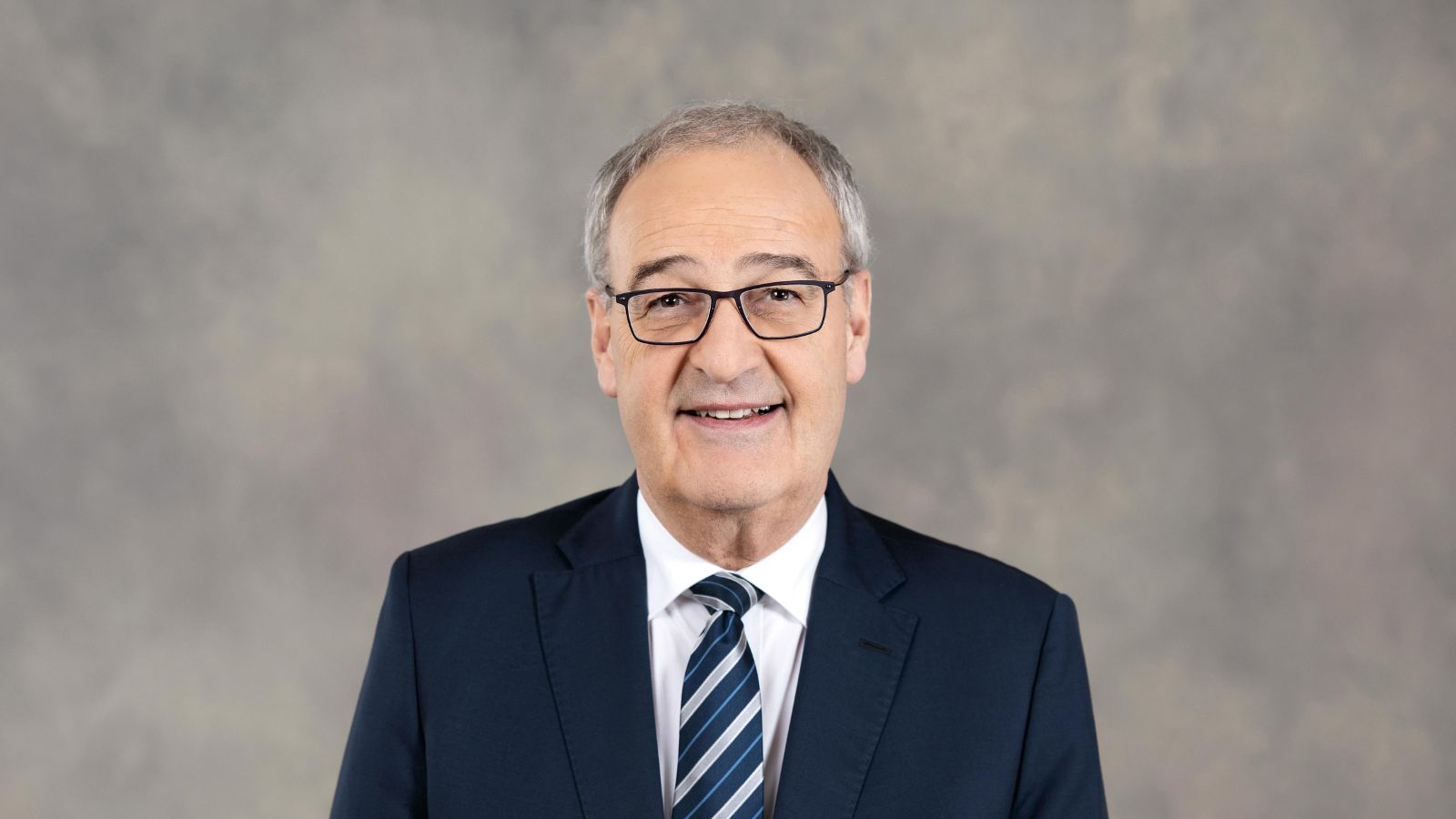 Guy Parmelin said that governments must ensure that they find appropriate answers to uses of AI that threaten the functioning of our democracies and the rule of law. (Source: Wikimedia Commons)
Switzerland’s President Guy Parmelin, who is also Minister for Economic Affairs, Education and Research (EAER), has said that the governments must ensure that they find appropriate answers to uses of AI that threaten the functioning of our democracies and the rule of law, and to empower citizens in this regard and to strengthen their AI literacy. In an email interview, Parmelin — who will meet Prime Minister Narendra Modi on the margins of the AI Impact summit in Delhi — talked about India-Switzerland economic partnership, AI summit, the Gaza peace plan and education and research opportunities for India. Edited excerpts:
How has the bilateral economic relationship developed between India and Switzerland, and how far is it benefited by the Trade and Economic Partnership Agreement (TEPA) between India and the EFTA nations? What are the Swiss goods, apart from chocolates and watches, and services that India can access from Switzerland in a more cost-effective manner?
India grants Switzerland significantly improved market access for around 95% of current Swiss exports (not including gold). Swiss watches and most categories of machinery already benefit from zero duty access, and a substantial share of chemical products is likewise treated favourably. Regarding services, Switzerland benefits from improved access for its financial sector, where India now allows higher foreign equity limits and clearer licensing procedures. The agreement also facilitates the temporary entry of installation and maintenance specialists, enabling Swiss firms to support their equipment locally.
What are your expectations from India’s leadership of the AI Impact Summit, with PM Modi talking about democratising AI and against deepfakes. Switzerland is in contention to be the next chair, and how does AI impact the future of work?
Switzerland very much welcomes and supports the focus of the AI Impact Summit which is well presented in the three ‘Sutras’: People, Progress, Planet. We fully agree that we need to develop and use AI in a way that everyone in the world can benefit from the potential that AI offers. This includes economic and societal progress for everyone. At the same time, we need to make sure that we respect our planet as the basis of all lives and that AI is developed and used in a sustainable way. And we must make sure that we find appropriate answers to uses of AI that threaten the functioning of our democracies and the rule of law, and to empower our citizens in this regard and to strengthen their AI literacy. We do therefore very much welcome the structures for voluntary cooperation on many of these issues that have been established by the AI Impact Summit here in New Delhi.
Swiss companies, including UBS, are opening new GCCs (Global Capability Centers) in India. Are GCCs another frontier for economic cooperation between the two countries?
Originally, GCCs were mainly established to take advantage of cost arbitrage. In recent years, however, they have evolved and now offer the companies added value that goes beyond cost savings. Many Indian GCCs have acquired important technologies, complex processes, and complete products. In this respect, they have taken economic cooperation between India and Switzerland to a new level.
Story continues below this ad
While the Gaza peace board was announced at Davos in Switzerland last month. Your view on the President Trump-led initiative, which has its first meeting next week?
Switzerland welcomes the “Gaza Peace Plan”, which aims to end the war in Gaza and open a pathway for lasting peace in the Middle East. This plan complements the New York Declaration. For Switzerland, it is essential that the plan be implemented in line with international law, including international human rights law and international humanitarian law, and that the two-state solution be advanced with the involvement of all relevant stakeholders, in particular the Palestinian authority.
What are the new areas of cooperation in the field of education and research between India and Switzerland, given that the US has become restrictive in its approach towards foreign students?
Switzerland is committed to strengthening and diversifying its international research, education and innovation partnerships, with India as a key partner. Switzerland and India share a long-standing and highly successful partnership in education, research and innovation, built on trust, openness, common and complementary interests as well as well-established institutional links. Our cooperation is supported by strong instruments, including joint research funding led by the Swiss National Science Foundation, our presence in India (Bangalore and Delhi) through Swissnex, and the Swiss Government Excellence
Story continues below this ad
Scholarships. Switzerland is committed to bringing Indo-Swiss research cooperation to the next level in the years ahead, with a focus on deepening collaboration through a strategic, long-term perspective.

Divya A reports on travel, tourism, culture and social issues - not necessarily in that order - for The Indian Express. She's been a journalist for over a decade now, working with Khaleej Times and The Times of India, before settling down at Express. Besides writing/ editing news reports, she indulges her pen to write short stories. As Sanskriti Prabha Dutt Fellow for Excellence in Journalism, she is researching on the lives of the children of sex workers in India. ... Read More

Shubhajit Roy, Diplomatic Editor at The Indian Express, has been a journalist for more than 25 years now. Roy joined The Indian Express in October 2003 and has been reporting on foreign affairs for more than 17 years now. Based in Delhi, he has also led the National government and political bureau at The Indian Express in Delhi — a team of reporters who cover the national government and politics for the newspaper. He has got the Ramnath Goenka Journalism award for Excellence in Journalism ‘2016. He got this award for his coverage of the Holey Bakery attack in Dhaka and its aftermath. He also got the IIMCAA Award for the Journalist of the Year, 2022, (Jury’s special mention) for his coverage of the fall of Kabul in August 2021 — he was one of the few Indian journalists in Kabul and the only mainstream newspaper to have covered the Taliban’s capture of power in mid-August, 2021. ... Read More
Stay updated with the latest - Click here to follow us on Instagram
© The Indian Express Pvt Ltd



 English (US) ·