

 1 hour ago
6
1 hour ago
6
ARTICLE AD BOX
Last Updated:February 21, 2026, 08:57 IST
The law was originally enacted during a period of balance-of-payments concerns, when imports far exceeded exports and put pressure on the US dollar


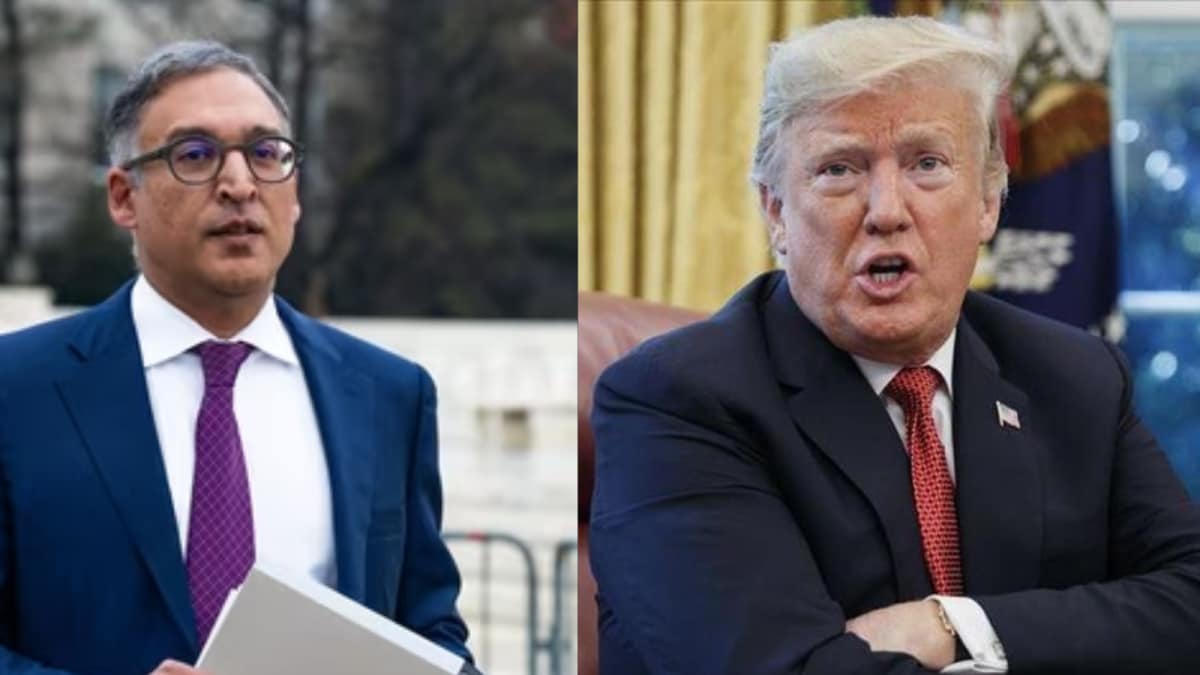
The immediate trigger for the US President’s decision was the US Supreme Court ruling that struck down a major part of his earlier tariff programme. (AFP)
Hours after the United States Supreme Court struck down many of Donald Trump’s sweeping and often arbitrary duties, delivering a stinging rebuke on his signature economic policy, the US President imposed an additional 10 percent tariff on imports into America.
Trump signed the tariff order in the Oval Office, saying on social media it was “effective almost immediately", after spending the past year imposing various rates to cajole and punish countries. The new duty is slated to take effect from February 24 for 150 days, with exemptions remaining for sectors that are under separate probes, including pharma, and goods entering the US under the US-Mexico-Canada agreement, according to a White House factsheet.
Exploring an alternative trade tool after the Supreme Court ruling, Trump signalled he would invoke Section 122 of the Trade Act of 1974—a rare provision that allows temporary tariffs in response to balance-of-payments concerns.
What Is Section 122?
It is a US law aimed at giving the President fast-acting tools to respond to certain trade and economic threats. Under this provision, the President can impose temporary import surcharges (tariffs) or quotas without waiting for lengthy investigations. These tariffs can be up to 15 per cent and remain in place for a maximum of 150 days. To extend them beyond that limit, Congress must approve additional authority.
According to The Economic Times, the law was originally enacted during a period of balance-of-payments concerns—when imports far exceeded exports and put pressure on the US dollar. Section 122 is rarely used because other trade laws (like Section 301 and Section 232) are more familiar to policymakers, and traditional tariff-setting usually involves more formal procedures.
Why Did Trump Pick Section 122?
The immediate trigger for the US President’s decision was the US Supreme Court ruling that struck down a major part of his earlier tariff programme. TIME reported that the court ruled that Trump exceeded his authority by using the International Emergency Economic Powers Act (IEEPA), a national emergency law originally designed for sanctions and crisis responses, to impose sweeping global tariffs.
According to The Guardian, IEEPA does not explicitly authorise tariffs, and the court said that tariff powers belong to Congress unless a statute clearly allows otherwise. Instead of abandoning his tariff agenda, Trump quickly pivoted to other legal tools, with Section 122 at the front of that strategy.
How Is The US President Using It?
Snubbing the Supreme Court ruling, Trump announced he would sign an executive order imposing a 10 per cent global tariff on imports from all countries under Section 122. He claimed that the authority allows him to keep tariffs in place while other, more durable investigations (like Section 301) proceed. He also said he would keep other tariff authorities (like Section 232 and Section 301) active or initiate new ones. The global 10 per cent tariff is effectively a temporary stopgap meant to preserve US leverage and revenue while the administration pursues longer-term, country-specific trade actions, according to The Guardian.
What Does Section 122 Allow?
Under Section 122, Trump can impose temporary tariffs up to 15 per cent. It allows immediate implementation with no prior investigation and there is no requirement for congressional approval (for up to 150 days).
However, it does not allow tariffs beyond 150 days without Congress, policies targeting specific unfair trade practices (those typically fall under Section 301), and national security-based tariffs (covered by Section 232)
How Does Section 122 Fit With Other Trade Tools?
After the Supreme Court setback, Trump’s tariff “playbook" now includes:
Section 122 (Trade Act of 1974): Temporary global tariffs.
Section 301 (Trade Act of 1974): Tariffs targeting specific unfair trade practices, often following investigations that can take months.
Section 232 (Trade Expansion Act of 1962): Tariffs justified on national security grounds for specific products (e.g., steel, aluminium).
This layered approach means Trump can continue to apply pressure on imports even after the court’s ruling against IEEPA-based tariffs.
Why Does The Move Matter?
The Supreme Court ruling sharply reined in a broad emergency tariff strategy. However, according to Axios, by pivoting to Section 122 and other statutes, the administration can reimpose global tariffs quickly and keep trade leverage in its toolkit. Section 122’s limits (time and rate) make it a temporary measure, but it buys time while deeper investigations under Sections 301 or 232 play out.
In short, Section 122 provides a legal lifeline that lets the administration continue an aggressive tariff stance, even if broader emergency powers are off the table.
Handpicked stories, in your inbox
A newsletter with the best of our journalism
Location :
United States of America (USA)
First Published:
February 21, 2026, 08:57 IST
News explainers What Is Section 122? A Rare Trade Law That's Donald Trump's Latest Weapon In Tariff Arsenal
Disclaimer: Comments reflect users’ views, not News18’s. Please keep discussions respectful and constructive. Abusive, defamatory, or illegal comments will be removed. News18 may disable any comment at its discretion. By posting, you agree to our Terms of Use and Privacy Policy.
Read More




 English (US) ·