

 1 hour ago
5
1 hour ago
5
ARTICLE AD BOX
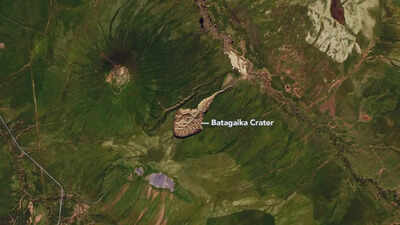
Batagaika Crater. PC: Wikimedia - NASA Earth Observatory images by Jesse Allen, using Landsat data from the U.S. Geological Survey
In the remote and frozen expanses of eastern Siberia lies a geological phenomenon so dramatic that it has captured both scientific curiosity and local imagination. Often referred to as the “Door to the Underworld,” the Batagaika Crater is not just a striking visual anomaly, it is one of the most important natural laboratories for understanding Earth’s climatic past and its rapidly changing future.This massive chasm is a living, and constantly expanding scar in the permafrost.
A scar that was never meant to exist
Unlike other craters that are formed by meteorite collisions or volcano eruptions, Batagaika Crater is not a product of either of these phenomena; its unique amphitheatrical shape is rather a result of thermokarst formation, which means that a megaslump is formed due to the thawing and erosion of ice-rich permafrost.It is located in the territory of Yakutia (Sakha Republic), in Russia, and started to form back in the 1960s.
The cause of such an unusual phenomenon may seem trivial, but it plays a crucial role: deforestation contributed to the development of the process, removing the canopy that protected the surface of the earth from direct exposure to sunlight and, therefore, freezing.Due to this lack of insulation and heat retention, the ground began to melt from inside out, causing the surface to collapse, thus opening access to more thawing layers.
In this way, a vicious circle began to form.Currently, Batagaika Crater is about a kilometre long and is up to 80-100 metres deep. It is considered to be the world's largest permafrost slump.
Origin of its eerie name
The origin of the name "Door to the Underworld" is attributed not only to the intimidating appearance of the crater but also to local myths. Its walls consist of jagged edges that look like a great wound carved into the earth. During warmer months, as ice melts and soil shifts, the ground can produce cracking and rumbling sounds, adding to its ominous reputation.For local communities, such a rapidly expanding and visually dramatic feature has long been associated with mystery. However, the true story behind Batagaika is not one of myth, but of science, climate, and time.
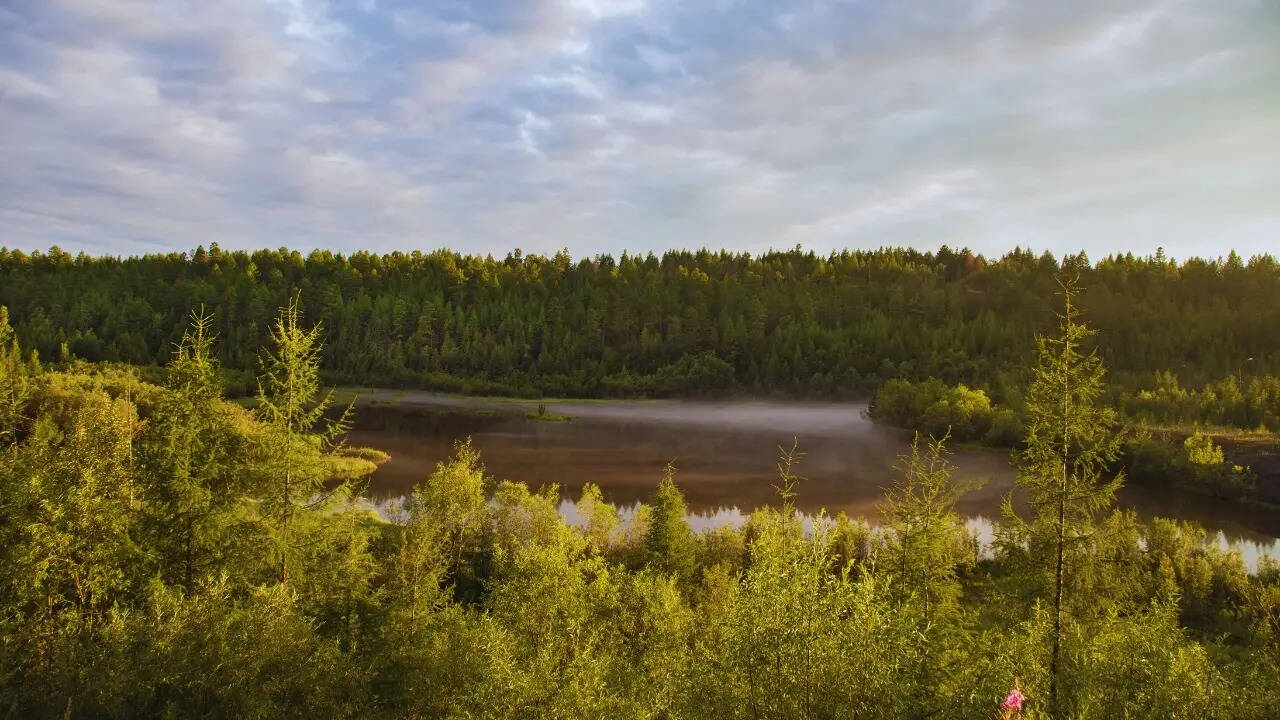
Sakha Yakutia landscape
A geological archive frozen in time
The Batagaika Crater's uniqueness lies not only in its dimensions but also in its content. The more the permafrost melts away and sinks, the more layers of sediment, organic material, and ground ice of incredible age become visible.These layers function like pages in a history book, offering scientists a rare opportunity to study:
- Climatic cycles of the ancient times
- Changes in vegetation
- Conditions of the atmosphere long ago
Some of the deposits uncovered by the melting are over 650,000 years old, thus, becoming one of the most ancient permafrost records that can still be accessed on our planet.In addition to soil and plant matter, the region has yielded remains of Ice Age fauna, including woolly mammoths, steppe bison, and ancient horses.
These discoveries help researchers reconstruct prehistoric Siberia, providing insight into how species adapted, or failed to adapt, to changing climates.
A visible sign of a warming planet
Though Batagaika provides an incredible insight into the past, it is no less important as a warning about what is to come. The rapid expansion of the crater is directly linked to climate change and the accelerated thawing of permafrost around the Arctic region.Permafrost is far more than simply frozen earth; rather, it is a massive carbon sink that has preserved organic matter for millennia. As permafrost thaws, however, this organic matter breaks down and emits greenhouse gases like carbon dioxide and methane.Thus, the result is an alarming vicious cycle, whereby thawing causes the emission of greenhouse gases, and greenhouse gases cause the acceleration of thawing.Indeed, the Batagaika Crater provides a clear example of this phenomenon. Studies have demonstrated that the edges of the crater can recede by several meters annually, especially in warm weather conditions.While global warming is causing the crater to grow, human activities were responsible for the formation of the crater. Deforestation in the 1960s stripped away the insulating vegetation, resulting in the thawing process that started the formation of the crater.The Batagaika Crater is thus a great example of how humans can make an enormous impact on nature through even minor interventions in their local environment. This phenomenon demonstrates that the ecology in the Arctic and sub-Arctic zones is very fragile.Batagaika Crater is often referred to as a gateway to hell; however, in reality, it can be considered as a gateway to our planet's past and our future. As the crater continues to grow, it opens up many secrets locked within the layers of frozen soil.






 English (US) ·