

 1 hour ago
3
1 hour ago
3
ARTICLE AD BOX
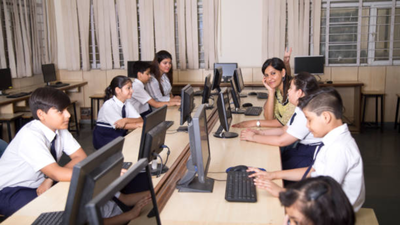
From the outside, it looks simple.A child sitting with a laptop.Headphones on.Screen open.Class is happening.But if you sit next to them for a while, you’ll realise something important.A digital classroom is not just a classroom.It’s a classroom, a distraction space, a search engine, and an entertainment hub all in one.And children are expected to manage all of it at the same time.Majority of parents believe that as long as the screen is on and the lesson is in process, learning is taking place.but within that screen is a very different experience to what it appears to be outside.A lesson might be playing.But another tab is open.A notification pops up.A message comes in.Even if the child doesn’t act on it, their attention shifts.And attention is what learning depends on the most.Research in digital learning has shown that students studying on devices are more likely to multitask, often without realising it. They believe they are paying attention, but their focus keeps moving.This is not about discipline.
It’s about design.Screens are built to pull attention.That’s why one of the biggest things parents need to understand is this:A digital classroom requires more self-control than a physical one.In school, distractions are limited.At home, they are built into the system.There’s also another shift parents don’t always see.When children don’t understand something in a physical classroom, they usually wait. They raise their hand.
They ask the teacher. There is a pause.In a digital setup, that pause is shorter.If something is confusing, they search it.The answer comes quickly.But the process of thinking through the problem gets skipped.Over time, this changes how children approach learning.They become faster at finding answers.But not always better at understanding them.That’s why simply asking, “Did you attend class?” is not enough anymore.Some parents have started asking different questions.“What did you understand today?”“Can you explain it back to me?”Not as a test, but as a way to check if learning actually happened.Another important thing is how long children are sitting in front of screens.Online classes, homework, videos, doubt-solving; it all adds up.Many studies now show that long screen hours can lead to fatigue, reduced concentration, and even lower retention.
Children may sit for hours, but that doesn’t always mean they are absorbing more.This is where small changes help.Short breaks.Offline revision.Writing things down instead of just watching.Because learning needs some form of pause.The digital classroom is not going away.It has made learning more accessible and flexible. Students can revisit lessons, explore beyond textbooks, and learn at their own pace.But it also comes with a different kind of challenge.Earlier, schools managed most of the learning environment.Now, part of that responsibility has quietly shifted home.And for parents, the role is not to control everything.It’s to understand what the screen is actually doing.Because a child sitting in front of a classand a child learning from itare not always the same thing.









 English (US) ·