

 1 hour ago
2
1 hour ago
2
ARTICLE AD BOX
Last Updated:May 14, 2026, 23:26 IST
China expands COMAC as a state backed rival to Boeing and Airbus, growing C909 and C919 fleets despite engine and certification hurdles, while US China tariffs strain Boeing sales.


Xi Jinping and Donald Trump in Beijing: (AFP)
US President Donald Trump may have arrived in Beijing hoping to revive massive Boeing aircraft sales. Still, analysts say the real long-term story is China’s aggressive push to build its own aviation giant capable of rivalling Boeing and Airbus.
During meetings with Chinese President Xi Jinping, Trump strongly promoted renewed Boeing purchases, with US officials hinting that major aircraft orders could soon be announced.
Also Read: Trump Says China Will Buy 200 Boeing Jets. Why US Presidents Keep Backing The Aircraft Giant
But behind the diplomacy and possible Boeing deals lies Beijing’s much bigger strategic ambition: turning the Commercial Aircraft Corporation of China (COMAC) into a global aviation powerhouse.
What Is COMAC?
COMAC is a state-owned aerospace manufacturer established in Shanghai in 2008 with a clear mission — break what China calls the “global duopoly" of Boeing and Airbus.
For years, COMAC was viewed as a long-term national project. But by 2026, it has evolved into a functioning aircraft manufacturer with hundreds of jets flying daily across China and parts of Asia.
China sees COMAC as central to:
- Reducing dependence on US technology
- Building industrial self-reliance
- Strengthening national security
- Challenging Western aerospace dominance
COMAC’s Growing Aircraft Fleet
As of 2026, COMAC has two active aircraft models in commercial service — the C909 regional jet and the C919 narrow-body aircraft — while its larger wide-body C929 remains under development.
The C909, formerly known as the ARJ21 before being rebranded in 2024, has become COMAC’s workhorse with more than 200 aircraft estimated to be operating across China and parts of Southeast Asia.
The larger C919, China’s direct rival to the Boeing 737 and Airbus A320, now has roughly 40 aircraft in service with major Chinese carriers including Air China, China Eastern and China Southern.
The C909: China’s Regional Workhorse
The C909 has reportedly carried over 30 million passengers and is now commonly used on regional routes across China.
It has also become COMAC’s first export success story, with airlines in:
- Indonesia (TransNusa)
- Laos (Lao Airlines)
already operating the aircraft.
The renaming to “C909" was part of China’s attempt to create a unified aircraft family:
- C909 (small aircraft)
- C919 (medium aircraft)
- C929 (large aircraft)
The C919: China’s Boeing 737 Rival
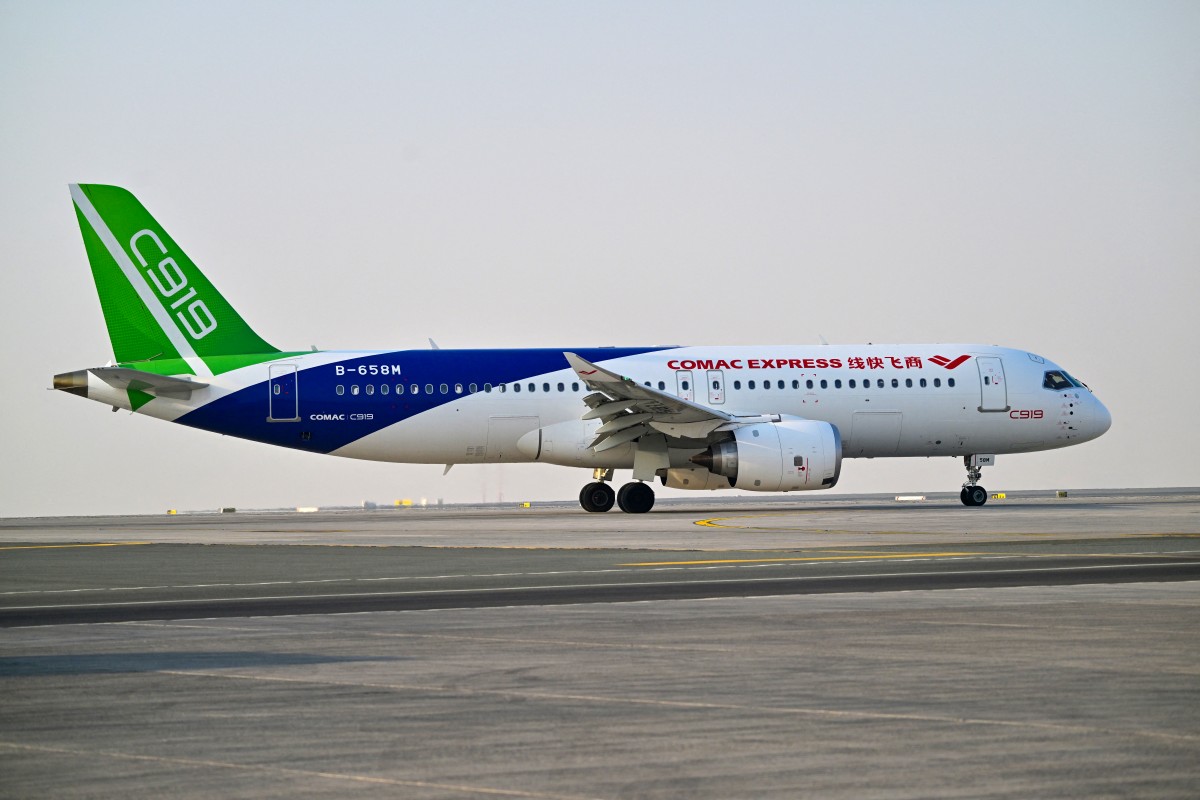
The C919 is Beijing’s direct competitor to the Boeing 737 MAX and Airbus A320 families.
The aircraft is already being flown by China’s “Big Three" state carriers:
- Air China
- China Eastern
- China Southern
However, production has been slower than originally planned.
Reports in 2026 suggested COMAC delivered only around 5–7 C919 aircraft between January and April due to labour shortages and supply-chain disruptions.
The Biggest Challenge: Engines
Despite China’s progress, COMAC still relies heavily on Western aerospace technology.
Both the C909 and C919 currently use engines developed by Western companies including GE and CFM International.
This “heart problem" remains China’s biggest aviation challenge.
The upcoming C929 widebody aircraft — intended to compete with Boeing’s 787 Dreamliner and Airbus A350 — is still under development and undergoing wind-tunnel testing.
But analysts say the lack of a fully domestic long-range jet engine remains the biggest obstacle to the C929’s planned 2030 maiden flight.
Why Boeing Still Matters
Even as China builds COMAC, Beijing still needs Boeing aircraft.
China remains one of the world’s fastest-growing aviation markets, and domestic production alone cannot yet satisfy airline demand.
But the relationship between Boeing and China has sharply deteriorated in recent years.
In April 2025, China reportedly:
- Began refusing delivery of Boeing 737 MAX aircraft
- Returned at least one aircraft already in the delivery process
- Halted acceptance of several new jets
The move came amid escalating tariff tensions between Washington and Beijing.
China retaliated against steep US tariffs by imposing its own tariffs on American goods, disrupting Boeing’s plans to deliver nearly 50 aircraft to China in 2025.
Several aircraft originally meant for Chinese airlines had to be remarketed to buyers elsewhere.
Certification Still A Major Barrier
While COMAC aircraft are increasingly common in China and parts of Southeast Asia, they still lack certification from:
- The US Federal Aviation Administration (FAA)
- The European Union Aviation Safety Agency (EASA)
Without these approvals, COMAC jets cannot freely operate in major Western aviation markets.
China’s Long-Term Aviation Gamble
Despite challenges, COMAC entered 2026 with a reported backlog of more than 1,000 aircraft orders — mostly from Chinese airlines and state-linked leasing firms.
Analysts believe that by 2030, COMAC could potentially deliver up to 150 aircraft annually, steadily eating into Boeing and Airbus dominance across Asia.
For Beijing, aviation is no longer just about transportation — it has become another front in the broader technological rivalry with the United States.
Handpicked stories, in your inbox
A newsletter with the best of our journalism
News world While Trump Talks Boeing With Xi, Beijing May Stick To This ‘Made In China’ Aviation Firm
Disclaimer: Comments reflect users’ views, not News18’s. Please keep discussions respectful and constructive. Abusive, defamatory, or illegal comments will be removed. News18 may disable any comment at its discretion. By posting, you agree to our Terms of Use and Privacy Policy.
Read More









 English (US) ·