

 1 hour ago
3
1 hour ago
3
ARTICLE AD BOX
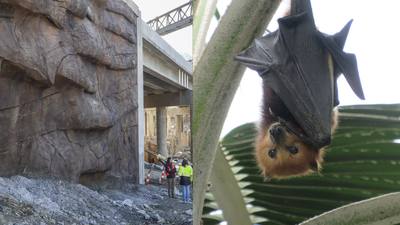
Image: US Fish and Wildlife Service
A concrete barrier wall beside a crowded American highway may seem rather mundane. Yet one of these structures, located on Interstate 40 in North Carolina, has gained worldwide recognition, not for its functionality for motorists, but rather for conservation.
The wall stands at about 25 feet and was specifically constructed not for people’s use, but to act as an artificial habitat for grey bats that have lost their roosts due to infrastructural development. The fascinating thing about this case is that nature’s needs have been met through a perfect combination of technology and human intervention.
The purpose behind the bat wall in North Carolina
A bat wall was installed by the North Carolina Department of Transportation (NCDOT) as part of the process of replacing an existing bridge along the Pigeon River Gorge.
At issue were grey bats, which have been known to use the space under the current bridge as a roost. This habitat would be lost under the construction of the proposed structure.In order to solve this dilemma, an innovative solution was necessary to provide an alternative habitat for the bats. In this way, engineers created a vertical concrete wall covered with crevices and other cavities suitable for the bats' roosting habits.
As pointed out by wildlife biologist Katherine Etchison, the objective here was to “really get together … and think through what bats would use, we can all brainstorm and give our ideas about how this should go together”, creating areas of different characteristics.
How engineers designed a habitat for bats
However, developing the design for a bat-friendly construction went beyond intuition. Reading about 'The Discovery of Gray Bats (Myotis grisescens) in Bridges in Western North Carolina' was key. Engineers discovered that grey bats like roosts that have a 15 to 25-foot vertical drop, which made the wall a good choice.A few key factors were taken into consideration: the inclusion of narrow crevices, venting spaces and varying textures to mimic natural stone formations. Even drainage-style openings were placed in some areas to give bats several options when choosing their microhabitat.What's particularly interesting is how the idea came to fruition. The NCDOT engineer, Kenny McCourt, mentioned that the concept was drawn up in his house while he and his daughter were watching TV; it simply "hit him".A combination of inspiration and scientific advice led to what can be considered an unprecedented achievement, a pioneering structure for wildlife conservation.
Impact on Grey Bat conservation and future projects
The success of the bat wall did not take long to show itself. In just weeks since the wall’s construction, grey bats were found around the construction site, indicating both the efficiency and the appeal of the structure.This is even more important considering the difficulties associated with the life of grey bats.
Loss of habitat, disturbances, and White-nose Syndrome are all reasons why the number of grey bats in the state is declining rapidly.As was mentioned above, at least 40 roosts of bats were recorded on bridges in North Carolina, underlining the importance of such structures to the species.Representatives of the North Carolina Department of Transportation (NCDOT) said that similar structures will appear in other bridges in the state where bats are present.In other words, the creation of a bat wall on the I-40 bridge can be considered as yet another example of a change in approach towards wildlife and the impact human infrastructure has on it.








 English (US) ·