

 1 hour ago
4
1 hour ago
4
ARTICLE AD BOX
Last Updated:April 03, 2026, 17:05 IST
Why A Mosque In Lucknow Was Bulldozed Before Dawn: Authorities said the timing of the operation was chosen to minimise public movement and avoid any potential flare-up


The district administration demolished the mosque following directions from the Allahabad High Court’s Lucknow Bench. (News18)
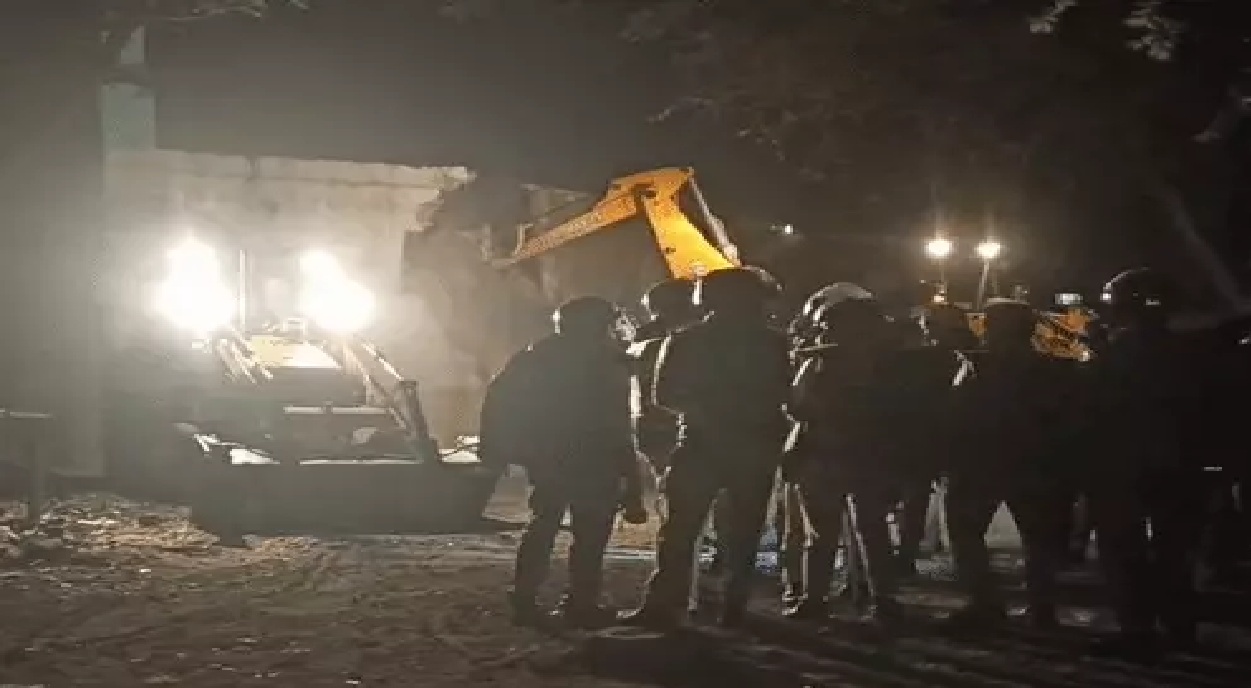
The roars of bulldozers shattered the pre-dawn silence at around 3 am, as residents of Asti village in Bakshi Ka Talab area of Lucknow lay asleep — unaware that within the next hour, a decades-old mosque would be reduced to rubble.
In a tightly secured operation carried out around 3 am on Thursday, the district administration demolished the mosque following directions from the Allahabad High Court’s Lucknow Bench. The action, executed with three bulldozers, was completed in less than an hour amid heavy deployment of police and Provincial Armed Constabulary (PAC) personnel.
Senior officials, including ADM (Administration) Rakesh Singh and the Sub-Divisional Magistrate (SDM), were present at the site as the structure was razed and the debris cleared soon after. Authorities said the timing of the operation was chosen to minimise public movement and avoid any potential flare-up.
According to the administration, the mosque had been constructed illegally on government land recorded as “khalihan" (threshing ground). Officials maintained that the demolition was carried out only after due legal process, spanning nearly two years, had been exhausted.
ADM (Administration) Rakesh Singh said inputs were received late at night about possible resistance from those occupying the land. “We reached the spot with the SDM and issued a final warning. It was made clear that illegal encroachment would be removed at all costs and disruption to law and order would not be tolerated," he said.
“With PAC deployment in place, three bulldozers were deployed and the structure was demolished within about an hour," he added.
TWO-YEAR LEGAL TRIAL
The case dates back to October 2024, when a lekhpal reported encroachment on gram sabha land measuring 0.300 hectares in Asti village. Of this, about 0.0300 hectares was occupied by the mosque.
Following this, the tehsil administration issued notices on October 21, 2024, to local residents Mohammad Sahibad and Lal Mohammad, who challenged the proceedings. On February 28, 2025, the tehsildar court ordered removal of the encroachment and imposed a fine of Rs36,000.
The affected party approached the ADM court against the order, but their appeal was dismissed. The matter then reached the High Court.
On March 25, 2026, the Lucknow Bench of the High Court dismissed the petition, terming it baseless and upholding the orders passed by the tehsildar and the ADM. However, the court set aside the Rs36,000 fine, noting that there was no evidence to establish the petitioners’ role in constructing the mosque. The order was passed by a single bench of Justice Alok Mathur.
Officials said that after the High Court order, a final notice was issued on March 31 and pasted at the site, directing removal of the structure. As the encroachment was not cleared within the stipulated time, the administration proceeded with demolition.
Tehsildar Sharad Kumar said the land was recorded as a khalihan in revenue records and could not be used for permanent construction. “The court has upheld the findings of the administration. The structure was unauthorised and had to be removed," he said.
However, the local residents claimed that the mosque had existed for nearly 60 years and was used only for offering prayers. They argued that the present petitioners had no role in its construction and raised concerns over the fairness of the proceedings, alleging they were not given an opportunity to cross-examine witnesses.
The High Court, however, clarified that proceedings under Section 67 of the Uttar Pradesh Revenue Code follow a summary procedure, where decisions can be based on affidavits and documentary evidence, and cross-examination is not mandatory in every case.
Officials said that Section 67 of the UP Revenue Code empowers authorities to act against encroachments on gram sabha or public land. It allows tehsildars and SDMs to issue notices, impose penalties and evict unauthorised occupants, with dues recoverable as arrears of land revenue.
The court found no infirmity in the orders passed by the tehsil administration or the appellate authority, effectively clearing the way for enforcement.
Following the demolition, the site was cleared of debris and remains under close watch, with security personnel deployed to ensure that the situation remains under control.
First Published:
April 03, 2026, 17:05 IST
News explainers Why A Mosque In Lucknow Was Bulldozed Before Dawn: The 2-Year Legal Trial Explained
Disclaimer: Comments reflect users’ views, not News18’s. Please keep discussions respectful and constructive. Abusive, defamatory, or illegal comments will be removed. News18 may disable any comment at its discretion. By posting, you agree to our Terms of Use and Privacy Policy.
Read More







 English (US) ·