

 41 minutes ago
4
41 minutes ago
4
ARTICLE AD BOX
Bastar, one of India's most backward regions, had become synonymous with Naxalism. By choosing to declare India 'Naxal-free' from Bastar, Amit Shah attempted to signal that the region, once seen as a symbol of fear, was now a place of stability.
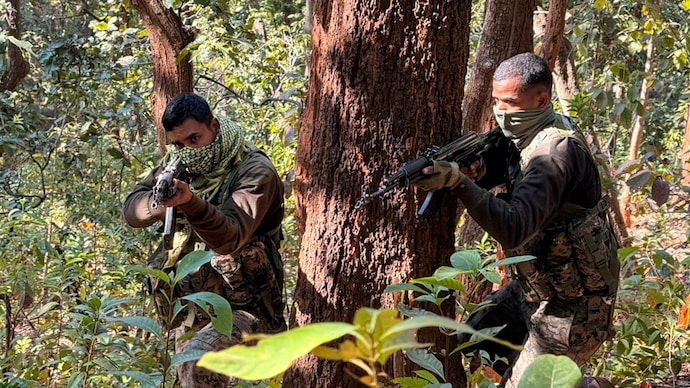
Armed security personnel during a gun battle with Naxalites at Saranda forest
It was April 6, 2010 - the day India witnessed its deadliest Maoist ambushes. A CRPF team on a routine patrol in Chhattisgarh's Bastar was ambushed by heavily armed Naxals, leaving 76 personnel dead. The incident only reinforced Bastar's image as the heartland of Maoist insurgency. For decades, Bastar has remained associated with violence and underdevelopment. On Monday, it was a momentous occasion for Bastar's residents as Union Home Minister Amit Shah asserted that India was now "Naxal-free".
The Modi government knew the road to weed out Naxals went through Bastar, which has been witness to decades-long conflict between security forces and rebels. It is exactly why Shah chose Bastar to make the announcement. "I am declaring with pride, India is now Naxal-free," the Home Minister said. The government had set March 31 as the deadline to eliminate Left-wing extremism from India. 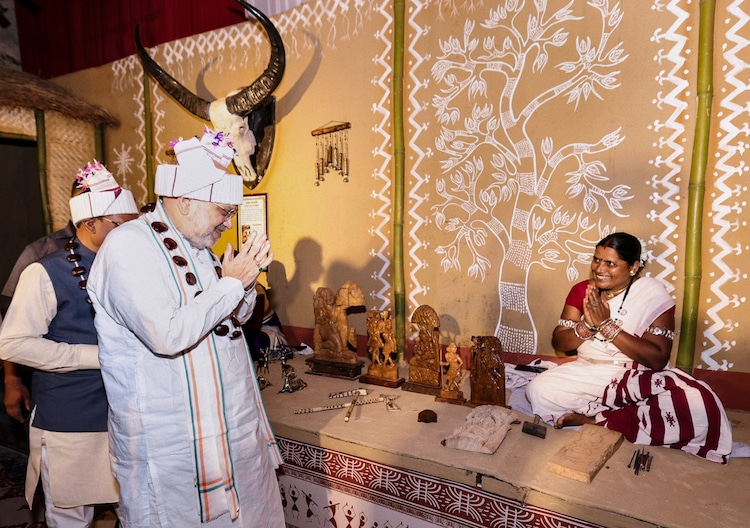
WHY AMIT SHAH CHOSE BASTAR?
Reflecting on Bastar's long history of insurgency, the Home Minister underlined that while the rest of India got independence in 1947, Bastar experienced "true freedom" only after March 31, 2026. "For over six decades, the region has endured severe economic, social and cultural setbacks," Shah said.
It was a historic moment for the 1.41 million residents of Bastar who were consigned to live in the shadow of Red Terror for decades. In fact, Bastar had become synonymous with Naxalism. Thus, by choosing to declare India "Naxal-free" from Bastar, Shah attempted to signal that the region, once seen as a symbol of fear, was now one of the government's success stories.
It did not happen overnight, nor in a year. Since 2019, the Modi government has had its sights on a Naxal-mukt Bharat. The efforts intensified after the BJP came to power in Chhattisgarh in 2023. The next year, 224 Naxals were killed, as per government data. In 2025, the number rose to around 400. Over 10,000 Naxals have surrendered in the past 10 years.
Thickly forested by sal, teak and bamboo, Bastar has always been a difficult terrain for security forces for anti-Naxal operations. Ambushes were hard to detect, and escape routes were difficult to find.
Here's the data:
Over the past two decades, nearly 1,300 security personnel have been killed. Civilians who stood against the rebels or secretly worked as police informers were murdered mercilessly. Between 2001-2024, over 1,800 people were killed by Naxals. For most of this period, venturing out after sunset was a strict no-no.
Due to this insurgency, Bastar has remained one of the most backward regions in India due to insurgency. To reverse the losses the region suffered, Bastar will need investment. And that too lots of it.
Thus, Shah's choice of location suggests an attempt to reposition Bastar as a place of stability. The optics will go a long way in helping Bastar attract investment, which is the need of the hour for the region to ensure delivery of welfare services, healthcare and public amenities.
Moreover, Bastar also hosted the 26th Central Zonal Council meeting on Tuesday, which senior ministers from Uttar Pradesh, Madhya Pradesh, Chhattisgarh and Uttarakhand attended. Such meetings, held to iron out inter-state issues, have usually been held in state capitals or New Delhi in the past.
Through it, the Centre sent out a message that Bastar was no longer an outlier or a conflict zone. In fact, an area that has seen the blood of hundreds of security personnel and politicians shed is now secure enough for the Union Home Minister and chief ministers to hold important meetings.
The grip that Naxals had over Bastar is now significantly weakened or non-existent. A 'transforming' Bastar is now firmly a part of the government's development discourse.
In fact, over the past couple of years, the Centre has experimented with this dual strategy in Bastar. While on one hand, it intensified anti-Naxal operations, leaving over 400 dead over 12 months, on the other, it expanded roads, mobile connectivity, banking access, education and healthcare facilities. 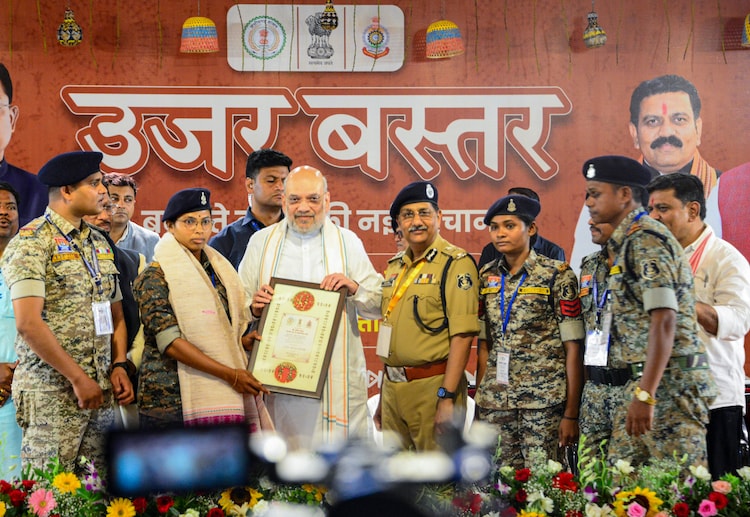
WHAT DOES IT MEAN FOR BASTAR?
With Naxalism now eradicated, the government aims to project Bastar not merely as a "security model" but as a "development model".
The blueprint was announced by Amit Shah on Monday. The Home Minister said the security camps operating in Bastar would be converted into Jan Seva Kendras. These will be one-stop hubs for welfare delivery, digital connectivity and administrative support.
Banking facilities, Aadhaar Card services, and disbursal of government benefits will be provided through these centres.
For Bastar, the visits by the Home Minister and the hosting of the Central Zonal Council are more than just a one-off VIP event.
With such large-scale events come improvements in roads, security infrastructure, communication networks and public facilities. Through this, Bastar also gets an image makeover - much needed to boost investment and tourism in the future.
Essentially, the broader message Shah intended to convey is that Bastar has now moved beyond the identity of fear and violence.
(With inputs from Jitendra Singh)
- Ends
Published By:
Abhishek De
Published On:
May 19, 2026 12:10 IST







 English (US) ·