

 6 days ago
10
6 days ago
10
ARTICLE AD BOX
After resigning from the BJP, K Annamalai announced that he would be launching a political movement that would gradually transition to a political party. Annamalai said that the movement would function under the APJ Abdul Kalam Centre for Ethics and Politics. Here's why invoking Kalam in Tamil Nadu politics is a masterstroke.
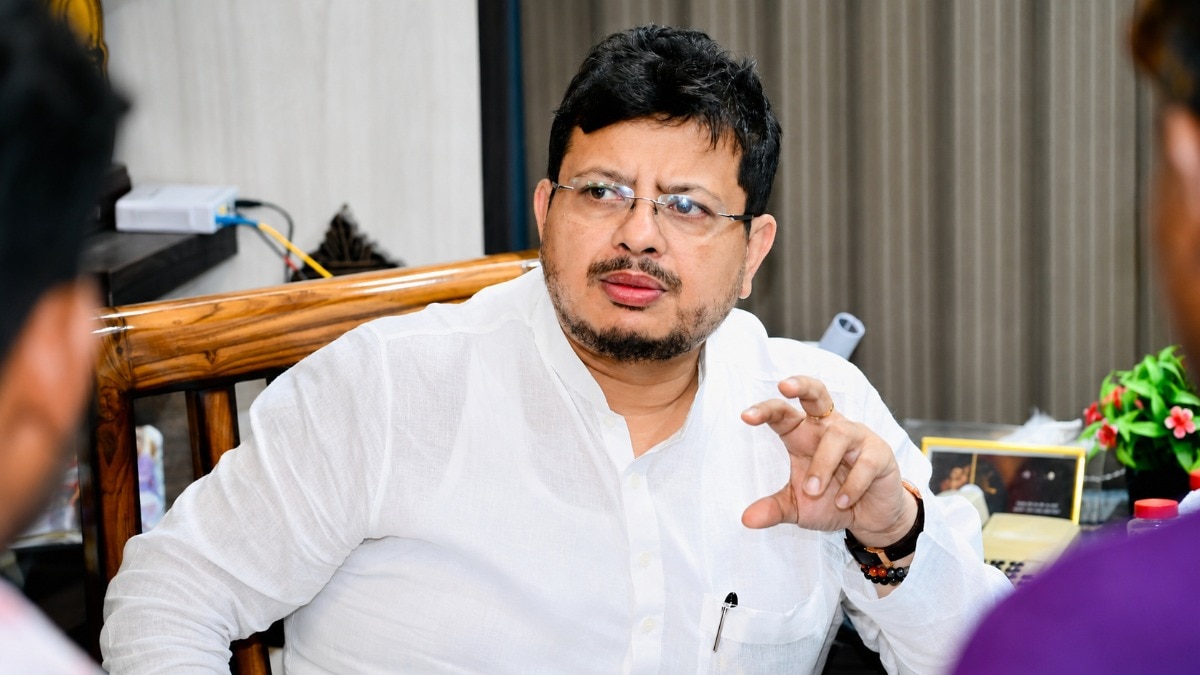
After the resignation was accepted by the Bharatiya Janata Party (BJP), the party's former state unit chief, K Annamalai, on Friday announced that he would launch a new political movement based on what he called the "Kalam School of Ideology". Scientist and former President APJ Abdul Kalam is a symbol of excellence, dedication, sacrifice, unity and nationalism. Bringing Kalam, a proud Tamilian and nationalist, into the narrative of Tamil Nadu's politics, which has thrived on exclusions, is a masterstroke by Annamalai.
In his first public address after his resignation was accepted, Annamalai said the movement, named 'We The Leader', would function under the APJ Abdul Kalam Centre for Ethics and Politics, a training and research institution which will be established by him in Coimbatore.
Annamalai praised Kalam's contributions to both India and Tamil Nadu, describing him as "a humanist, a proud Tamilian, and a nationalist".
The characterisation is notable because it closely mirrors Annamalai's own political positioning, which has consistently sought to blend Tamil identity with Indian nationalism. Like Kalam, Annamalai has often argued that pride in one's Tamil heritage and commitment to the nation are complementary rather than contradictory, making the former President a natural ideological inspiration for his new movement.
By choosing Kalam as the ideological icon, Annamalai appears to be positioning his politics around nationalism, development, scientific temper, and social harmony. Kalam, one of the country's most-respected scientists and popularly known as the "Missile Man of India", remains a rare public figure who is admired across political, religious, and social divides.
Outlining the core principles of the movement, Annamalai said it would oppose social divisions, dynasty politics, and personality cults, while promoting scientific temper, nationalism, Tamil pride, good governance, and overall development. The choice of Kalam is a strategic move, allowing Annamalai to blend regional aspirations with a broader national vision without being tied to traditional ideological camps that currently dominate Tamil Nadu state politics.
Annamalai also revealed that the movement would gradually evolve as a political party and contest the Tamil Nadu Assembly election in 2031.
WHAT ANNAMALAI REVEALS ABOUT TAMIL NADU POLITICS IN RESIGNATION LETTER
The IPS officer-turned politician had submitted his resignation letter to BJP national president Nitin Nabin in New Delhi on June 2. Before stepping down, he held meetings with Union Home Minister Amit Shah, Nabin, and BJP national general secretary BL Santhosh. The saffron party formally accepted his resignation on Friday.
In his resignation letter, Annamalai reflected on his efforts to reshape political discourse in Tamil Nadu.
"National parties never spoke the language that people in Tamil Nadu understood. I have tried to change this belief and also found reasonable success despite multiple roadblocks, barriers, and obstructions from both inside and outside," he wrote.
"As a nationalist deeply rooted in regional aspirations, I take immense pride in the richness of my language, the diversity of my culture, and the unique heritage of my region. I firmly believe that a strong and united India is built upon the strength, dignity, and aspirations of its many regions and communities," he added.
Explaining his long-term vision, Annamalai said the movement would focus on identifying and nurturing future leaders. Annamalai said that one CM cannot change Tamil Nadu.
He also added that neither 234 MLAs nor 39 MPs can change the current system. And he said he has a plan to overcome this problem. "If the system has to change, we need to change 30,000 people right from panchayat members to councillors to mayors, and right up to the top, we have to change the entire set of people," he said.
HOW ANNAMALAI'S INTERNSHIP WITH VIJAYAKANTH'S PARTY CHANGED HIM
Annamalai also said that the best brains, experts, and professionals from diverse fields and regions would be brought in to train individuals joining his movement. He described the project as a gradual and long-term exercise, emphasising that building a credible political alternative would require patience, institutional development, and sustained grassroots engagement over the coming years.
Annamalai recalled his three-month internship with the late DMDK founder Vijayakanth in 2009 while pursuing his MBA at IIM Lucknow. Having secured special permission from the institute, he worked directly under Vijayakanth during the Lok Sabha election campaign.
Referring to the experience during the launch of his new political movement, Annamalai said the internship marked the beginning of his 17-year journey in grassroots engagement and public service, providing him with his first exposure to electoral politics and political organisation. He expressed that he wanted to give this experience to the youth of the state, to enter politics.
WHAT IS KALAM'S SCHOOL OF IDEOLOGY THAT ANNAMALAI HAS PICKED?
Annamalai's choice of Kalam as ideological inspiration is significant. In a state where political movements have traditionally been built around the ideas of Periyar, CN Annadurai, M Karunanidhi, MG Ramachandran, or J Jayalalithaa, Annamalai has chosen a figure who was neither a conventional politician nor associated with any particular political party.
According to Annamalai, his movement will oppose social division, dynasty politics, personality cults, and vote-bank politics, while promoting nationalism, Tamil pride, scientific temper, youth empowerment, and development-oriented governance. These themes closely mirror the values that defined Kalam's public life.
At its core, the Kalam School of Ideology is rooted in the belief that the nation must come before all other considerations. Kalam consistently argued that religion, caste, language, and region should never become barriers to national unity. Instead, he advocated what he called a "Unity of Minds", where people from different backgrounds work together towards a shared national purpose.
Unlike many political icons whom all the political parties in India idolise, they built their appeal around identity-based mobilisation and favouring one or the other section. On the other hand, Kalam focused on collective progress, social harmony, and nation-building. He was a proud nationalist who believed India's strength came from its civilisational heritage, diversity, and self-reliance. Kalam rarely engaged in ideological confrontation and instead promoted a positive vision centred on development and national advancement.
Born into a modest Tamil Muslim family in Rameswaram, Kalam never wore the sleeves of being a minority, and rather, he rose through education and hard work to become one of India's leading scientists and later the President of India. For millions, he represented the idea that merit, knowledge, and service to the nation could transcend social and economic barriers.
Development was the central pillar of Kalam's worldview. Through his Vision 2020 programme in 2000, he called for India to become a developed nation through investments in education, technology, infrastructure, healthcare, agriculture, and innovation. He believed that governments should focus less on political divisions and more on improving people's lives.
Scientific temper was another defining feature of his philosophy. As the architect of several of India's missile and space programmes, Kalam viewed science, innovation, and knowledge as the engines of national progress. At the same time, he balanced scientific thinking with spirituality and ethical values, arguing that technological advancement must be accompanied by moral responsibility.
Often referred to as the "People's President", Kalam was admired across religious, caste, regional, and political lines. His speeches focused on leadership, hard work, optimism, and empowering young Indians rather than electoral calculations or ideological battles.
For Annamalai, choosing Kalam as the ideological face of his movement is also a political statement. It signals an attempt to create an alternative political space that combines nationalism with Tamil identity, while avoiding both the identity-centric politics associated with traditional Dravidian parties and the personality-driven politics that have dominated Tamil Nadu for decades.
WHY KALAM AS ICON IS A CLEVER CHOICE FOR TAMIL NADU POLITICS
By choosing Kalam as the ideological face of his new political movement, Annamalai might have made one of the most calculated political choices in contemporary Tamil Nadu politics. Unlike most political icons around whom parties in the state have been built, Kalam remains a figure who is admired across caste, religious, regional, and political divides.
An Ajatshatru (one with no enemies), Kalam never built his public image around identity politics or social divisions. This sets Kalam apart from the icons that dominate Tamil Nadu's political landscape.
The DMK traces its ideological roots to Periyar EV Ramasamy, CN Annadurai, and later M Karunanidhi, figures revered by supporters but also strongly opposed by sections of the society for their views on religion, caste, and social reform.
The AIADMK revolves around the legacies of MG Ramachandran and J Jayalalithaa, whose appeal was immense but largely tied to leader-centric politics.
Vijay's TVK has sought to broaden the Dravidian framework to "neo-dravidism" by drawing inspiration from Periyar, BR Ambedkar, K Kamaraj, Rani Velu Nachiyar, and Anjalai Ammal. He has tried to create a broader ideological coalition while remaining rooted in the Dravidian tradition.
Kalam, however, occupies a unique space outside these political parentheses. He is perhaps one of the few modern Tamil icons who are respected by Dravidian supporters, nationalists, minorities, upper castes, backward communities, and young aspirational voters.
Kalam's legacy is associated not with protest or political confrontation, but with achievement, knowledge, national pride, and the belief that development should transcend social divisions.
This is why Annamalai's choice is politically significant. By invoking Kalam, Annamalai seems to be attempting to create an ideological framework that moves beyond the traditional binaries of Tamil Nadu politics — Dravidian versus nationalist, caste versus caste, or region versus nation.
Instead, the 'Kalam School of Ideology' places development, scientific thinking, national unity, youth empowerment, and Tamil pride at the centre of political discourse.
Whether Annamalai can convert this vision into a successful political movement is too early to say. But by choosing Kalam, often seen as an Ajatashatru, Annamalai has definitely anchored his movement to one of the most widely respected and unifying personalities in modern Indian public life.
In a state where political identities have long been shaped by ideological battles, personality cults, and dynasties, Annamalai is betting on Kalam's life and work to send a message of aspiration, harmony, and nation-building that can offer Tamil Nadu a new political vocabulary.
- Ends
Published By:
Avinash Kateel
Published On:
Jun 5, 2026 17:38 IST



 English (US) ·