

 1 hour ago
2
1 hour ago
2
ARTICLE AD BOX
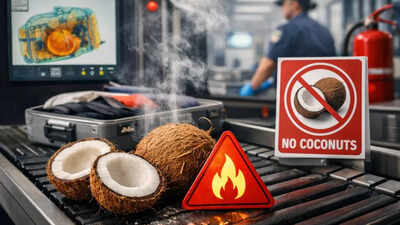
There are many rules and regulations associated with air travel. These rules and regulations include no carrying of sharp objects, no carrying of large quantities of liquids, and no carrying of inflammable items.
However, some rules and regulations seem unusual. The case of carrying coconuts is one such case. Coconuts are commonly found and are associated with religious, food, and everyday activities. However, there is a restriction on carrying coconuts on an aircraft.Many people face difficulties and are surprised when they are not allowed to carry coconuts during air travel. The seemingly harmless item poses many risks and hazards.
The risks associated with carrying coconuts in an aircraft include the risk of fire and pressure. The reasons behind this restriction will show how ordinary items can pose risks and hazards.
Why are coconuts considered a safety risk
The main reason for this restriction on coconuts in flights is that they are high in oil. Dry coconuts are also known as copra, and they are high in oil, which is highly flammable. In certain conditions, this oil may catch fire in front of sparks or in hot conditions.
According to international aviation safety standards set by the International Air Transport Association (IATA), materials that are flammable or capable of self-heating are restricted on flights, and dried coconut can fall into this category due to its high oil content.The cargo area and cabin area in flights are strictly regulated, and any small fire risk is taken seriously. As part of aviation safety, we focus more on preventing rather than reacting.
The risk of fire and self-heating
It is not only flammable but may also have the ability to produce heat on its own in certain circumstances.
Some materials have the ability to produce heat due to their oil content and may even catch fire after a series of slow chemical reactions.This is one of the reasons why dried coconut is considered a dangerous material in the guidelines related to air travel.
Pressure and structural concerns
Another lesser-known reason has something to do with the air pressure. It is already known that during a flight, the air pressure may affect objects with liquid or air pockets.
A coconut has both.As the pressure differs, there is a small possibility that the shell of the coconut might crack or leak. Although it does not seem like a big deal, any unexpected leak of the coconut shell might cause complications during the flight.
Security and scanning challenges
Airport security also makes extensive use of X-ray scanning to detect possible threats. However, the hard outer covering of coconuts makes it hard for X-ray scanners to get a good view of what is inside them.This lack of visibility may also spark suspicion, as it is hard for authorities to easily ascertain whether the item is safe or not. In places like airports, which are highly sensitive, any item that cannot be scanned easily may be forbidden.
Could coconuts be used as a physical hazards
Besides chemical hazards, coconuts are also solid and heavy objects. When in situations such as turbulence, anything that is loose and hard could become a threat.The hard shell of coconuts could also become a source of damage should it suddenly change position.
Although this may not be the main reason for banning coconuts, it is just another reason for aviation authorities to worry about.
Are coconuts allowed in any form
There are a few exceptions depending on the airlines’ rules and regulations. In some cases, carrying coconuts is allowed as long as they are cut into small pieces and packed in the checked baggage.However, carrying whole coconuts and dried copra is not allowed in either the cabin baggage or the checked baggage. The best advice that a traveller should follow is not to carry coconuts at all.







 English (US) ·