

 1 week ago
6
1 week ago
6
ARTICLE AD BOX
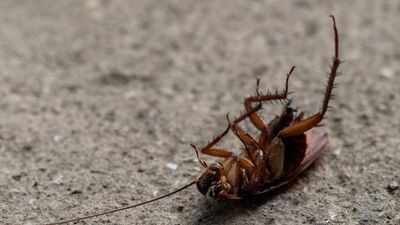
A light poke is sometimes enough to make an insect collapse into complete stillness. Legs fold in, movement stops, and, for a few moments or even much longer, the animal appears lifeless.
To anyone watching, it can seem like a strange overreaction. Yet this behaviour, known as death-feigning or thanatosis, has evolved repeatedly across the animal kingdom and is particularly common among insects.For years, biologists suspected that predators might avoid prey that appeared dead. The idea sounded plausible, but direct evidence remained surprisingly scarce. More recent work has begun to show that what looks like a simple act of "playing dead" can involve predator learning, mistaken identity and even a form of distraction that encourages hunters to move on in search of easier targets.
Death-feigning in insects: A survival strategy against predators
Death-feigning is often triggered by touch or physical disturbance. An insect that cannot outrun a predator may suddenly become motionless instead. At first glance, this seems risky. A motionless insect remains visible and may still be eaten.According to a study published in The Royal Society, titled “Hide-and-seek strategies and post-contact immobility”, the strategy can work because predators do not always respond to apparently dead prey in the same way they respond to living prey.
Working with Indian stick insects (Carausius morosus) and birds, Skelhorn found that birds learned to associate dead insects with an unpleasant eating experience. After that learning process, they were more likely to reject live insects that adopted a death-feigning posture.As per the study published in the National Library of Medicine, titled “Avoiding death by feigning death”, birds that had previously encountered unpalatable dead stick insects often avoided live individuals displaying thanatosis because they appeared similar to the dead insects the birds had learned not to eat.
When that resemblance was removed, the protective effect disappeared. The findings suggested that some predators can be fooled into treating a living insect as a corpse they would rather avoid.
Why predators often move on from motionless insects
The advantage of death-feigning may not always depend on convincing a predator that the prey is dead. Sometimes the benefit comes from becoming temporarily uninteresting.As per the study published in Biology Letters, they examined what they termed post-contact immobility, a broader category that includes death-feigning behaviour.
Their models explored what happens when predators encounter groups of prey living close together.The researchers proposed that when a predator drops or loses contact with an individual that suddenly becomes motionless, attention may shift elsewhere. Rather than waiting indefinitely for movement to resume, the predator can simply move on to another nearby target. In effect, the motionless prey becomes harder to notice while more obvious opportunities remain available.
The study suggested that long and unpredictable periods of immobility can improve survival, especially when many similar prey occupy the same area.
How insects use stillness to disrupt predator attacks
Many insects rely on camouflage before a predator notices them. Once contact occurs, camouflage alone is no longer enough. At that stage, death-feigning becomes a last line of defence. A sudden freeze can interrupt the sequence of events a predator expects. Hunters frequently depend on movement when locating, tracking or handling prey.
When an insect instantly stops responding, the predator may pause, loosen its grip or redirect attention.
That brief interruption can create an opportunity for escape.The behaviour is particularly common among insects that lack strong physical defences. Stick insects, beetles and antlion larvae often have few options once discovered. Remaining completely still may be the most effective tactic available.
How staying still for longer can increase survival chances
The duration of death-feigning varies enormously between species.
Some insects remain motionless for only a few seconds. Others can continue the act for many minutes. According to the study, unpredictability may be part of the strategy. If predators cannot easily anticipate when an insect will begin moving again, waiting becomes less worthwhile. Their analysis of antlion larvae suggested that prolonged periods of immobility can encourage predators to abandon the search and look elsewhere instead.That means death-feigning is not simply a dramatic performance. In many cases it appears to be a carefully shaped evolutionary response to predator behaviour. What looks like surrender may actually be a survival tactic, exploiting the fact that predators make decisions based on experience, attention and the expectation that prey will move.For some insects, the safest action after being touched is to do absolutely nothing at all.









 English (US) ·